




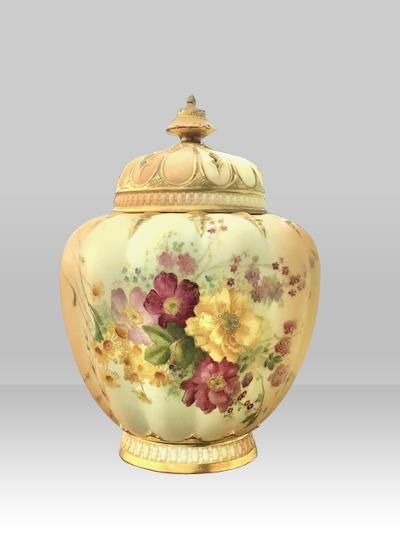


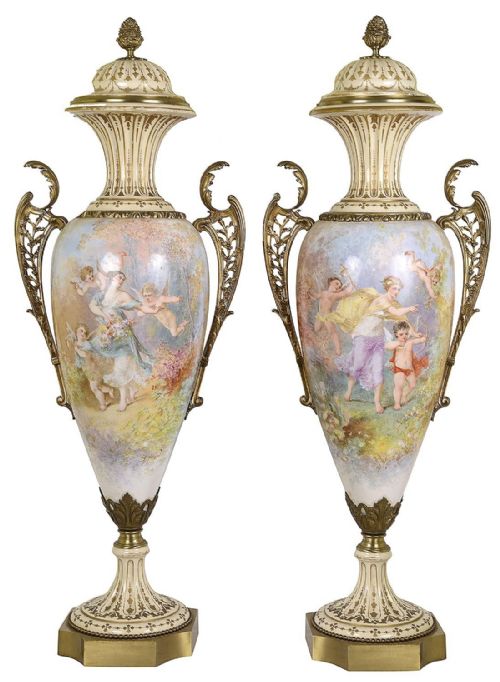


Cream Porcelain Lidded Urn
These cream porcelain lidded urn pieces bring nineteenth-century and Edwardian elegance to a mantelpiece, combining classic form with delicate hand-painted detail.
Cream Porcelain Lidded Urn
A cream porcelain lidded urn serves primarily as a decorative garniture or table centrepiece, often featuring a fitted cover and handles. When you search for a cream porcelain lidded urn, you encounter Victorian, Edwardian, and Meiji Period examples shaped as pedestal vases, pot pourri jars, and covered vessels.
The pieces appearing here span the nineteenth century up to nineteen-twenty, encompassing Hadley's Worcester, Royal Worcester, Sevres style, and Satsuma wares. Forms range from compact blush ivory pot pourri vessels to large tall display urns.
Victorian Aesthetic Movement and Rococo Revival influences appear frequently among the listings, alongside Japanese Meiji Period imports. Buyers select these objects for their classic silhouettes and painted decoration.
What varies in quality
The refinement of the painted decoration separates standard production from superior examples. Hand-painted botanical and animal subjects by known factories display greater artistic control than routine transfer printing.
The application of gilding and gold leaf also marks the distinction between ordinary vessels and high-grade works. Crisp moulding on handles, pedestals, and covers adds to the visual weight.
Cream Porcelain Lidded Urn Retail Price Guide 2026
Typical asking prices for cream porcelain lidded urn among the pieces listed under this phrase on Sellingantiques today, from the lower quarter to the upper quarter. They describe what is for sale here now, not the wider market.
Listings feature porcelain, earthenware, enamel, and gold leaf across Victorian, Edwardian, and Meiji Period styles.
Hadley's Worcester·Royal Worcester·KPM
The Cream Porcelain Lidded Urn Glossary
- Blush ivory
- A softly shaded cream porcelain body developed by factories like Royal Worcester to imitate the tone of natural ivory. It provides a warm background for floral painting.
- Pedestal vase
- A vessel elevated on a distinct foot and stem, giving height and formal presence to a display. These often include a matching lidded cover.
- Pot pourri
- A jar or urn designed with a pierced cover to release the scent of dried flower petals placed inside. They combine practical function with decorative form.
- Polychrome enamel
- Glass-based pigments fired onto the porcelain surface in multiple colours. This technique creates vibrant scenes that resist fading over time.
- Ormolu
- Gilt bronze mounts applied to the base, handles, or rim of a porcelain vessel. The metalwork frames the ceramic body with a metallic sheen.
Cream Porcelain Lidded Urn: Frequently Asked Questions
What is a cream porcelain lidded urn used for?
These covered vessels served primarily as decorative garnitures on mantelpieces, sideboards, or console tables during the nineteenth and early twentieth centuries.
Certain forms, such as pot pourri jars, held dried aromatic herbs and flowers to sweeten the air in period drawing rooms.
How do I date a cream porcelain lidded urn?
Dating relies on factory marks stamped or painted on the underside, stylistic cues like Victorian revival shapes, and the specific colour palette used.
Blush ivory bodies and specific painted signatures point toward late nineteenth-century or Edwardian production.
Where were these urns manufactured?
Production centres were split between prominent English potteries like Worcester and continental European workshops following Sevres or KPM traditions.
Japanese Satsuma kilns also produced large decorative lidded jars imported heavily during the Meiji period.
How do I care for antique porcelain?
Dust the surface gently with a soft dry brush and avoid using water or chemical cleaners on gilt or enamel decoration.
Keep pieces away from direct sunlight to preserve the vibrancy of the hand-painted polychrome colours.