


Cream Pearl Diamond Necklace
A cream pearl diamond necklace brings together lustrous pearls and sparkling diamonds in elegant Edwardian, Art Deco and mid-century designs.
Cream Pearl Diamond Necklace
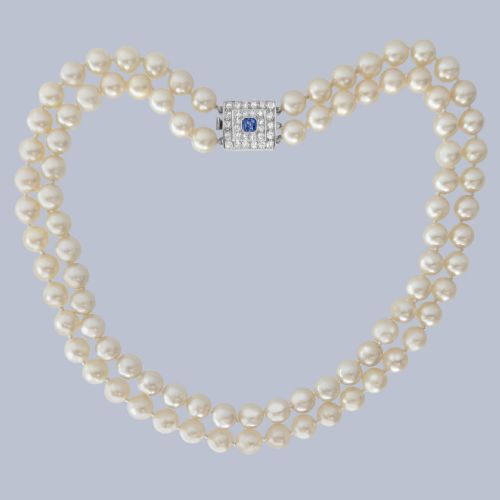
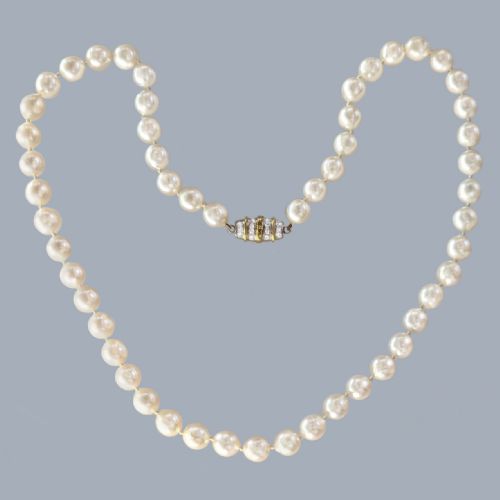
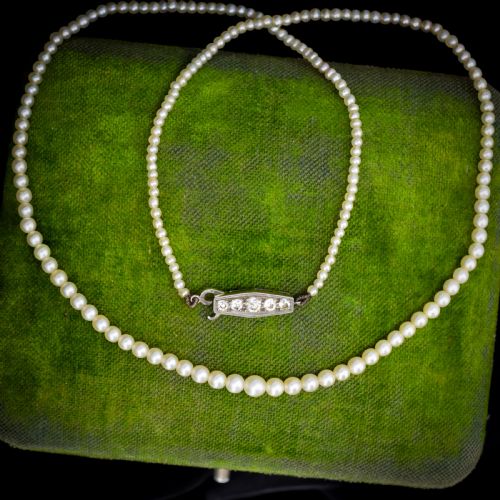
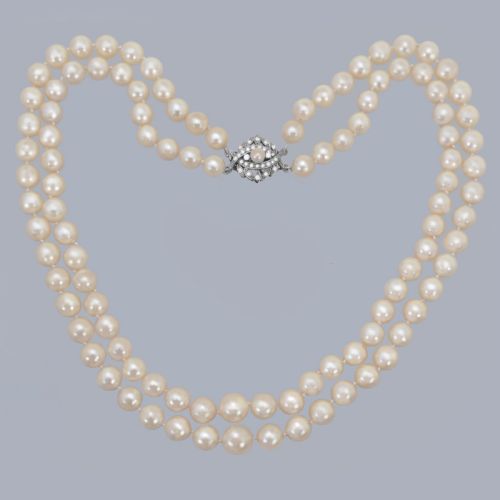
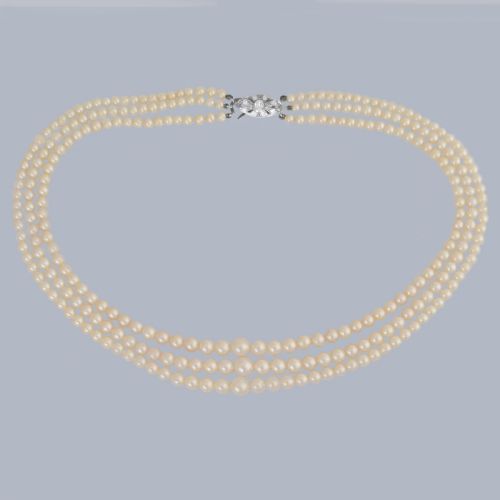
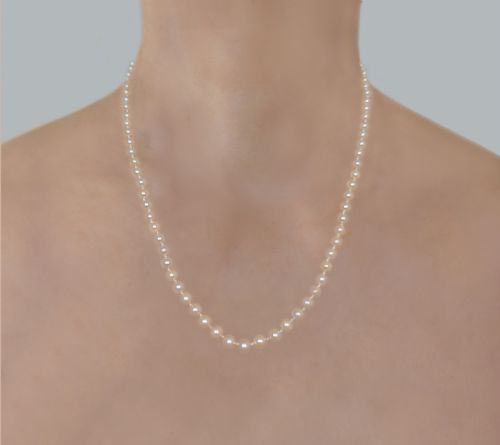
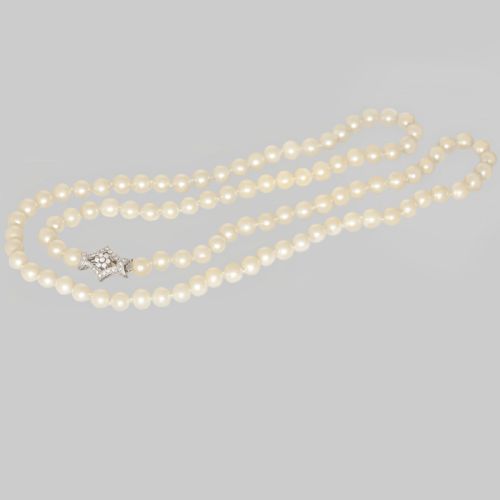
A cream pearl diamond necklace combines soft nacreous pearls with brilliant diamond accents, frequently secured by an intricate decorative clasp that serves as a focal point. These pieces span from the Georgian and Victorian eras through the Edwardian period, the geometric lines of Art Deco, and the robust forms of the 1950s and 1960s.
Single, double and triple strand configurations appear across the selection, often complemented by precious gems such as sapphires, rubies and black onyx. Pendant necklaces and chokers also feature among the items, reflecting changing fashions in necklines over the decades.
The most common iteration on this page is the multi-strand cultured or natural pearl necklace featuring an 18ct white gold, yellow gold or platinum clasp set with small diamonds. These pieces bridge classic formality and period character, offering wearers traditional stringing paired with distinctive metalwork.
How they were made
Goldsmiths and lapidaries utilised precious metals including platinum, 18ct white gold, 9ct gold and yellow gold to form secure settings for diamonds and coloured gemstones. Clasps often incorporate detailed foliate, floral or geometric motifs executed through casting, engraving and stone setting techniques.
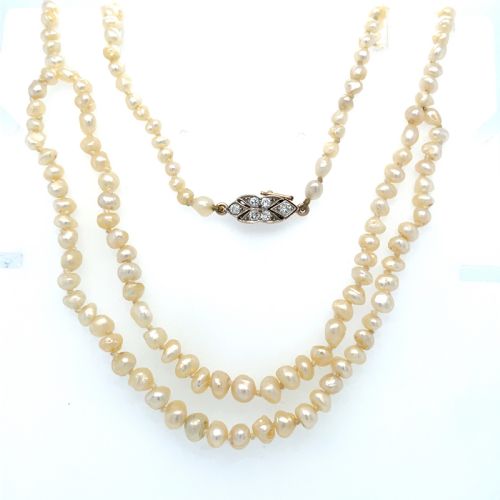
Strands consist of natural saltwater pearls or cultured pearls, carefully matched for size and lustre, and threaded onto silk or specialised cord. Older examples frequently show evidence of being recently restrung to ensure the longevity of the piece.
Listings span multiple eras from Georgian and Edwardian times through Art Deco and mid-century decades, utilising white gold, platinum and yellow gold.
What varies in quality
The quality of a cream pearl diamond necklace rests upon the lustre, orient and matching of the pearls themselves, alongside the cut and brilliance of the accompanying diamonds. Natural saltwater pearls generally command higher regard than cultured varieties, though uniformity in size and minimal surface blemishes remain paramount across all types.
Artisanal skill in the construction of the clasp distinguishes finer examples, where platinum or high-carat white gold is shaped into delicate millegrain edges or complex geometric patterns. Hallmarks, certifications from recognised gemmological authorities and the integrity of the stringing further elevate a piece.
Chaumet
The Cream Pearl Diamond Necklace Glossary
- Cultured pearl
- A pearl formed with human intervention by inserting a nucleus into an oyster or mollusc. These became widely available in the twentieth century.
- Old cut diamond
- A diamond cut by hand before modern machinery, characterised by a smaller table and larger culet. This cut yields a softer, warmer sparkle under candlelight.
- Millegrain
- A decorative jewellery technique featuring a line of tiny beaded metal dots along the edges of a setting. It was particularly popular during the Edwardian and Art Deco periods.
- Clasp
- The mechanical fastening of a necklace, which in period pieces often doubles as a decorative brooch-like element featuring diamonds and precious stones.
Cream Pearl Diamond Necklace: Frequently Asked Questions
How should I care for my pearl necklace?
Store pearls separately in a soft pouch to prevent scratching from harder gemstones like diamonds. Wipe them gently with a damp cloth after wearing and avoid exposing them to perfumes or cosmetics.
Have the strands checked and restrung periodically by a professional jeweller to prevent cord failure.
Are these pearls natural or cultured?
The listings include both natural saltwater pearls and cultured pearls depending on the period of manufacture. Edwardian and earlier examples more frequently feature natural pearls, while mid-century pieces generally utilise cultured varieties.
Gemmological certificates are often provided to verify the origin of the pearls.
How do I date a pearl necklace?
Dating relies on the style of the clasp, the metal purity marks, and the method of pearl cultivation. Edwardian pieces often display platinum work and millegrain, whereas 1950s examples commonly use 9ct gold floral settings.
Hallmarks stamped on the metal provide official assay office dates.