



Cream Painted Salon Chairs
Cream painted salon chairs bring a light, continental elegance to a room, offering comfortable seating shaped by neoclassical and revival designs.
Cream Painted Salon Chairs
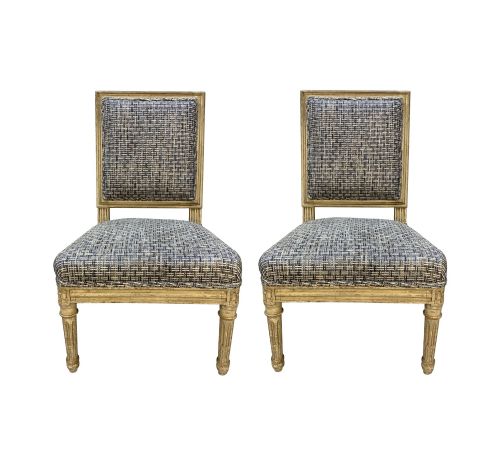
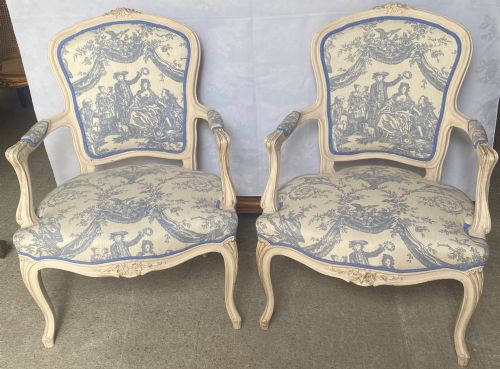
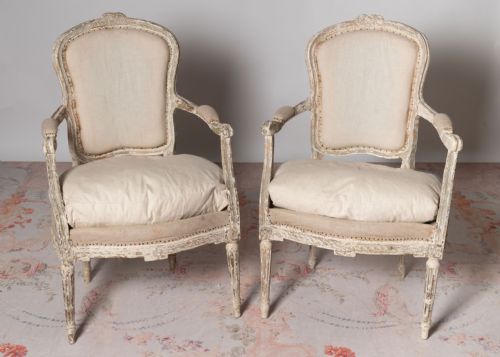
Cream painted salon chairs are decorative seating options originating largely from nineteenth-century France and wider European traditions. When searching for cream painted salon chairs, a buyer encounters armchairs, side chairs, and occasional seats shaped by historical revivals.
The pieces available display distinct influences from Louis XV, Louis XVI, and Neoclassical styles, alongside French Provincial and Scandinavian expressions. Most examples date from the nineteenth century, though the selection extends from earlier periods through to mid-twentieth-century interpretations.
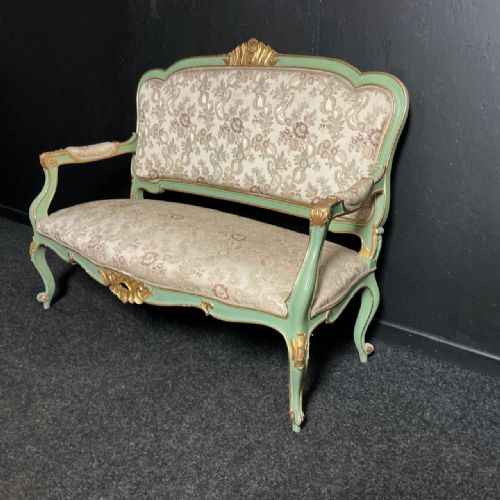
Makers and workshops produced these forms using carved wood finished with paint, often highlighted with parcel gilt or gold leaf. Upholstery choices vary across the inventory, featuring fabrics such as linen, velvet, and standard textile coverings.
How they were made
Craftsmen shaped these frames primarily from beech and walnut, employing carved wood techniques to achieve ornate detailing. Artisans then applied paint surfaces directly to the timber, frequently adding gold leaf or silver gilt to accentuate the carved motifs.
Upholstery completed the construction, with makers securing fabrics like linen and velvet over padded seats and backrests. The combination of painted wood and textured textile forms the standard structural approach across these periods.
Cream Painted Salon Chairs Retail Price Guide 2026
Typical asking prices for cream painted salon chairs among the pieces listed under this phrase on Sellingantiques today, from the lower quarter to the upper quarter. They describe what is for sale here now, not the wider market.
Some chairs sport so many coats of paint down the decades they have developed their own geological strata.
What varies in quality
Quality separates through the crispness of the wood carving and the depth of the painted finish applied to the frame. Pieces featuring refined parcel gilding or gold leaf demonstrate a higher tier of workshop execution than simpler painted surfaces.
The integrity of the original timber frame and the sophistication of the revival style dictate the overall standard. Finer examples balance structural proportion with harmonious decorative details across the arms, legs, and crest rails.
The Cream Painted Salon Chairs Glossary
- Louis XVI Revival
- A nineteenth-century design movement emulating the straight lines, symmetry, and neoclassical motifs of the French reign. This style often incorporates fluted legs and geometric carvings.
- Parcel Gilt
- A decorative technique where specific carved portions of a painted wooden object are partially covered in gold leaf. It highlights structural details against the painted ground.
- Louis XV Revival
- A design style inspired by the mid-eighteenth-century French court, characterised by asymmetrical curves and floral carving. Frames in this tradition display flowing cabriole legs.
- Neoclassical
- A revival style drawing on classical Greek and Roman art forms, focusing on restraint, proportion, and straight architectural lines. It appears frequently in nineteenth-century seating.
- French Provincial
- A style reflecting the domestic furnishings of French regions outside Paris, combining practical construction with simplified decorative carving. These pieces often feature painted or distressed wooden finishes.
Cream Painted Salon Chairs: Frequently Asked Questions
Where were salon chairs used?
Salon chairs were placed in formal drawing rooms and receiving areas for entertaining guests and social gatherings. They provided lightweight, movable seating that could be rearranged easily within a room.
Today, these chairs function well as occasional seating in living spaces, bedrooms, or hallways, adding a decorative historical element to an interior.
How do I identify Louis XVI style?
Louis XVI style is marked by straight, fluted legs, rectangular backrests, and symmetry drawn from classical architecture. Carvings often include classical motifs like ribbon twists and acanthus leaves.
This aesthetic contrasts with the curved, asymmetrical lines of earlier rococo designs, offering a more formal and structured appearance.
What is parcel gilding?
Parcel gilding involves applying thin sheets of gold leaf to selected raised portions of a painted wooden frame. It creates a contrast between the metallic highlights and the painted background colour.
This technique was utilised to draw attention to intricate carved details on high-status seating.
How do I care for painted wood?
Maintain painted wooden frames by dusting them gently with a soft, dry cloth to prevent accumulation. Avoid using harsh chemical cleaners or excess moisture, which can damage the painted and gilt surfaces.
Keep the furniture away from direct sunlight and temperature fluctuations to protect the timber and upholstery.