




Cream Painted Ottoman
These cream painted ottoman items and related painted seats bring continental character to a room through aged surfaces and traditional upholstery.
Cream Painted Ottoman
A cream painted ottoman or related painted seat brings understated surface texture to a room, drawing on forms from the eighteenth, nineteenth, and early twentieth centuries. Buyers seeking this search phrase encounter painted stools, benches, window seats, and occasional boxes rather than standard modern storage furniture.
The selection leans heavily toward continental European designs, featuring Swedish, French, and Italian examples alongside English pieces. Swedish and French influences dominate the aesthetic, with styles spanning Gustavian, Louis XV, and Regency periods.
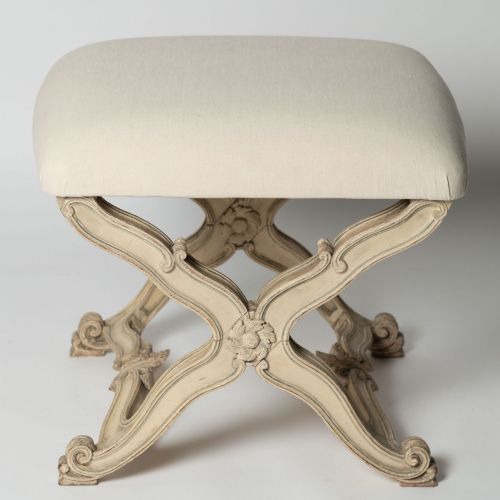
Forms vary from low footstools and carved X-frame curule stools to long benches and pine blanket boxes. Each piece offers a functional seat or surface finished in historic paint schemes.
Materials and construction methods
Makers utilised solid timbers such as pine and carved wood, building frames intended to endure heavy domestic use. Surfaces received layers of paint, sometimes accented with gold leaf or gilding to highlight carved details.
Upholstery completed the functional pieces, utilising traditional textiles like linen and needlework to cover seats and benches. Wood carving remained entirely hand-executed, creating the distinct profiles seen across French and Swedish workshops.
Listings span from the eighteenth to the twentieth century, combining painted wood, pine, and gilded surfaces with traditional upholstery.
Distinguishing features of quality
Quality rests in the integrity of the original timber frame and the authenticity of the surface finish. Hand-carved elements show crispness and depth that distinguish bespoke craftsmanship from simpler production.
The character of the aged paint surface determines visual success, with layered historic paint holding greater appeal than flat modern applications. Upholstery execution and fabric selection further separate standard items from superior examples.
Miles & Edwards
The Cream Painted Ottoman Glossary
- Gustavian
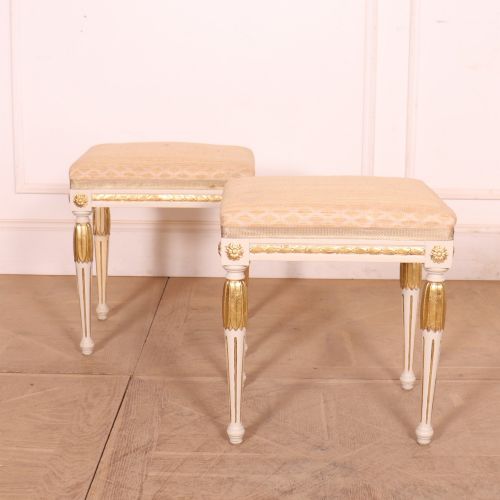
- A Swedish neoclassical style characterised by restrained carvings, pale paint finishes, and elegant proportions. This aesthetic emerged during the late eighteenth century and remains influential in interior design.
- Curule stool
- An ancient Roman chair shape featuring intersecting X-shaped legs that support the seat. Nineteenth-century interpretations revived this classical form with upholstered tops.
- Gilding
- The application of gold leaf or powder to a wooden surface to create metallic highlights. This technique enhances carved details on decorative frames.
- Needlework
- Hand-stitched textile work utilised for seat covers and upholstery. It introduces intricate patterns and varied textures to antique stools.
- Regency
- An English design period spanning the early nineteenth century defined by classical restraint and archaeological revival forms. Pieces from this era often incorporate clean lines and painted finishes.
Cream Painted Ottoman: Frequently Asked Questions
How do I style a painted stool?
Place a low painted stool at the foot of a bed or beside a fireplace to add subtle texture and extra seating. The neutral painted finish allows the piece to integrate easily into both traditional and contemporary interiors.
Pair longer benches with simple upholstery alongside larger rooms, or use smaller footstools as decorative accents in tighter spaces. Their historic presence grounds a scheme without dominating the floor plan.
Are these pieces purely decorative?
Most items function actively as seats, window benches, or occasional footrests while contributing historic character to a room. Pine boxes provide practical lidded storage alongside their decorative painted exteriors.
Buyers should consider the scale and weight capacity of individual antique stools before planning heavy daily usage. Delicate carved frames suit light sitting or display purposes best.
What defines Swedish painted furniture?
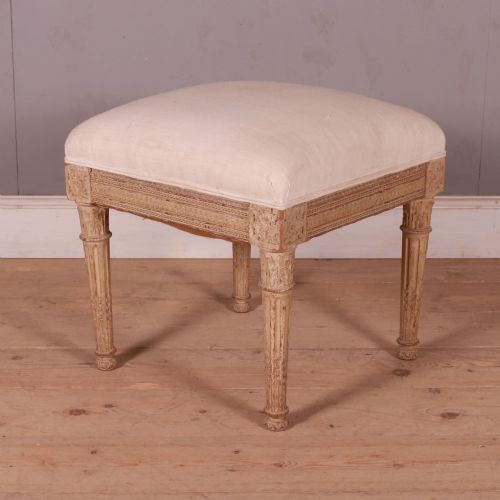
Swedish pieces from the nineteenth century typically feature bright, pale paint layers designed to reflect natural light during long northern winters. Carvings remain restrained, drawing heavily on neoclassical proportions.
Original paint surfaces often exhibit a desirable patina gained through decades of domestic use. This aesthetic underpins the enduring popularity of Gustavian-style seating.
How do I identify French regional styles?
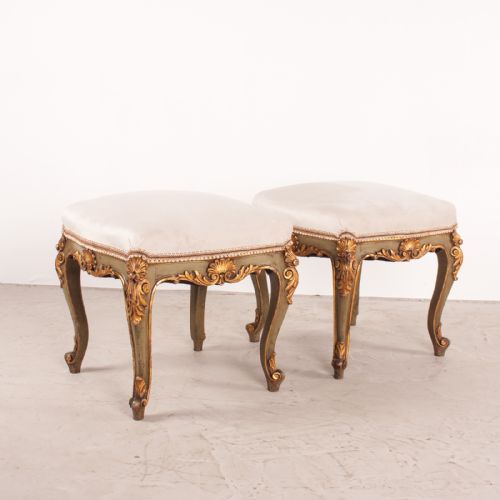
French seating often displays fluent hand-carved ornamentation reflecting Louis XV or provincial chateau aesthetics. Cabriole legs and curved wooden frames distinguish these decorative items from stricter English or Swedish forms.
Gilded highlights or subtle paint distressings frequently accompany these continental pieces, emphasising their sculptural profiles.