

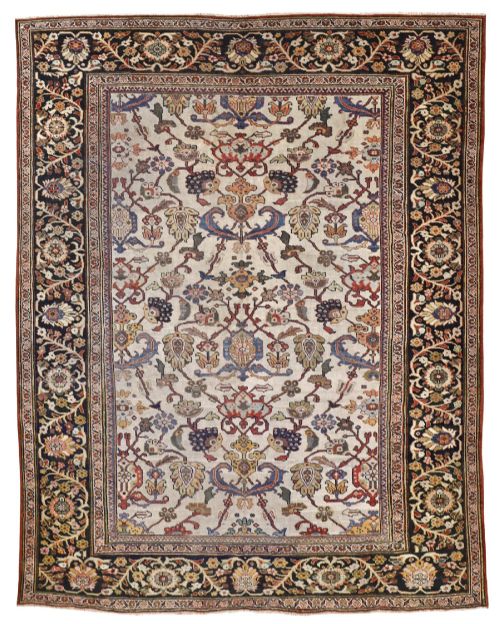
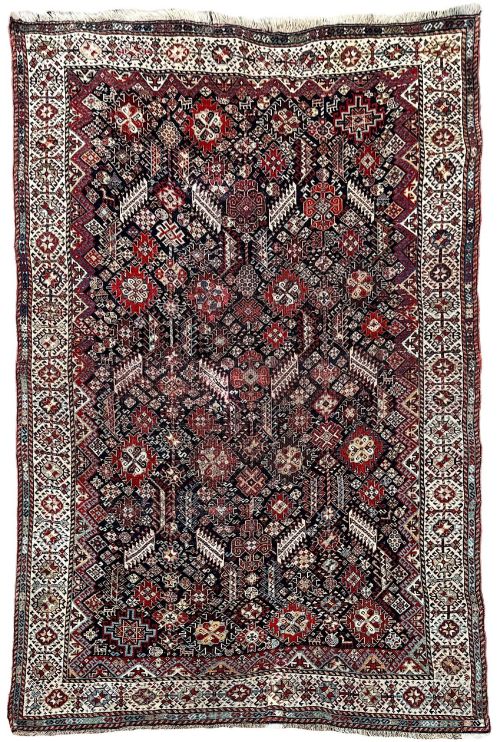
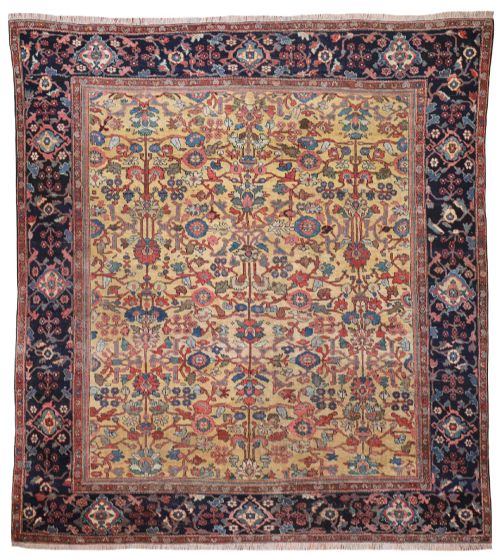
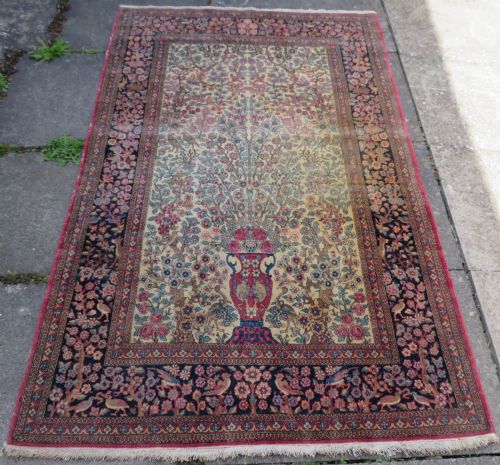
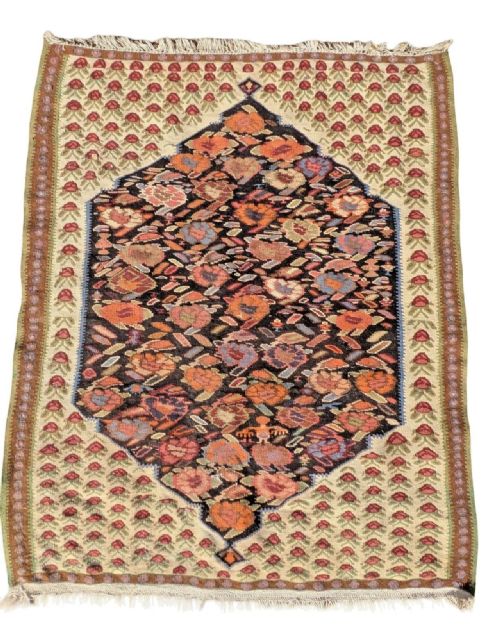
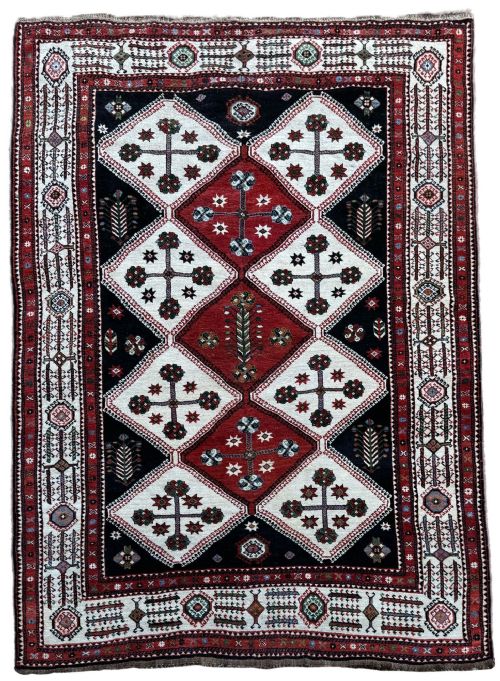
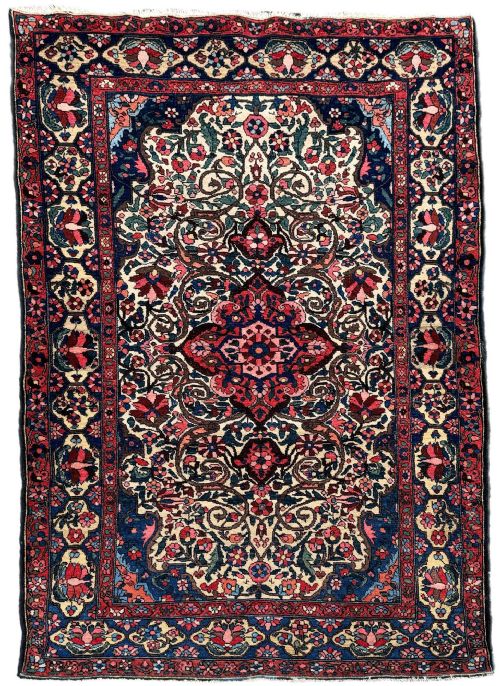
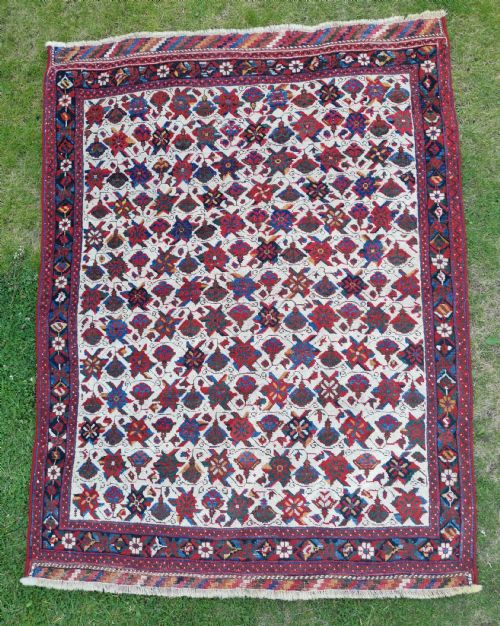
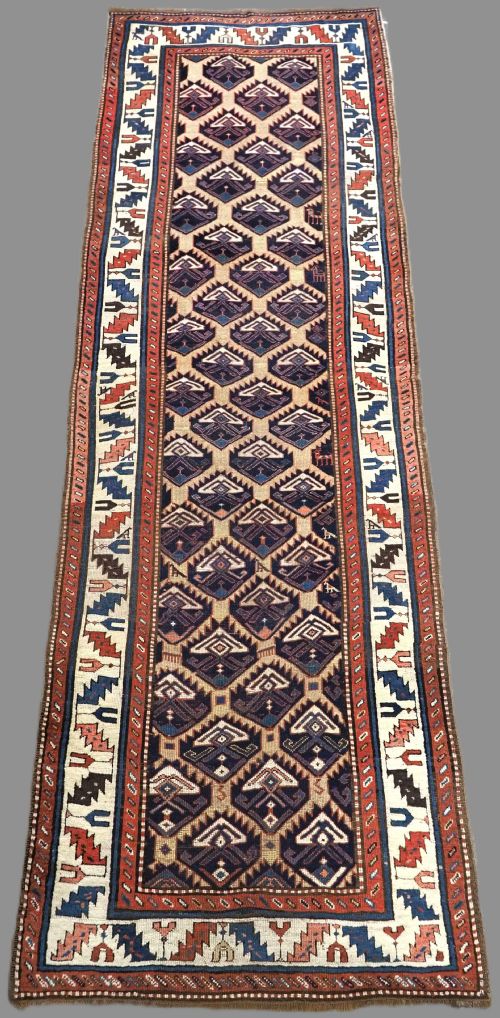
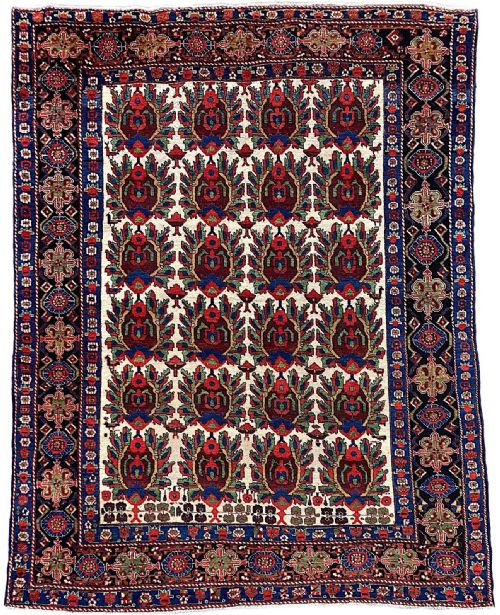
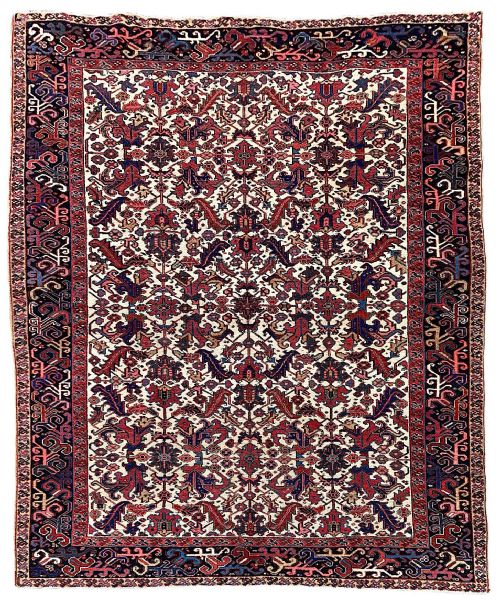


Cream Navy Persian Rug
A cream navy persian rug brings centuries of woven artistry into a room, offering durability and striking contrast for modern floors.
Cream Navy Persian Rug
When you search for a cream navy persian rug, you are looking at hand-knotted floor coverings originating from various regions and villages across Persia, spanning from the late nineteenth century into the early decades of the twentieth century. These textiles include room-size carpets, smaller area rugs, and narrow hallway runners woven by nomadic, village, and workshop artisans.
The dominant examples on this page reflect traditional regional styles such as Heriz, Mahal, Tabriz, Isfahan, and Bakhtiar, often utilising ivory or cream grounds contrasted with deep indigo or navy elements. Buyers encounter pieces ranging from geometric tribal room carpets to finely detailed floral prayer rugs and village runners.
How these rugs were made
The construction of these traditional floor coverings relies on durable natural materials, predominantly utilising wool pile hand-knotted onto sturdy cotton foundations. Artisans employed natural and early synthetic dyes to achieve the characteristic contrast between pale ivory or cream fields and dark navy motifs.
Weavers worked on upright vertical looms, securing the pile with symmetrical or asymmetrical knots before finishing the ends with kilim weaves and side cords. The density of the knotting and the preparation of the spun wool determine the structural resilience of each individual carpet or runner.
Cream Navy Persian Rug Retail Price Guide 2026
Typical asking prices for cream navy persian rug among the pieces listed under this phrase on Sellingantiques today, from the lower quarter to the upper quarter. They describe what is for sale here now, not the wider market.
Nomadic weavers sometimes tucked tiny accidental handprints or stray animal fleece into the pile as personal signatures of their journey.
What varies in quality
The standard of a woven carpet depends heavily on the precision of the knotting density and the careful balance of the wool quality used in the pile. Tighter knots allow for sharper definition in intricate floral medallions, tree of life patterns, and lattice designs.
Additionally, the artistic expression found in village and nomadic pieces contributes to their desirability, where individual weavers varied compositions without rigid cartoons. The integrity of the foundational cotton warp and weft threads dictates how well the structure holds its shape over generations of use.
The Cream Navy Persian Rug Glossary
- Warp
- The vertical threads stretched tightly on the loom that form the structural skeleton of the rug.
- Weft
- The horizontal strands passed through the warp threads between rows of knots to bind the structure together.
- Medallion
- A symmetrical central decorative ornament placed in the field of the rug.
- Boteh
- A traditional almond-shaped or paisley motif representing a floral spray or cypress tree.
- Kilim
- A flatweave technique often used on the ends of piled carpets to prevent fraying.
Cream Navy Persian Rug: Frequently Asked Questions
How do I clean an antique rug?
Gentle surface brushing and regular vacuuming without a beater bar help remove embedded grit from the wool pile. Professional specialist cleaning is recommended for deep washing to protect the natural dyes.
Water exposure should be kept to a minimum during routine maintenance to prevent the cotton foundation from shrinking or weakening over time.
Can I place a runner in a hallway?
Narrow formats and elongated runners are traditionally suited for corridors, entryways, and narrow transitional spaces between rooms. Placing a quality underlay beneath the piece prevents slipping and cushions the wool against hard floorboards.
Consider the door clearance in your hallway before selecting a runner, as older weaves can sometimes have a thicker pile profile.
What is a village rug?
Village rugs are woven by independent artisans in domestic settings rather than large urban workshops. These pieces often feature geometric interpretations and regional motifs influenced by local tribal traditions.
Because they were produced without strict master patterns, village weaves frequently display charming irregularities in symmetry and colour shading.
How do I identify different regional styles?
Regional attribution relies on examining specific design elements, such as the bold geometric corners of Heriz carpets or the fine curvilinear floral sprays found in Tabriz and Isfahan pieces. Palettes also offer clues, with certain districts favouring specific contrasts between ivory grounds and navy borders.
Familiarising yourself with the typical knot counts and wool textures helps distinguish between nomadic tribal work and organised workshop production.