


Cream Floral Settee
A cream floral settee brings period grace and upholstered comfort into a room, offering an inviting seat shaped by centuries of stylistic revival.
Cream Floral Settee
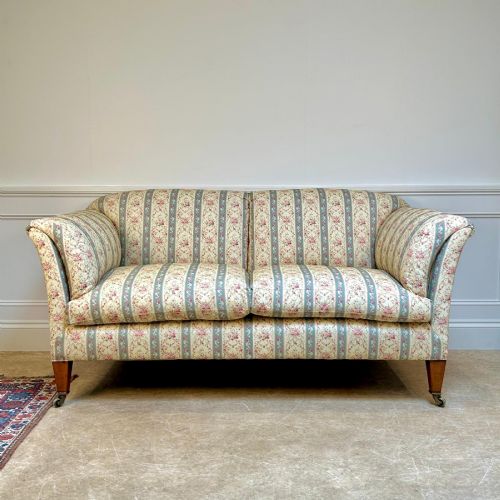
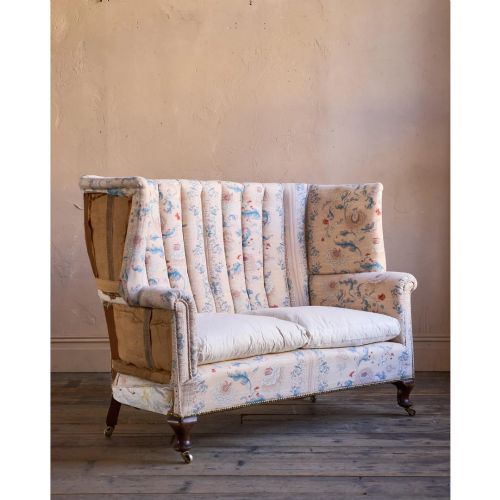
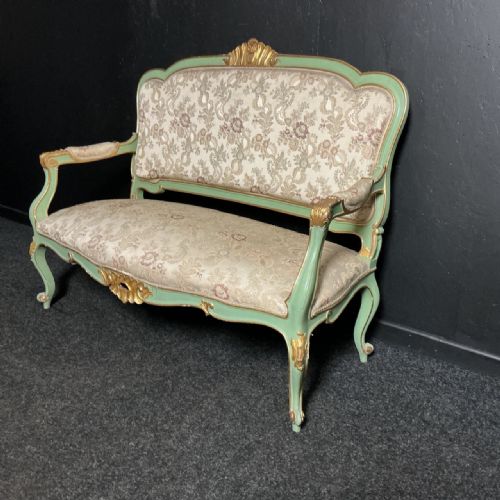
A cream floral settee unites a soft neutral fabric ground with botanical patterns across an upholstered wooden frame. Buyers searching for a cream floral settee encounter various historical interpretations ranging from Victorian creations to mid-twentieth-century French painted pieces.
The selections span distinct centuries and regional revivals, including Louis XV and Louis XVI styles alongside classic Chippendale and Sheraton forms. Most examples date from the nineteenth century, utilising traditional framework designs such as camel backs, wingbacks, and triple-back configurations.
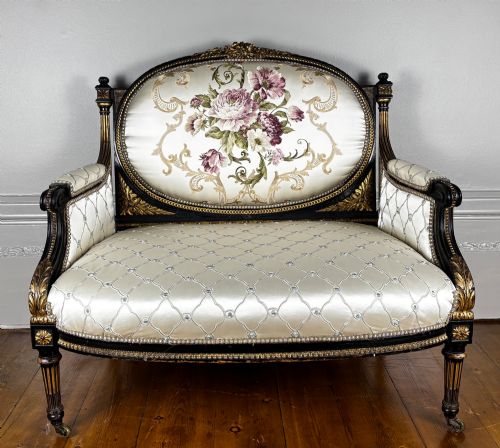
Makers and workshops of the period applied diverse decorative treatments to the wooden structures, ranging from carved mahogany and ebonised finishes to decorated satinwood. These seating forms served formal reception spaces and studies, combining robust timber foundations with layered textile coverings.
Materials and construction methods
Frameworks rely upon structural timbers such as mahogany, walnut, and ebonised wood, shaped through traditional joinery and hand carving. Craftsmen incorporated detailed elements like hawk claw and ball feet, fluted woodwork, and parcel gilding to enrich the visible timber.
Upholstery techniques utilise durable internal foundations including hessian support layers beneath fabric upholstery. Decorative surfaces feature hand-carved details or marquetry inlay, binding the textile elements to the carved wooden skeleton.
Current selections feature pieces primarily from the nineteenth century, alongside examples from 1880, 1890, 1900, and 1960.
Assessing quality and execution
The distinction between standard production and exceptional work rests upon the crispness of the hand carving and the selection of timber. Superior pieces display refined proportions in elements like camel backs and fluted wingbacks, where the timber grain and applied decoration complement the silhouette.
Integration of the upholstery with the frame indicates workshop proficiency, particularly in how fabric meets carved wooden mouldings. Finer examples combine intricate woodwork, such as marquetry or parcel gilt highlights, with robust underlying joinery that maintains structural integrity.
Howard & Sons Chaplin
The Cream Floral Settee Glossary
- Camel back
- A traditional sofa back featuring a graceful, undulating curve resembling a camel's hump. This contour provides both aesthetic elegance and ergonomic support.
- Ebonised wood
- Timber treated with chemical or pigment processes to resemble dense, dark ebony. This finish gained popularity during the Victorian era for formal seating.
- Marquetry
- The art of applying small pieces of veneer to a structure to form decorative patterns. Dutch workshops frequently employed this technique on nineteenth-century seating.
- Parcel gilt
- A decorative method where specific carved details receive a thin application of gold leaf while the surrounding wood remains exposed. It highlights the craftsmanship of the frame.
- Wingback
- A high-backed chair or sofa featuring protective side panels designed to shield occupants from drafts. Nineteenth-century examples often incorporate fluted woodwork on the legs.
Cream Floral Settee: Frequently Asked Questions
What defines a cream floral settee?
A cream floral settee is an upholstered seating piece featuring a pale fabric ground patterned with botanical motifs. These items combine historic wooden frames with decorative textile coverings.
They appear across various nineteenth-century and revival styles, serving as both functional furniture and decorative focal points within interior spaces.
How do I identify nineteenth-century styles?
Nineteenth-century seating often incorporates revival aesthetics inspired by earlier periods, such as Chippendale, Sheraton, and Louis XVI designs. Examine the woodwork for hand-carved details and traditional joinery methods characteristic of the era.
Makers frequently utilised mahogany, satinwood, and ebonised timber, applying decorative techniques like marquetry or parcel gilding to enrich the frame.
Where were these settees used historically?
Historically, such settees occupied formal drawing rooms, large salons, and private study libraries. They provided comfortable seating for multiple occupants during social gatherings and daily domestic life.
Their substantial construction and decorative upholstery suited the reception spaces of grand residences and period homes.
How do I care for antique upholstery?
Preserving fabric upholstery requires gentle, regular vacuuming with a soft brush attachment to remove dust without stressing the fibres. Protect the textile from direct sunlight to prevent fading of the floral patterns.
Maintain stable indoor humidity levels to safeguard the underlying timber frame and prevent the wood from drying out or cracking.