


Cream Earthenware Figurine
These cream earthenware figurine examples bring vernacular portraiture and animal studies into the room with direct charm.
Cream Earthenware Figurine
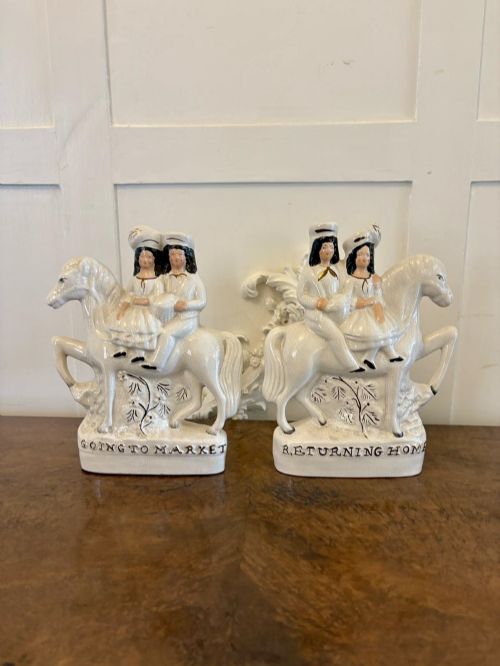
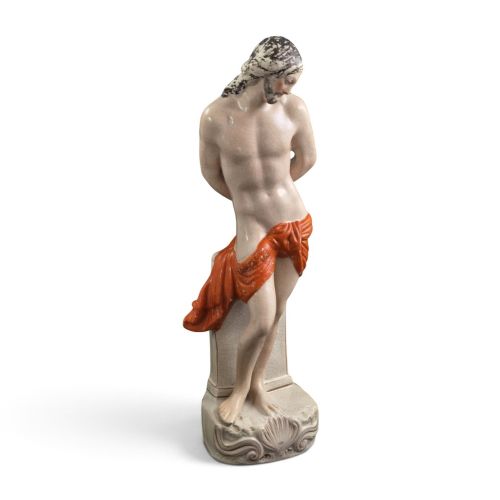
A cream earthenware figurine represents a distinct branch of British pottery, spanning Victorian Staffordshire dogs and lions alongside earlier Scottish Portobello work and Welsh cream jugs. Buyers seeking a cream earthenware figurine encounter animal pairs, royal portraits, and figures on horseback modelled with traditional vernacular energy.
The objects date from the Georgian period through the nineteenth century, including specific decades such as eighteen-sixty and eighteen-eighty. Most pieces originate from English potteries or Scottish works, taking the form of flat back figures, poodles, cats, and cows.
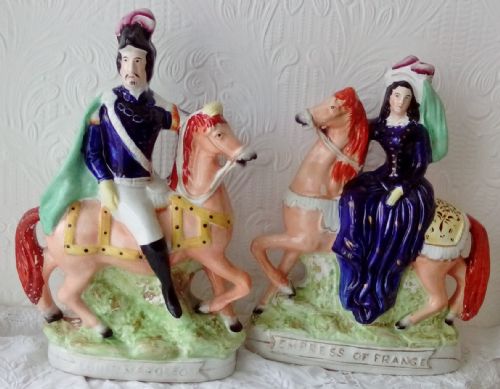
Makers such as Wooley appear among Staffordshire traditions, producing pairs and singular decorative objects for domestic mantelpieces. The range encompasses both primitive folk art expressions and finely detailed portrait pieces like Napoleon III and Empress Eugenie.
Materials and construction
Techniques relied on slip casting or pressing into moulds, followed by hand painting and low-temperature firing. The glaze provides a smooth surface that interacts with the underlying earthenware body, occasionally showing craquelure or pooling in recessed areas.
Listings feature earthenware and ceramic materials decorated with enamel paint and gilt, spanning the Victorian and Georgian periods.
Assessment of quality
Proportion and scale distinguish superior figures, particularly in matched pairs where symmetry and balance matter. The preservation of the original glaze and the integrity of the ceramic body determine the standing of an individual piece.
Wooley Staffordshire
The Cream Earthenware Figurine Glossary
- Earthenware
- A porous ceramic body fired at lower temperatures than stoneware or porcelain. It requires a glaze to achieve impermeability and forms the foundational material for nineteenth-century figures.
- Flat back
- A construction method where the rear of the figure is unmodelled and left flat or partially glazed. This allowed pieces to sit flush against mantelpieces and walls.
- Cow creamer
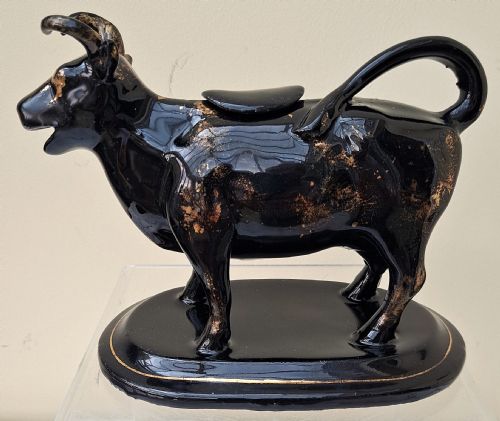
- A hollow ceramic vessel in the form of a cow with an opening on the back and a spout through the mouth. These domestic pieces combine utility with figurative modelling.
- Portobello
- A Scottish pottery tradition known for primitive folk art figures produced around the turn of the nineteenth century. These items display distinct regional modelling and glazing characteristics.
- Enamel
- Vitreous paints applied over the fired glaze and subjected to a secondary low-temperature firing. This technique permitted bright colour palettes on nineteenth-century pottery.
Cream Earthenware Figurine: Frequently Asked Questions
Are these figures glazed on the back?
Many nineteenth-century Staffordshire pieces feature flat backs that remain unglazed or receive only a minimal protective wash. This construction method suited mantelpiece placement where only the front and sides were visible.
Fully modelled figures typically receive a complete glaze covering the entire ceramic body.
What periods do these figures represent?
The available pieces span the Georgian era through the Victorian period, with particular concentration in the mid-to-late nineteenth century. Dates range from early regional pottery traditions around eighteen-hundred to Edwardian examples.
Stylistic shifts reflect changing domestic tastes across these decades.
How do I distinguish pairs from single pieces?
Matched pairs of dogs, lions, or cats were designed to sit symmetrically at either end of a fireplace or shelf. Each animal mirrors the posture and orientation of its companion.
Single figures, such as portrait subjects or cow creamers, were produced as standalone decorative or functional items.