

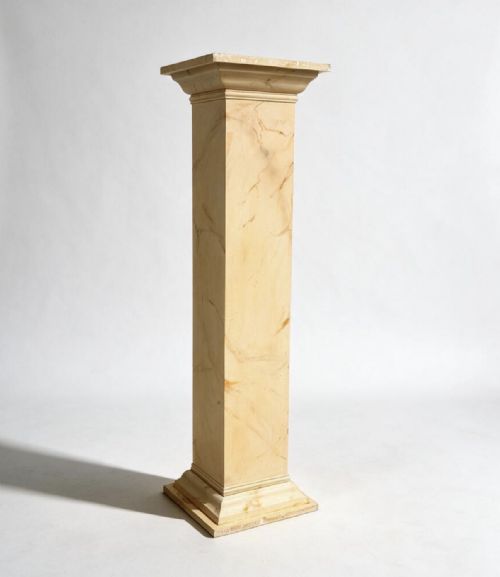
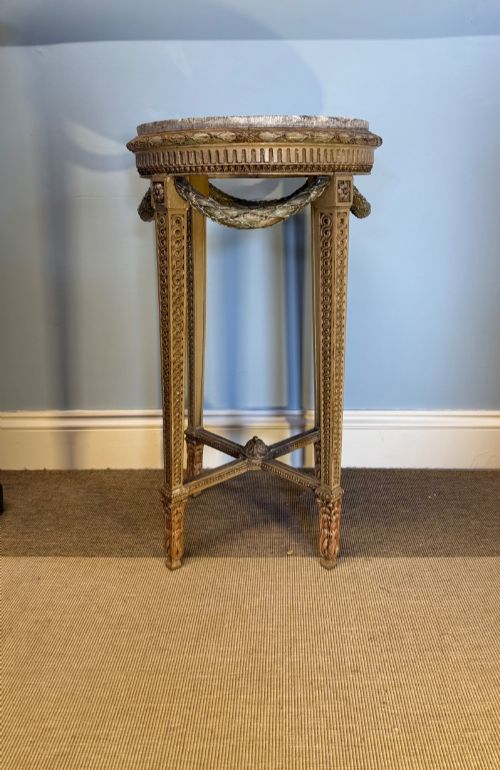
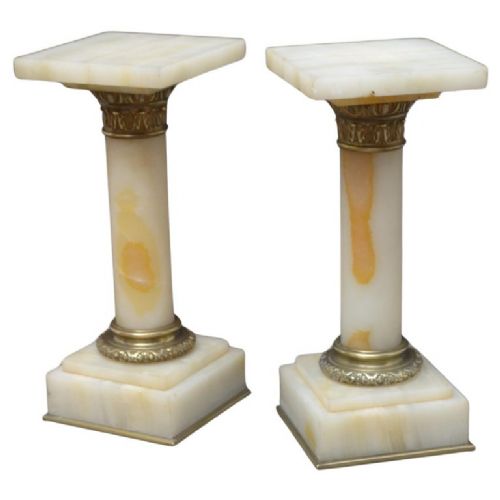


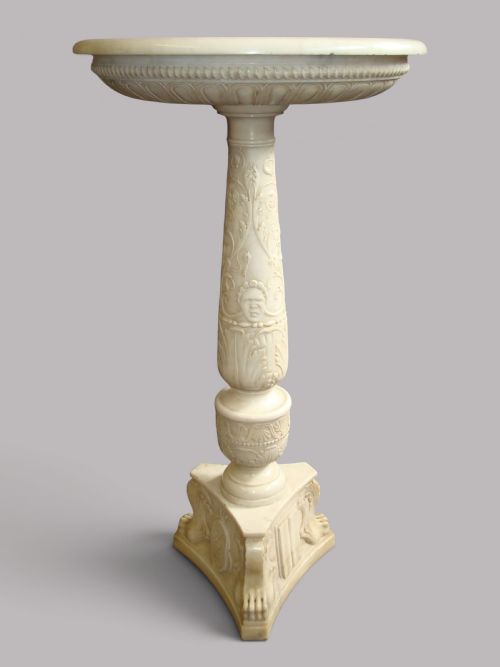


Cream Display Pedestal
A cream display pedestal lifts a bust or urn to eye level, bringing classical balance and proportion to a room.
Cream Display Pedestal
A cream display pedestal serves as a stable column or column-like support for sculpture, plants, and decorative objects. When you search for a cream display pedestal, you encounter architectural forms designed to elevate items within an interior space.
The selection on this page draws from multiple periods, including the Georgian, Victorian, Edwardian, and 1930 eras. These pieces appear as cylindrical sculpture stands, plant stands, and classical columns with varied surface treatments.
Origins span English, French, Italian, and Swedish workshops, taking the form of single columns and paired stands. The dominant light finishes reflect Neoclassical, Louis XVI, and Gustavian design influences.
How they were made
Materials include carved marble, alabaster, onyx, terracotta, and turned wood finished with paint or faux marble effects. Stonework relies on precision cutting and polishing to create smooth cylindrical shafts.
Metal components such as brass, gilt bronze, and ormolu collars add structural accents and decorative mounts to stone and wooden columns. Painted plaster and hardwood options demonstrate alternative regional moulding and joinery techniques.
Cream Display Pedestal Retail Price Guide 2026
Typical asking prices for cream display pedestal among the pieces listed under this phrase on Sellingantiques today, from the lower quarter to the upper quarter. They describe what is for sale here now, not the wider market.
Listings feature natural stone materials including onyx, alabaster, and marble alongside painted wood and plaster.
What varies in quality
The distinction between standard utility stands and finer display columns lies in the selection of raw materials and the precision of the carving. Natural stone columns featuring varied veining and detailed ormolu mounts sit at the upper end of the range.
Surface execution also defines the tier of a piece, whether through hand-applied faux marble paint, carved alabaster detail, or cleanly turned wooden sections. Proportion and balance determine how successfully a pedestal holds a heavy urn or sculpture.
The Cream Display Pedestal Glossary
- Ormolu
- Gilt bronze mounts applied to furniture and decorative columns. This technique involves coating bronze in a finely ground gold-mercury amalgam and heating it.
- Tazza
- A shallow bowl or cup mounted on a stem and foot, sometimes displayed atop a pedestal. It functions as a classical decorative centrepiece.
- Neoclassical
- A style drawing on the art and architecture of classical antiquity. It favours clean architectural lines, symmetry, and classical motifs.
- Alabaster
- A fine-grained, translucent stone used for carving decorative stands and vessels. Its softness allows for intricate detail work.
- Gustavian
- The Swedish interpretation of French Neoclassical design, known for light painted finishes and restrained ornamentation.
Cream Display Pedestal: Frequently Asked Questions
What can I display on a pedestal?
These columns support heavy items such as marble busts, bronze sculptures, and large ceramic urns. They also function as plant stands for trailing foliage.
Weight distribution matters when placing objects on antique columns. Ensure the base of your item sits squarely within the top surface diameter of the stand.
How do I clean a stone column?
Dust marble, onyx, and alabaster regularly with a soft, dry cloth. Avoid harsh chemical cleaners that can etch polished stone surfaces.
Water can damage porous materials like plaster and painted wood. Use only a barely damp cloth for stubborn marks on finished timber.
Are pedestals stable enough for daily use?
Most antique columns offer a wide base designed to maintain balance under heavy decorative loads. Heavier stone versions provide natural stability on solid flooring.
Placement in high-traffic hallways requires caution. Position stands away from swinging doors and active walkways to prevent accidental tipping.
How do I identify the period?
Look to the decorative vocabulary and material choices to suggest an era. Neoclassical brass collars and crisp marble carving often point to the nineteenth century.
Turned wooden columns and painted plaster finishes frequently align with later Edwardian and 1930 aesthetics. Compare the turning style with known furniture dates.