


Cream Alabaster Figures
Cream alabaster figures bring the soft translucency of carved stone into your home, capturing classical grace in portrait busts and full-length sculptures.
Cream Alabaster Figures
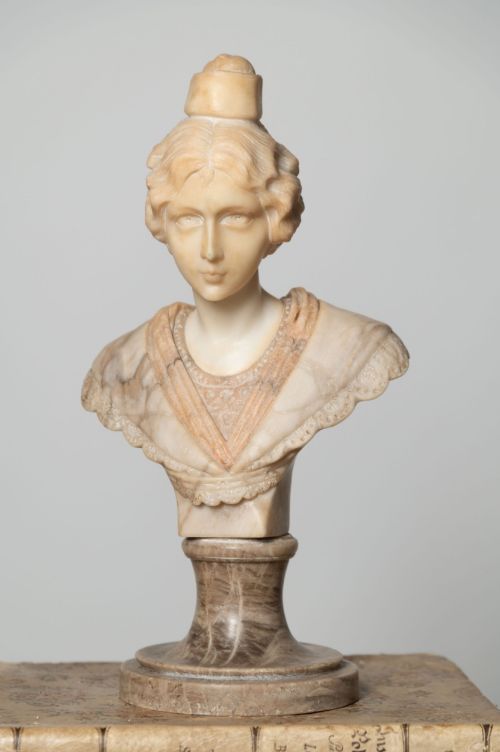
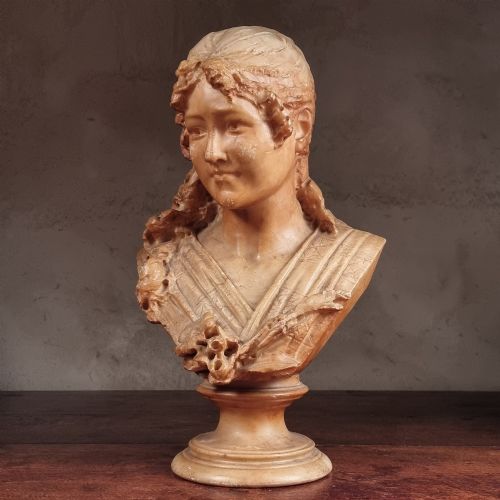
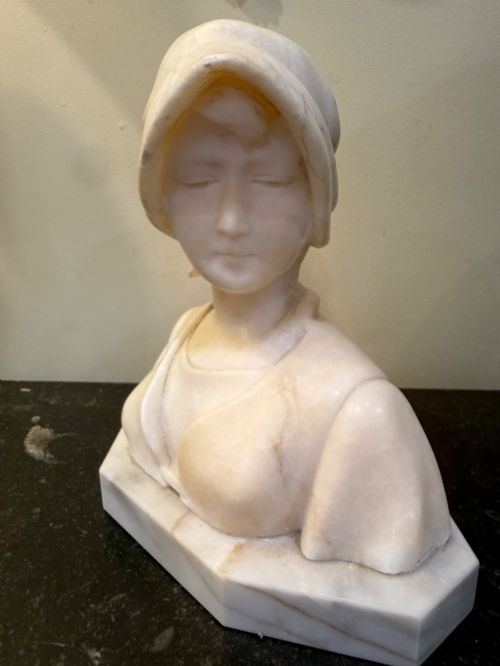
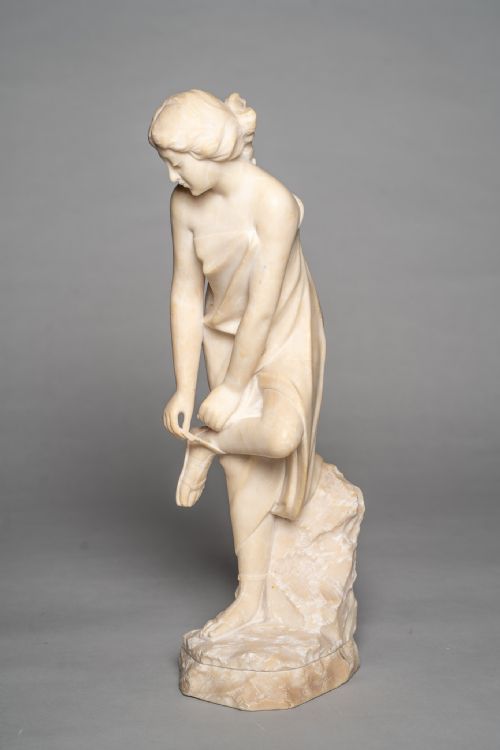
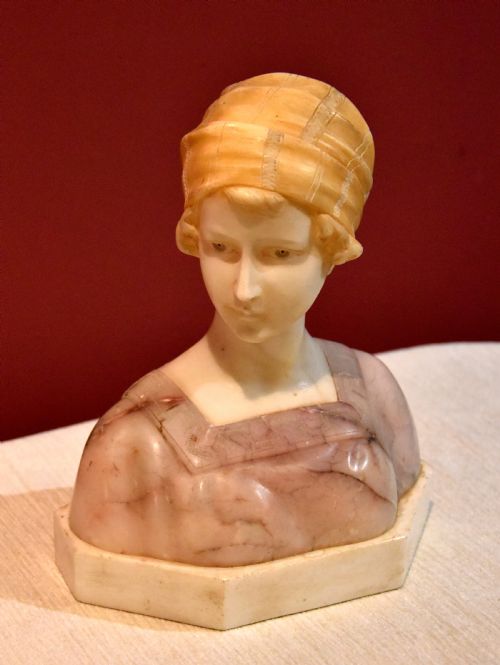
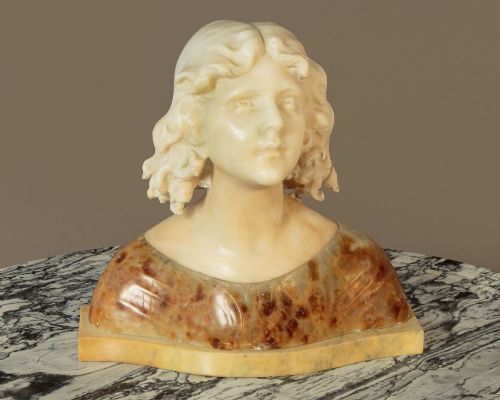
Cream alabaster figures comprise carved portrait busts, female figures, and classical sculptures dating from the nineteenth and early twentieth centuries. When you search for cream alabaster figures, you encounter works spanning the Victorian, Art Nouveau, and Art Deco periods, predominantly originating from French and Italian studios.
The subjects range from allegorical figures and mythological goddesses like Hestia to young women and gentlemen portrayed in realistic detail. Portrait busts dominate the selection, often mounted on contrasting marble or stone bases to elevate the carved stone.
Pieces frequently reflect the aesthetic movements of their era, shifting from Victorian classical formality through the flowing lines of Art Nouveau to the stylised geometry of Art Deco.
How they were made
Sculptors carved these pieces directly from blocks of natural alabaster, sometimes combining the soft stone with marble, metal, brass, or wood for structural support and decorative bases. The material requires meticulous hand-carving and polishing to achieve the characteristic smooth, translucent surface that mimics human skin.
Many significant works bear signatures or foundry markings, indicating production by skilled artisans and prominent European workshops during the late nineteenth and early twentieth centuries.
Several figures depict historical deities like Hestia, bringing ancient domestic mythology straight onto the Victorian sideboard.
What varies in quality
Quality rests upon the depth of the carver's skill, evident in the natural rendering of drapery, hair, and facial expression. Superior examples display subtle variations in tone and meticulous hand-detailing that bring the stone to life.
The choice of materials also dictates the standing of a piece, particularly where alabaster is paired with fine marble or incorporated with metal elements and signed by known sculptors.
A.Gamay·Auguste Henri Carli·Fritz Kochendorfer·Pugi·Cipriani·Gugielmo Pugi
The Cream Alabaster Figures Glossary
- Alabaster
- A fine-grained, soft stone prized for its translucency and pale colour. It is easily carved into detailed portrait busts and figures.
- Portrait bust
- A sculpted representation of a person from the chest or shoulders up. This format was especially popular for capturing likenesses in the nineteenth century.
- Art Nouveau
- A decorative style characterised by flowing, organic lines and natural motifs. It heavily influences figures produced around the turn of the twentieth century.
- Art Deco
- A design style favouring stylised geometry and sleek forms. It emerges in sculptures dating from the nineteen-twenties.
Cream Alabaster Figures: Frequently Asked Questions
How do I clean cream alabaster figures?
Alabaster is a remarkably soft and porous stone that absorbs moisture and dirt readily. Dust the surface gently with a dry, soft cloth and avoid water or chemical cleaners entirely.
Keeping these figures away from direct sunlight and damp environments preserves the delicate polish of the stone. Professional restoration is recommended if the surface becomes heavily soiled.
Where should I display these sculptures?
These sculptures suit stable, level surfaces such as sturdy sideboards, mantelpieces, or dedicated pedestals. Ensure the display area is out of high-traffic zones to prevent accidental knocks against the soft stone.
Positioning the pieces near natural light can enhance the translucent quality inherent in carved alabaster. Adequate support beneath heavy marble and stone bases is essential.
How can I tell the period of a figure?
Stylistic details provide the clearest indication of a piece's age, transitioning from formal Victorian classical designs to flowing Art Nouveau forms. Hairdos, clothing styles, and signatures often align with the manufacturing decade.
Examining the base materials and mounting techniques also helps contextualise the era of production. Twentieth-century works frequently adopt the geometric lines associated with Art Deco.
What is the difference between alabaster and marble?
Alabaster is significantly softer than marble and possesses a distinct waxy translucency when polished. This softness allowed sculptors to achieve fine details in hair and drapery.
Marble offers greater hardness and durability, which is why makers frequently used it for the supporting bases of alabaster busts. The two stones are often combined within a single sculpture.