
Crapaud Armchairs Pair
Crapaud armchairs pair options bring low-slung, upholstered French seating into a room.
Crapaud Armchairs Pair
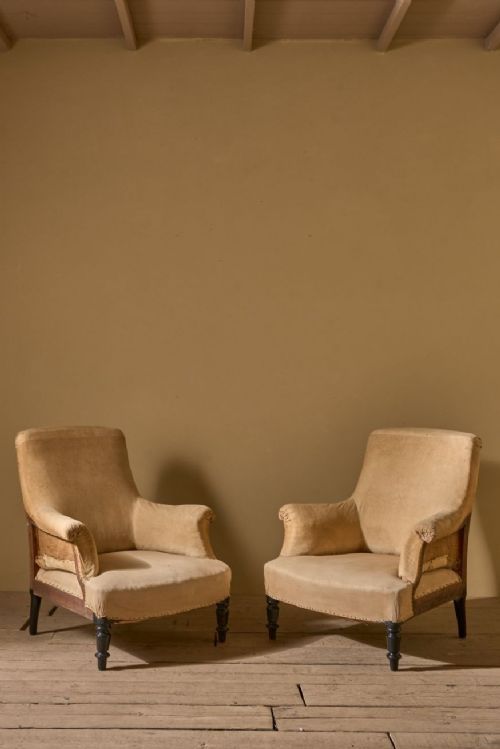
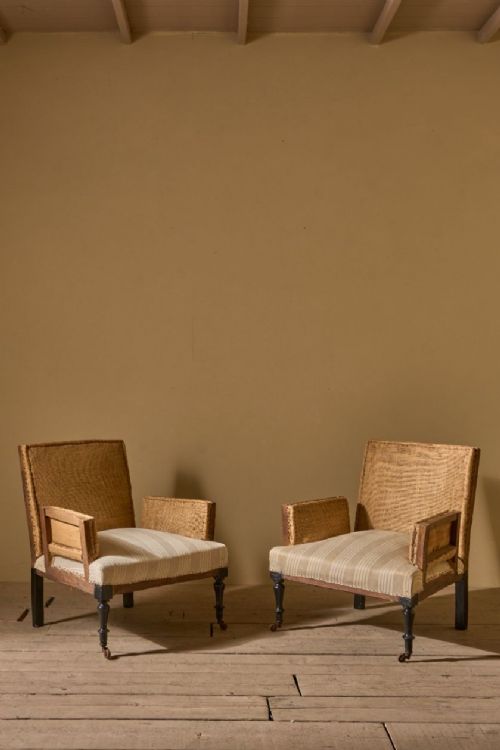
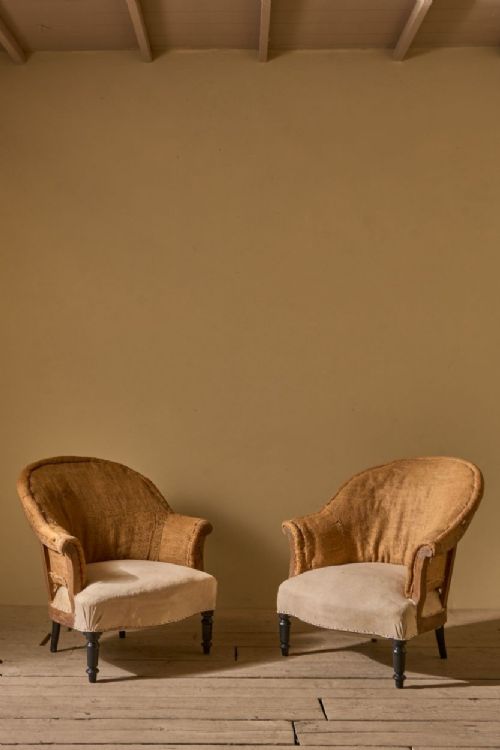
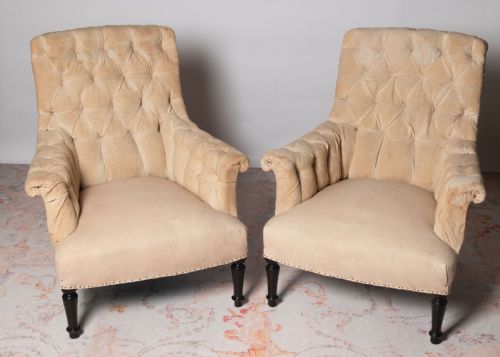
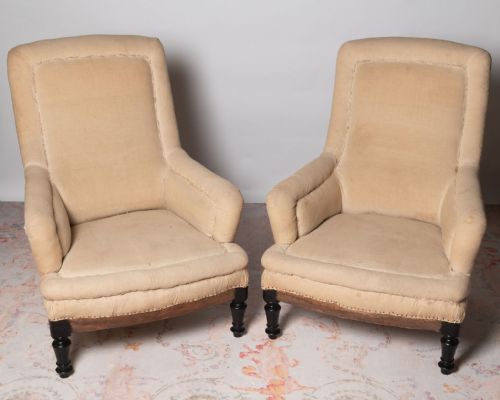
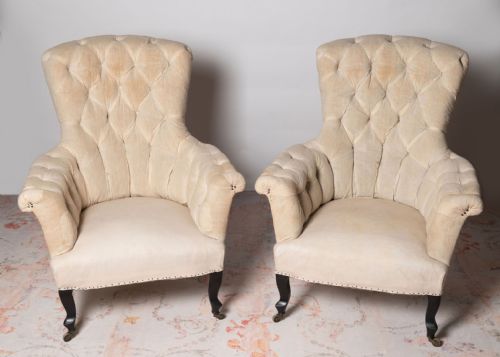
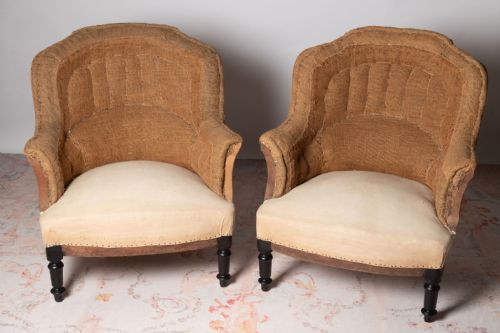
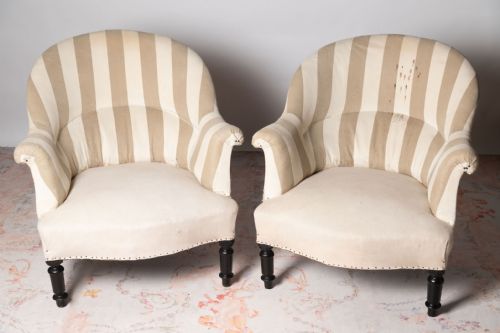
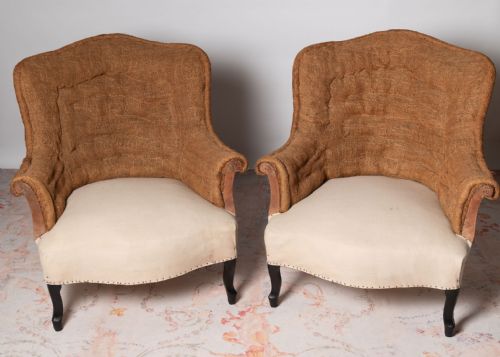
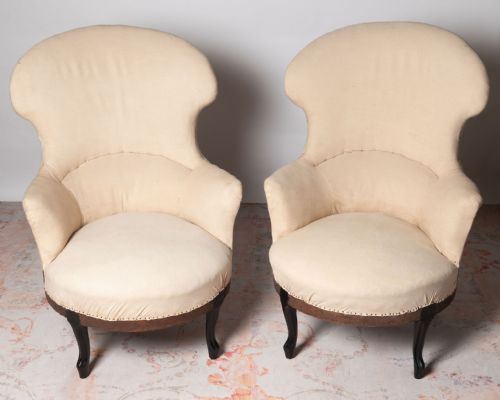
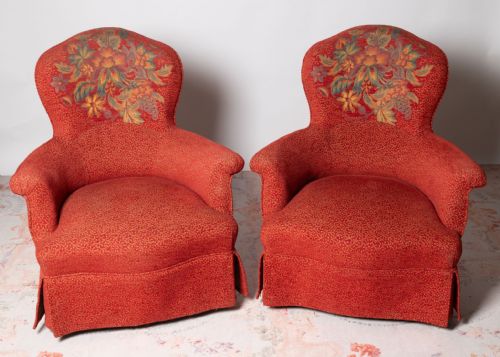
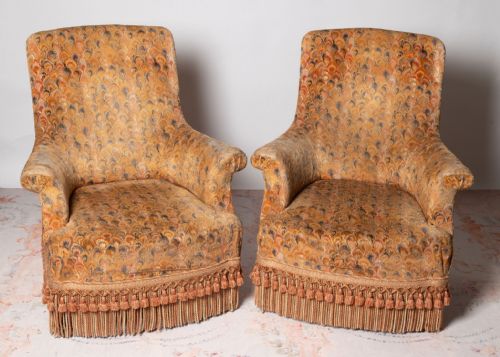
When you search for a crapaud armchairs pair, you are looking at low, fully upholstered seating designed for comfort and intimacy. The pieces here span the nineteenth century, nineteen hundred, and nineteen thirty, drawing primarily from French provincial and Napoleon III traditions. Most examples appear as tub chairs, square-sided forms, or low boudoir seating.
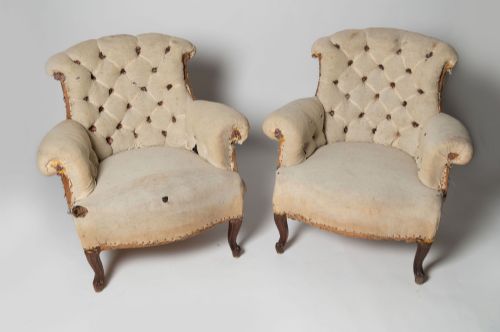
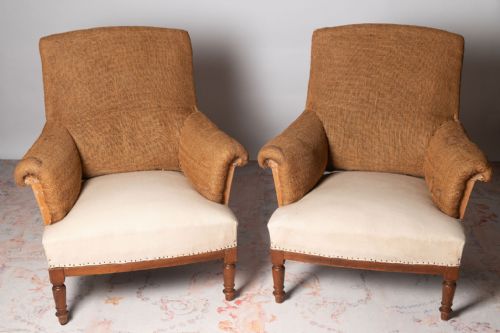
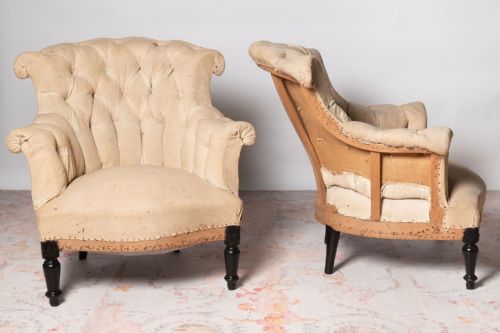
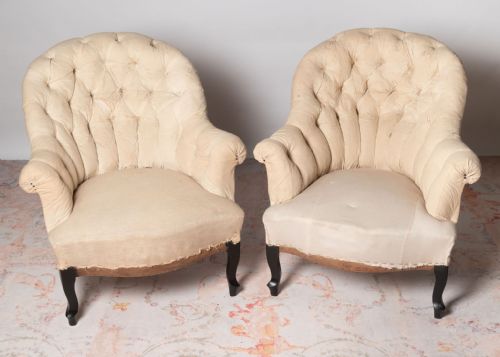
The nineteenth-century pieces dominate the selection, often featuring low profiles that sit close to the floor. Many examples arrive stripped down in calico, hessian, linen, or cotton, ready for final upholstery, while others display high buttoned curved backs or plain square backs. The pairing means matching dimensions and silhouettes, designed originally for bedrooms and private salons.
What varies in quality
Quality rests in the integrity of the wooden frame and the precision of the low proportions. A sturdier beech foundation and well-defined spring tension separate robust examples from those requiring extensive structural intervention.
The finish of the upholstery work, whether raw hessian or finished ticking, alters the tactile weight of the piece. Matching symmetry within the pair remains vital, as small discrepancies in height or back contour affect how the two chairs sit together in a room.
Listings span the nineteenth century, nineteen hundred, and nineteen thirty, predominantly featuring French provincial and Napoleon III styles.
The Crapaud Armchairs Pair Glossary
- Crapaud
- French for toad, describing the low, squat, and fully upholstered shape of these armchairs. The style hugs the floor with minimal visible wood.
- Tub chair
- An armchair with a continuous curved back and arms forming a single circular or semi-circular enclosure. This form provides an enclosed, supportive seat.
- Hessian
- A coarse woven fabric, typically made from jute fibres, used historically as a foundational layer for stuffing and springs. It provides the hidden support beneath decorative top covers.
- Napoleon III
- A nineteenth-century French design period associated with eclectic revivals and deep, luxurious upholstery. Pieces from this era often emphasise comfort through padded forms.
- Calico
- A plain-woven cotton fabric used as an underlying layer to contain stuffing before the final decorative textile is applied. Many unfinishing frames are sold in this pale cotton state.
Crapaud Armchairs Pair: Frequently Asked Questions
What is a crapaud armchair?
A crapaud armchair is a low-slung, heavily padded French seat designed during the nineteenth century. The name translates to toad, reflecting the squat, close-to-the-ground silhouette.
These chairs prioritise plush comfort, featuring fully upholstered frames that hide most of the internal wood structure. They function as intimate seating for bedrooms and small sitting areas.
How were these chairs used originally?
These seats served primarily in nineteenth-century French boudoirs, dressing rooms, and private salons. Their low height accommodated the heavy skirts and fashions of the period.
Pairs were positioned near fireplaces or conversation areas where comfortable, low seating encouraged relaxed gathering.
Why are some listed in plain calico or hessian?
Many nineteenth-century examples survive with their internal upholstery layers exposed because previous fabric layers degraded over time. Stripping the chair down to calico or hessian reveals the raw construction.
This leaves the final fabric choice open, allowing buyers to recover the pieces in a textile that suits their specific interior scheme.
How do I distinguish Napoleon III examples?
Napoleon III pieces date from the mid to late nineteenth century and typically feature pronounced buttoning, curved backs, or precise square profiles. The upholstery work is dense and elaborate.
They rely on beech frames buried beneath layers of springs, stuffing, and tightly pulled outer fabrics, often finished with brass tacking along the base.