



Cranberry Wine Glasses
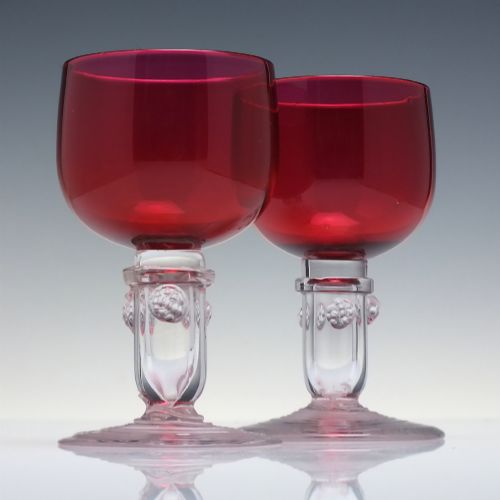
These cranberry wine glasses bring deep, translucent red tones to the table, pairing rich colour with Victorian elegance.
Cranberry Wine Glasses
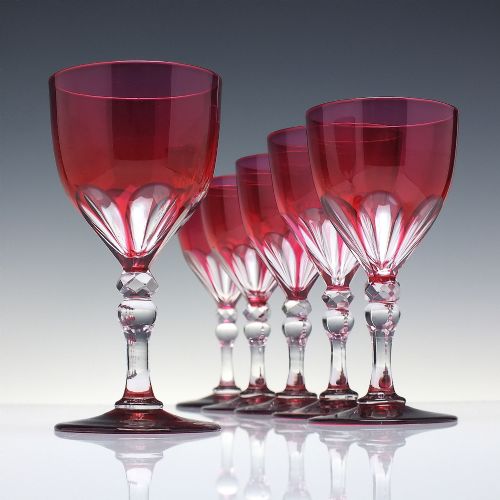
Cranberry wine glasses are drinking vessels defined by their distinctive pinkish-red glass, which gained immense popularity during the Victorian and Edwardian eras. When searching for cranberry wine glasses, buyers encounter hand-blown stemware sets alongside matching decanters and serving bottles from the nineteenth century.
The pieces appearing on this page span from the 1850s through to the early 1900s, reflecting Victorian and Edwardian craftsmanship. Sets of six glasses predominate, often accompanied by related glassware collections and claret jugs.
Originating predominantly from English and Bohemian workshops, these items showcase the rich decorative tastes of the period. Buyers most frequently meet matched sets of table stemware alongside individual decanters featuring engraved or overlaid glass.
How they were made
These glasses and decanters rely on blown glass and cut crystal techniques, achieved by introducing gold into the molten glass mixture to create the characteristic cranberry colour. Artisans then shaped the vessels by hand, resulting in subtle variations across individual stems.
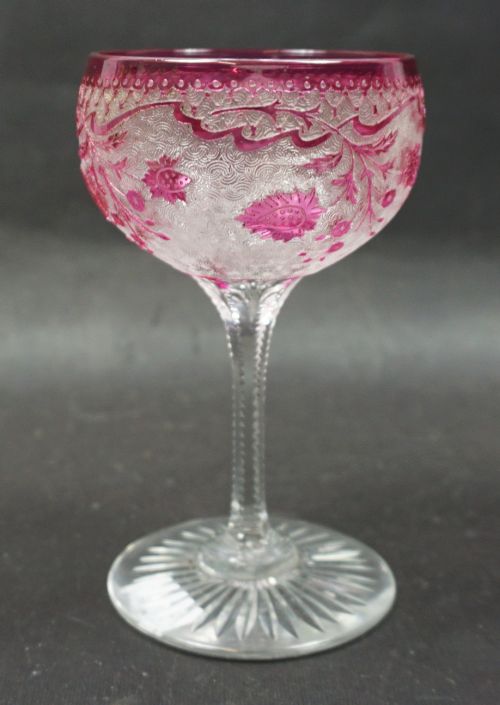
Many pieces incorporate overlay methods, fusing layers of clear and coloured glass before cutting through the outer layer to expose patterns beneath. Engraving further embellishes the surfaces, depicting birds among vines and fruiting vine motifs.
Mounts and hardware utilise silver plate or sterling silver, particularly on decanters and serving bottles dating towards the Edwardian period. This combination of coloured glass and precious metal mounts defines the manufacturing standard of the era.
Cranberry Wine Glasses Retail Price Guide 2026
Typical asking prices for cranberry wine glasses among the pieces listed under this phrase on Sellingantiques today, from the lower quarter to the upper quarter. They describe what is for sale here now, not the wider market.
Materials recorded across the inventory include cranberry glass, clear glass, ruby glass, cut crystal, and silver plate.
What varies in quality
Quality in these glasses rests upon the depth and evenness of the colour throughout the bowl and stem. Superior examples display a vibrant, consistent hue without cloudiness or heavy bubbles in the material.
The crispness of the hand-cutting and engraving separates finer decanters and stemware from standard productions. Deeply carved vine motifs and sharply defined facet cuts demonstrate superior artisanal skill.
Completeness within a set alters desirability, particularly when matched sets of six or fifteen survive intact alongside their original decanters. The weight and balance of the glass in the hand also indicate the standard of the maker's output.
The Cranberry Wine Glasses Glossary
- Cranberry Glass
- A type of transparent glass coloured by the addition of gold chloride to the molten batch. It yields shades ranging from light pink to a deep ruby red.
- Overlay Glass
- A technique where a layer of coloured glass is fused over a base of clear glass. Craftsmen cut away portions of the outer layer to create contrasting patterns.
- Hock Decanter
- A tall bottle specifically designed for serving hock or white wine. These vessels frequently feature colour-over-crystal construction.
- Champagne Coupe
- A shallow, broad-bowled glass used for sparkling wine. Victorian examples often feature engraved bowls and matching feet.
- Claret Jug
- A large serving vessel for red wine, usually fitted with a handle and a hinged mount made from silver plate or sterling silver.
Cranberry Wine Glasses: Frequently Asked Questions
Are these glasses safe for daily use?
While sturdy enough for careful handling, nineteenth-century glass benefits from occasional rather than daily use. Hand-blown pieces possess delicate rims that require mindful placement.
Treating them as special occasion tableware preserves their condition and prevents accidental chips on modern surfaces.
How can I tell Victorian glass from Edwardian pieces?
Victorian examples tend to feature rich, saturated cranberry tones and heavier hand-engraved floral motifs. Edwardian pieces often incorporate refined silver mounts marked with early twentieth-century hallmarks.
Examining the pontil mark on the base also helps establish the manufacturing period and working method.
What is the difference between cranberry and ruby glass?
Cranberry glass achieves its pinkish-red hue specifically through gold content, resulting in a transparent, luminous quality. Ruby glass often utilises different mineral compounds for a darker, denser appearance.
Listings sometimes group these terms together, but the underlying colour saturation usually distinguishes the two.