

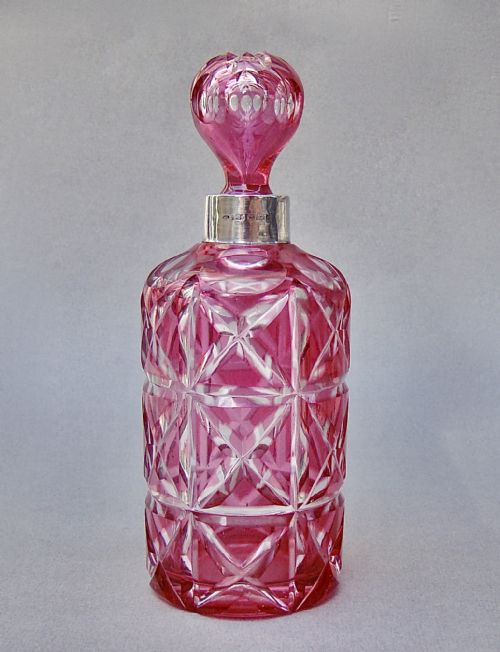

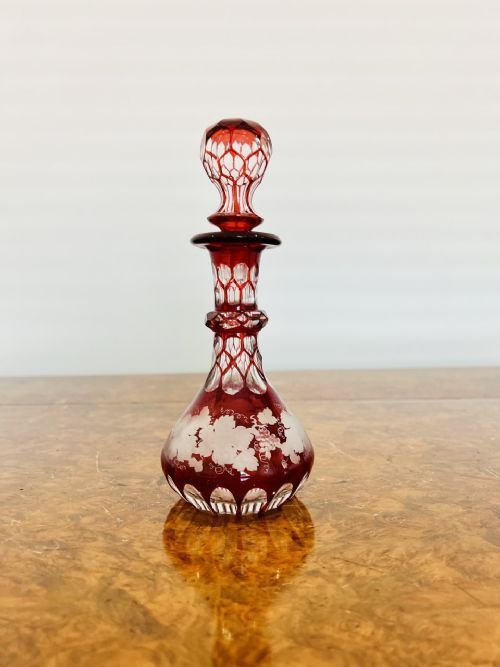


Cranberry Glass Scent
These cranberry glass scent pieces bring rich pink-red tones and silver mounts to dressing tables from the Victorian and Edwardian eras.
Cranberry Glass Scent
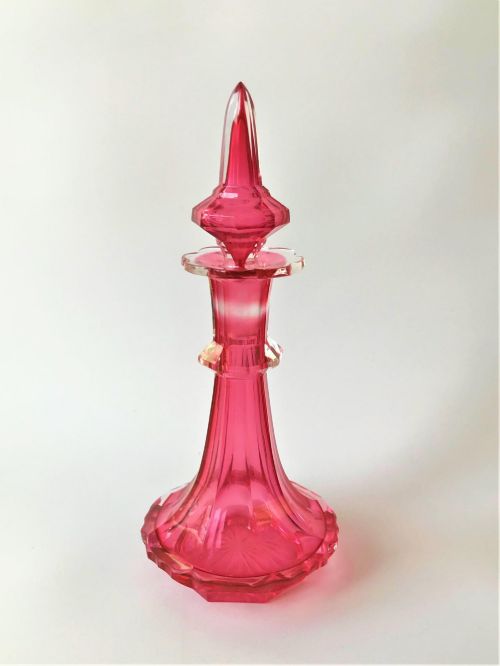
When you search for cranberry glass scent, you are looking at small personal containers designed for perfume or smelling salts during the nineteenth and early twentieth centuries. The selection here centres primarily on Victorian and Edwardian examples, spanning decades from the 1850s to the 1910s.
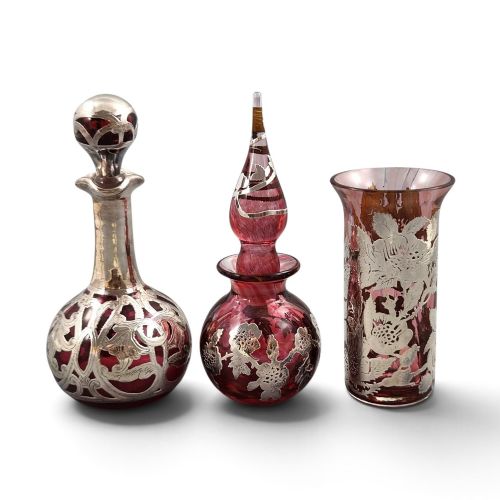
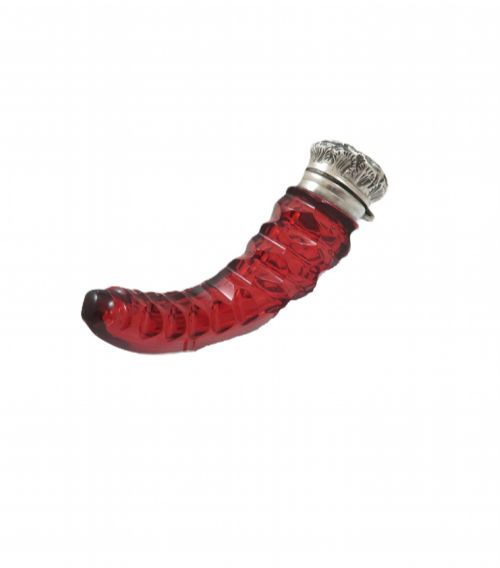
The most common forms you will meet on this page are individual scent bottles fitted with hinged or screw-top silver mounts, alongside occasional vanity ensembles and perfume bottles. These range from pocket-sized icicle and penny shapes to larger Bohemian overlay pieces.
Origins stretch across British workshops in Birmingham, French glasshouses from the nineteenth century, and Bohemian makers known for layered glass techniques. Each piece reflects the dressing table habits of its period, combining vibrant glass colour with precious metalwork.
Materials and technique
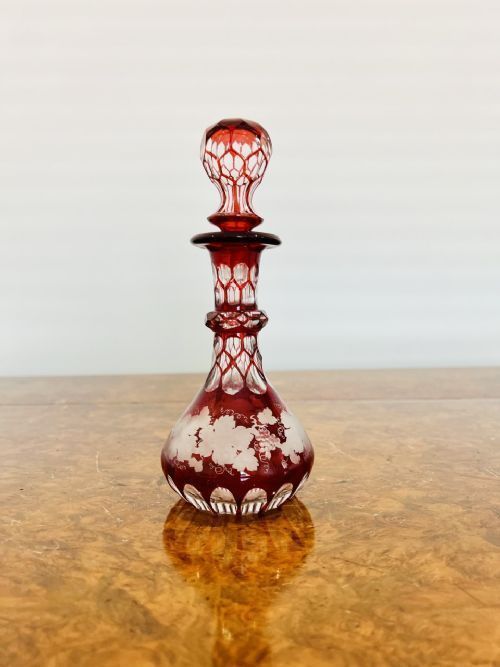
The body of each piece relies on cranberry glass or ruby glass, coloured through the addition of gold chloride to the molten batch. Glassmakers shaped these vessels by hand, often incorporating cut crystal or overlay techniques where a clear or white layer is cut away to reveal the pink-red glass beneath.
Mounts and stoppers typically involve sterling silver, frequently marked with Birmingham assay details, while some items feature gold leaf accents or cut glass detailing. Silversmiths worked directly with the glassblowers to secure hinged caps, screw caps, or inner glass stoppers that kept volatile perfumes sealed.
Cranberry Glass Scent Retail Price Guide 2026
Typical asking prices for cranberry glass scent among the pieces listed under this phrase on Sellingantiques today, from the lower quarter to the upper quarter. They describe what is for sale here now, not the wider market.
Object forms span vanity ensembles, perfume bottles, and spirit perfume flasks with fitted glass stoppers.
Quality and manufacture
Quality in these scent containers rests on the depth of the glass colour and the precision of any cut decoration or overlay work. Superior examples show an even, rich hue throughout the vessel without muddiness, paired with crisp facets that catch the light cleanly.
The integration between the glass body and the silver mount dictates much of the standing of a piece. Well-made mountings fit the neck securely without excess solder, and hallmarked silver hardware from known makers or silversmiths elevates the standard of the entire object.
Gorham·Harold Bushell & Co
The Cranberry Glass Scent Glossary
- Cranberry glass
- A transparent pinkish-red glass produced by adding gold to the molten batch. It became exceptionally popular during the Victorian era for decorative tableware and vanity items.
- Overlay
- A technique where a layer of coloured glass is cased over a body of another colour, then partially cut away to create contrasting patterns. Bohemian makers utilised this method extensively.
- Sterling silver
- A silver alloy consisting of ninety-two point five percent silver by mass and seven point five percent other metals, commonly used for the caps and collars on these bottles.
- Assay mark
- A stamp or group of stamps applied to precious metals to indicate the standard of purity, the assay office, and the year of testing. Birmingham hallmarks frequently appear on these pieces.
Cranberry Glass Scent: Frequently Asked Questions
How do I date a bottle?
Dating relies heavily on silver hallmarks, assay office symbols, and the specific silhouette of the glass body.
Victorian and Edwardian examples often display distinct stylistic markers, such as Art Nouveau silver mounts or heavy Bohemian overlay patterns.
Are the stoppers original?
Many pieces retain their original inner glass stoppers alongside outer metal screw caps or hinged lids.
Matching glass stoppers inside silver collars ensure the perfume chamber remains properly sealed.
How do I display them?
These bottles suit placement on dressing tables, mantelpieces, or inside illuminated glass display cabinets.
Positioning them near a light source allows the translucent pink-red glass and cut facets to shine.