


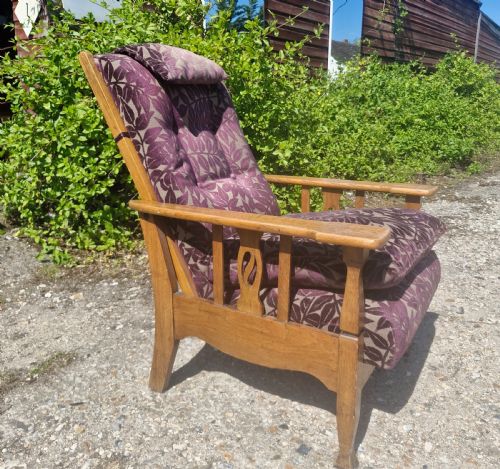


Craftsman Armchair
These craftsman armchairs bring honest oak and clever joinery straight into your sitting room, offering sturdy comfort built to last.
Craftsman Armchair
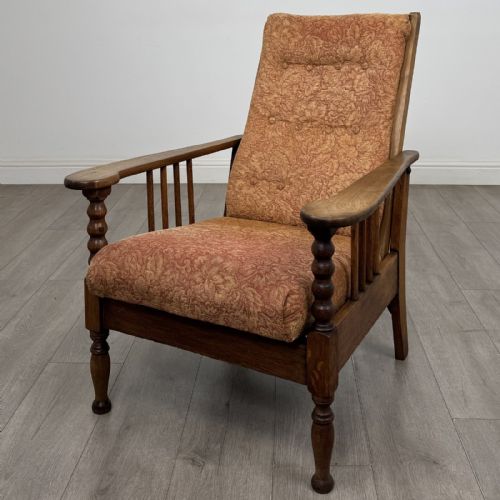
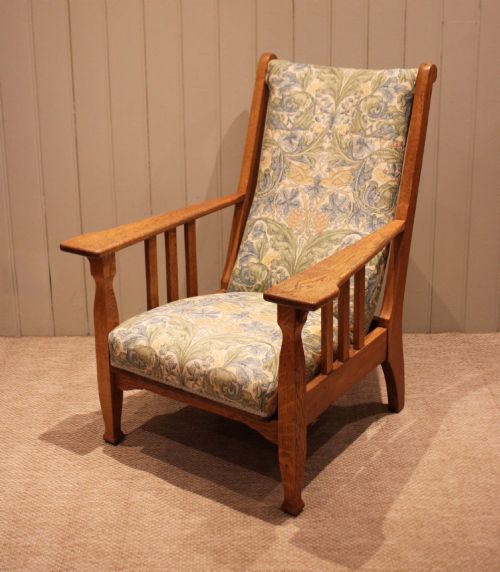
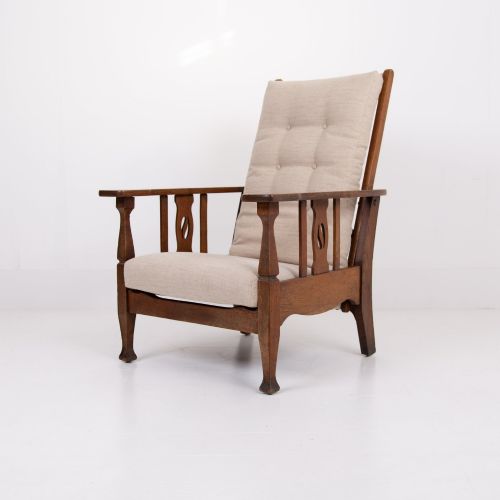
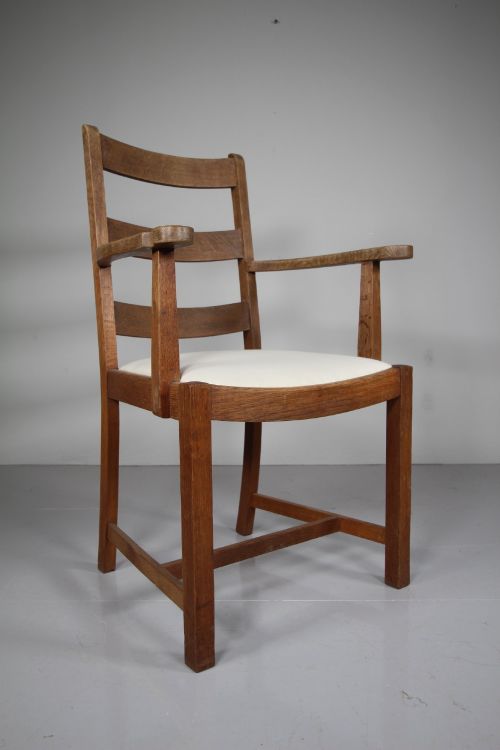
A craftsman armchair is a sturdy wooden seat rooted in the Arts and Crafts movement, typically made from solid oak with visible construction joints. You are most likely to meet straightforward oak frames bearing ladder backs, reclining mechanisms, or simple upholstered pads dating from around 1900 to the Edwardian period.
Makers often drew inspiration from progressive design houses like Liberty's or Goodyers of London, shaping sturdy timbers into low ladder back chairs with rush seats. Others turned to specialised workshops such as Shapland & Petter or Heals Letchworth to produce refined oak seating featuring pewter inlay or leather upholstery.
Later iterations stretch into the 1940s with brown leather Chesterfield armchairs bearing carved animal signatures like Robert Mouseman Thompson's trademark mouse. Whether built as a simple reading chair or an adjustable recliner, each piece prioritises honest materials and straightforward utility over superfluous ornamentation.
How they were made
Makers relied heavily on English oak to build the solid frames, often leaving the natural grain visible beneath simple wax or polish finishes. Joinery was kept honest and straightforward, with pegged tenons and visible joints taking the place of hidden nails or veneers.
Seating surfaces and cushioning relied on traditional materials including woven rush, durable linen, and supple leather. Details such as pewter inlay were occasionally integrated into the timber framework to provide subtle decoration without disrupting the structural integrity.
Craftsman Armchair Retail Price Guide 2026
Typical asking prices for craftsman armchair among the pieces listed under this phrase on Sellingantiques today, from the lower quarter to the upper quarter. They describe what is for sale here now, not the wider market.
Current listings span the Edwardian era through the nineteen-forties, showcasing oak frames paired with leather, rush, and pewter inlay.
What varies in quality
The distinction between standard workshop output and top-tier pieces lies in the crispness of the joinery and the selection of timber. Superior examples exhibit tightly fitted pegged joints and carefully chosen quarter-sawn oak that displays prominent medullary rays.
Hardware and secondary materials also set pieces apart, from smooth mechanical actions on reclining armchairs to neat rush weaving and quality pewter inlay. Maker attribution elevates a piece further, particularly when associated with established firms like Liberty & Co or named craftsmen.
Heals Letchworth·Goodyers of London·Robert Mouseman Thompson·Liberty & Co·Shapland & Petter
The Craftsman Armchair Glossary
- Arts and Crafts
- A design movement spanning the late nineteenth and early twentieth centuries that championed traditional craftsmanship, simple forms, and visible construction. It arose as a reaction against mass production.
- Ladder back
- A chair back featuring multiple horizontal wooden slats resembling the rungs of a ladder. This traditional form was frequently utilised in early twentieth-century seating.
- Rush seat
- A seating surface woven from dried marsh rushes or similar grasses, creating a durable and textured platform. It is commonly found on lighter wooden chairs from the period.
- Pewter inlay
- A decorative technique where small pieces of pewter metal are embedded flush into recesses carved directly into the wood. This detail appears on select Arts and Crafts furniture to add a metallic accent.
Craftsman Armchair: Frequently Asked Questions
What defines a craftsman armchair?
A craftsman armchair is defined by its solid oak construction, visible joinery, and straightforward Arts and Crafts styling. These chairs reject excessive factory ornamentation in favour of honest materials and functional design.
You will commonly find them featuring exposed pegged joints, low ladder backs, or adjustable reclining mechanisms dating from the early twentieth century.
Who made these chairs?
Many chairs from this period were produced by notable retail houses and regional workshops such as Liberty & Co, Goodyers of London, and Shapland & Petter. Individual craftsmen and firms like Robert Mouseman Thompson also contributed distinct designs.
Attributions are often supported by stamps, paper labels, or characteristic signatures carved directly into the timber frame.
How do I care for an oak armchair?
Caring for an antique oak armchair involves maintaining the wood with occasional applications of quality beeswax and avoiding direct sunlight or excessive heat. This preserves the natural finish and prevents the timber from drying out.
Leather and rush elements require their own gentle maintenance, keeping upholstery clean and moisture levels stable in the room.
Are these chairs comfortable for daily use?
These chairs are built for sturdy daily use, offering supportive upright seating or adjustable reclining angles depending on the model. Many incorporate comfortable leather pads, woven rush, or upholstered cushions.
Their robust oak frames ensure they remain solid and dependable seats for modern living spaces.