

Crafted Oak Dining Chairs
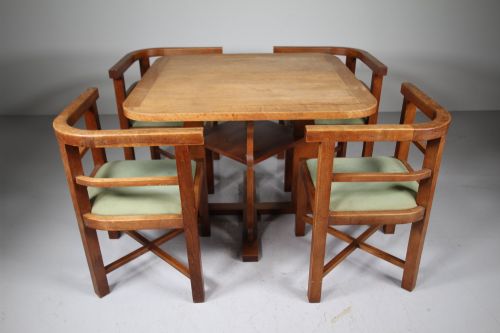
These crafted oak dining chairs bring solid timber construction and period character to the table.
Crafted Oak Dining Chairs
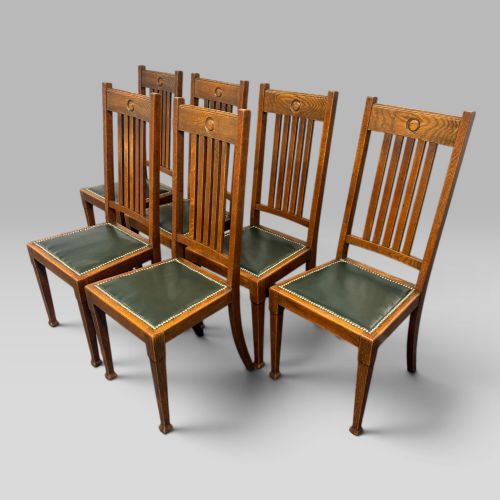
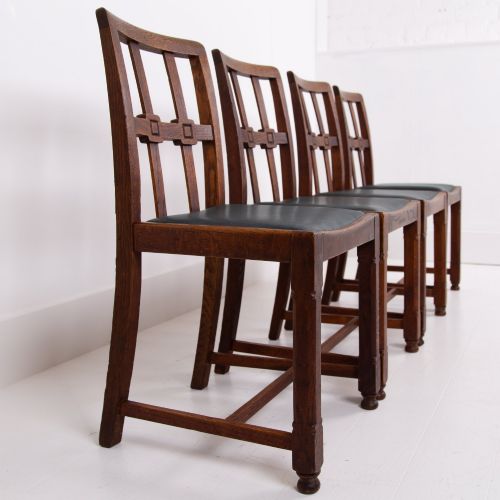
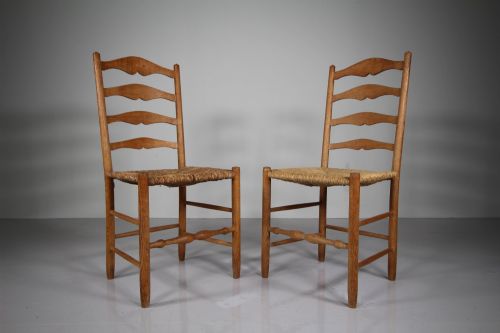
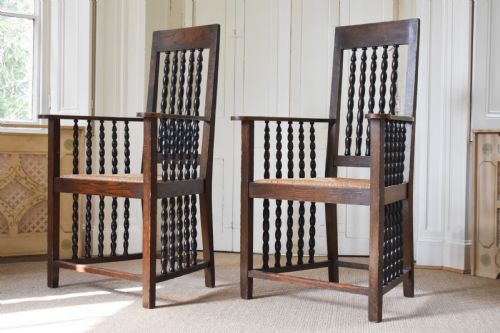
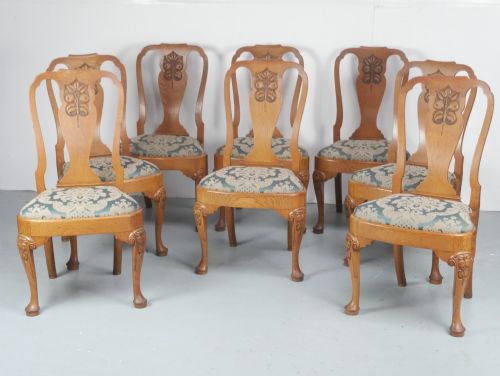
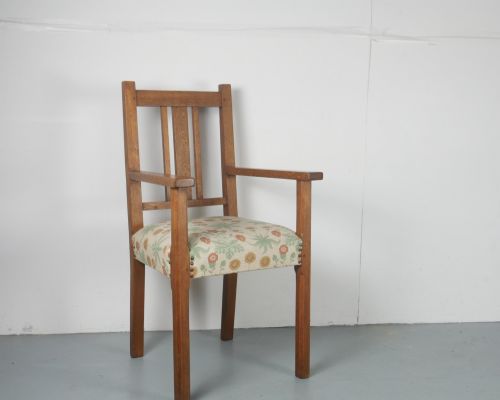
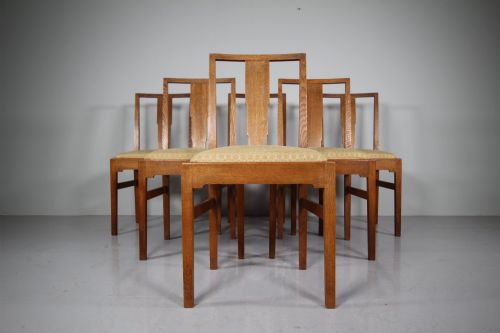
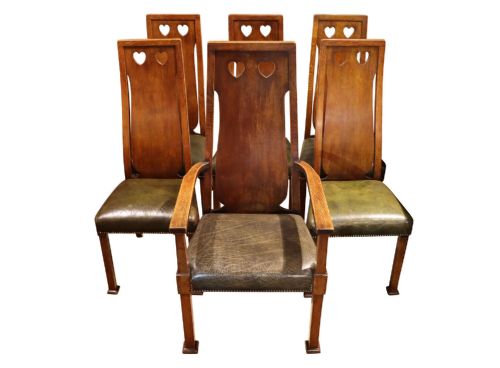
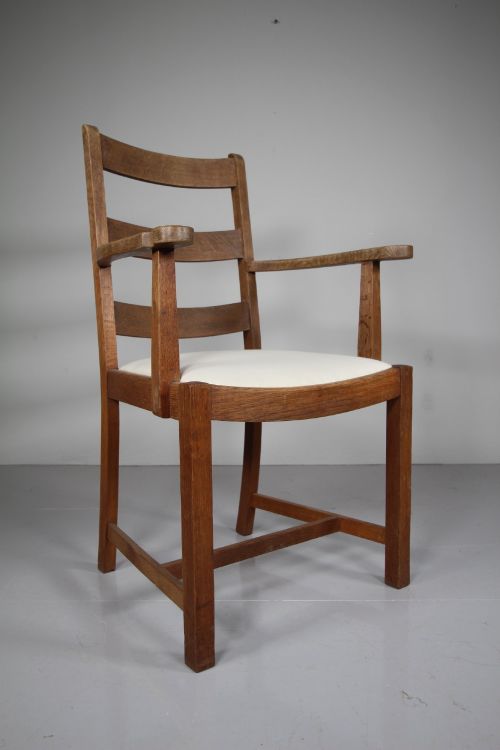
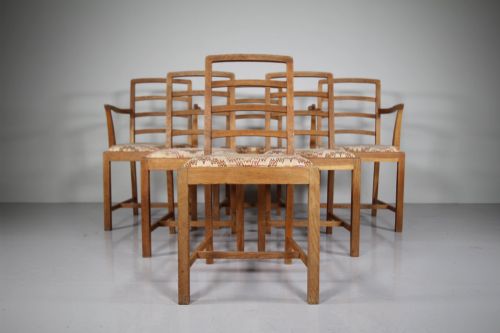
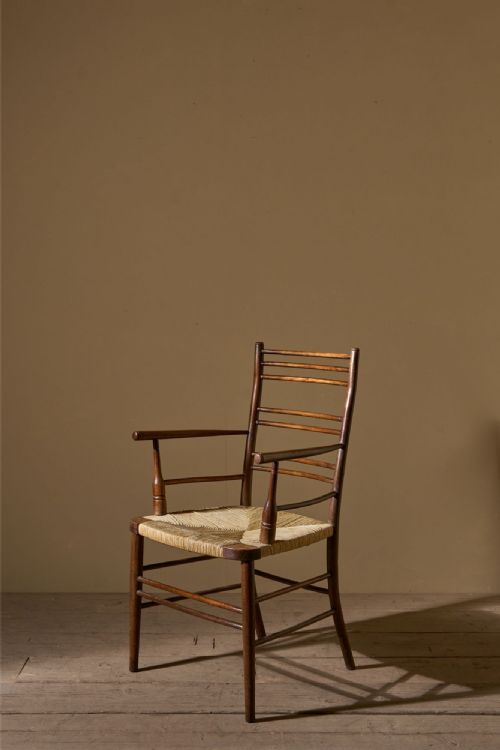
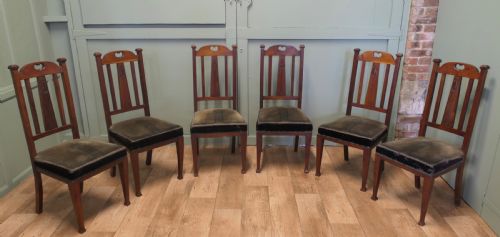
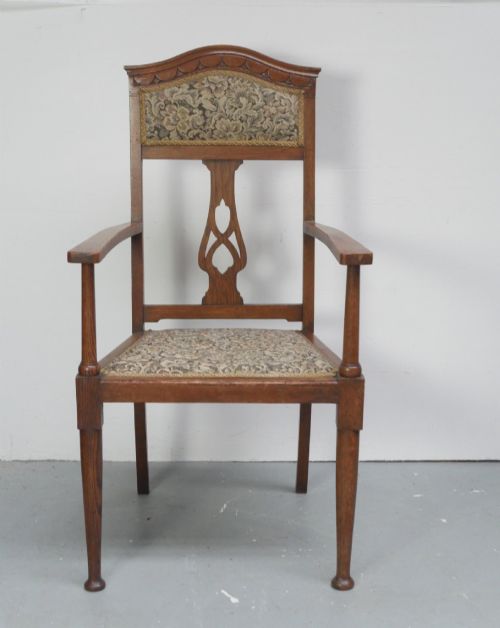
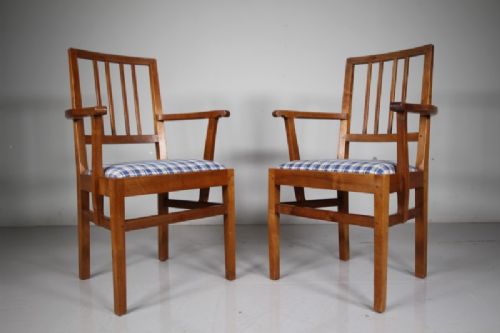
You meet both single side chairs and carver armchairs, often grouped in sets ranging from pairs up to larger collections for a dining room. Many examples incorporate high backs, ladder backs, or rush and leather inserts suited to everyday use.
Origins stretch across English workshops, Scottish makers, and notable retail houses like Liberty and Heal's. The prevailing aesthetic favours warm golden oak tones and straightforward joinery over heavy applied ornamentation.
Materials and construction methods
Makers utilised solid oak, often selected for its pronounced grain and durability, fashioned into sturdy frames using traditional mortise and tenon joints. This timber framework provides the structural backbone for both simple farmhouse forms and refined studio pieces.
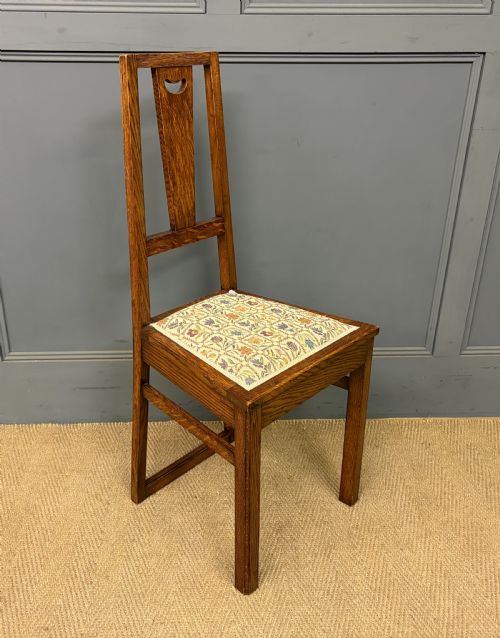
Seating areas frequently employ woven rush, supple leather, or taut fabric pads secured with brass tacks to contrast against the dense wood. Certain pieces integrate carved details, trefoil motifs, or distinctive elements such as carved signature mice.
Makers finished surfaces to highlight the natural properties of the wood, resulting in warm golden tones or deeper patinated honey hues achieved through wax and polish.
Crafted Oak Dining Chairs Retail Price Guide 2026
Typical asking prices for crafted oak dining chairs among the pieces listed under this phrase on Sellingantiques today, from the lower quarter to the upper quarter. They describe what is for sale here now, not the wider market.
Keep an eye out for a carved wooden mouse clambering up a chair leg, leaving a distinct signature of the workshop.
Markers of quality and execution
The distinction between standard production and top tier work rests on the crispness of the joinery and the selection of the timber. Superior pieces exhibit hand-finished details, precise pegging, and balanced proportions that maintain structural integrity without excessive weight.
Signatures, stamps, or labels from established workshops and specific designers elevate a set, confirming attribution to notable makers. The integration of auxiliary materials, such as tight hand-woven rush seats or quality leather upholstery, further separates standard country chairs from bespoke studio commissions.
Edward Barnsley·Dicon Nance·Liberty and Co·Lawrence Neal·Edward Gardener·Shapland and Petter·Charles Bevan·George Henry Walton
The Crafted Oak Dining Chairs Glossary
- Carver
- An armchair, typically designed to sit at the head of a dining table, featuring supportive side arms. These pieces match the simpler side chairs in a larger set.
- Rush
- Dried marsh grass twisted into cords and hand-woven to create a supportive, resilient seat base. This traditional technique appears frequently on country and Arts and Crafts seating.
- Ladder back
- A chair back constructed with horizontal wooden slats positioned between upright posts. The design offers ergonomic support and references vernacular furniture traditions.
- Gothic Revival
- A nineteenth-century style drawing inspiration from medieval architecture and forms. Pieces often feature pointed arches, trefoil cutouts, and imposing vertical proportions.
Crafted Oak Dining Chairs: Frequently Asked Questions
How do I care for oak chairs?
Feed the timber periodically with a traditional beeswax polish to maintain the moisture and sheen of the oak.
Avoid placing the seating near direct heat sources or strong sunlight, which can dry out the wood and fade leather or fabric upholstery.
Are these chairs comfortable for daily dining?
Most examples provide upright support suited for prolonged seating around a dining table, particularly designs featuring angled ladder backs or supportive armrests.
Seat comfort depends on the condition of the underlying rush webbing or leather pads, which can be restored while keeping the original frame intact.
How can I date an oak chair?
Examine the construction marks, tool traces, and joint pegs, as machine-cut timber and modern screws indicate twentieth-century production.
Stylistic cues such as heavy Gothic revival motifs point to the nineteenth century, while clean-lined golden oak pieces typically align with the Arts and Crafts movement.
Can I mix different chair styles together?
Pairing carvers at the head of the table with simpler side chairs along the sides reflects historical dining traditions.
Matching chairs by wood tone and period ensures a cohesive appearance even when combining pieces from different regional workshops.