


Covered Imari Urn Lid
A covered imari urn lid brings together distinctive ceramics and rich palettes from Japanese and European traditions.
Covered Imari Urn Lid
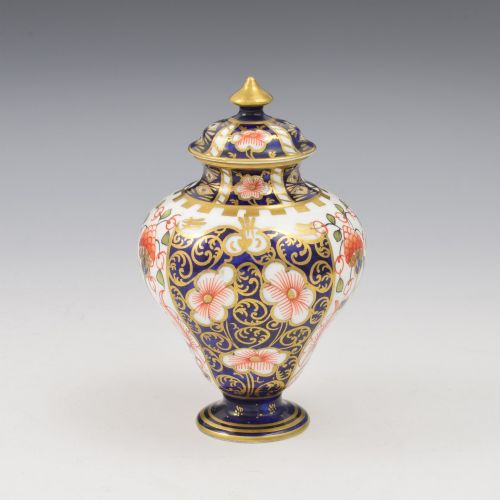
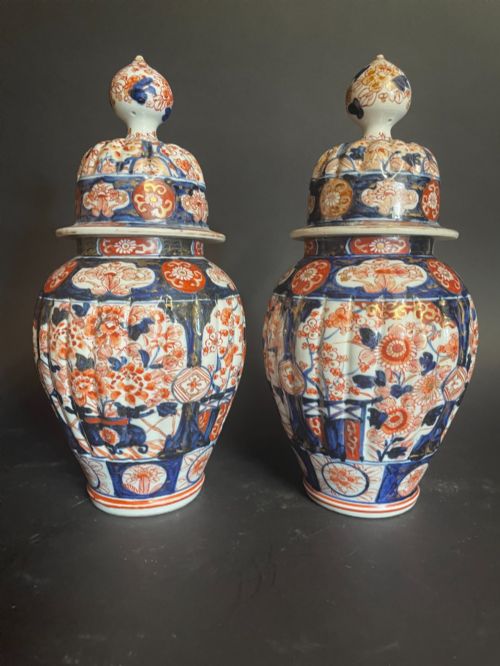
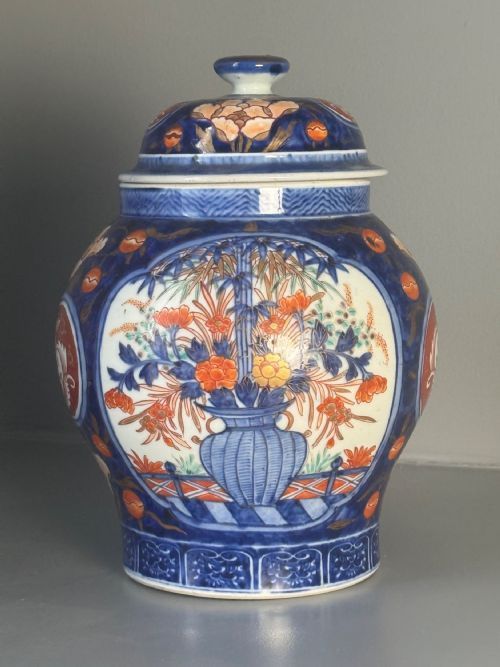
A covered imari urn lid serves as the protective top for lidded vases, ginger jars, and potpourri vessels found within these listings. Most examples emerge from nineteenth-century Japanese production, alongside eighteenth-century pieces and British ironstone interpretations.
These items take various forms, ranging from octagonal baluster profiles to miniature porcelain vases and large decorative urns. The objects often arrive as pairs or standalone items, reflecting both traditional export wares and European adaptations in the imari palette.
How they were made
Potters shaped these vessels using porcelain, ceramic, and ironstone bodies, often applying a white glaze as the foundation for hand-painted decoration. Artisans then utilised cobalt blue and iron red pigments, frequently enriched with gold leaf or gilding to create the characteristic imari look.
Firing techniques varied between Japanese kilns in Arita and European factories such as Mason's and Royal Crown Derby. The application of enamel work over the glaze added depth and texture to the finished surface of the lid and urn.
Listings feature periods spanning from the seventeenth century through the Edwardian era, with porcelain and ironstone as the primary materials.
What varies in quality
The precision and detail of the hand-painted palette separate ordinary production from superior examples. Crisp execution in the cobalt blue and iron red, paired with well-preserved gilding, indicates a higher standard of craftsmanship.
Proportion and form also dictate worth, particularly where lids match the exact contours and decorative schemes of their corresponding vases. Pieces showing careful potting, especially in larger baluster shapes or intricate octagonal jars, demonstrate greater skill from the maker.
The Covered Imari Urn Lid Glossary
- Imari
- A style of Japanese export porcelain originating from Arita, traditionally characterised by a palette of underglaze blue, iron red, and gilt.
- Baluster
- A vase or urn shape with a rounded body that tapers toward the base and swells outward near the middle.
- Ironstone
- A heavy, durable type of ceramic developed in Britain as a robust alternative to porcelain.
- Pot pourri
- A decorative vessel featuring a pierced lid designed to diffuse scent from dried flowers and spices within the room.
- Ginger jar
- A high-shouldered container with a domed lid, originally used for storage and later adopted as a decorative display piece.
Covered Imari Urn Lid: Frequently Asked Questions
What is an imari lid used for?
A covered imari urn lid tops a decorative jar, ginger pot, or vase to complete the silhouette of the vessel. These covers kept contents secure or simply finished the artistic design of the display piece.
Many surviving lids remain with their original jars, though some exist independently due to the fragile nature of ceramics over centuries of handling.
Are these lids porcelain or ironstone?
The listings include both fine porcelain from Japanese kilns in Arita and sturdy ironstone pieces produced by British makers like Mason's. Porcelain offers a translucent body and smooth glaze, while ironstone provides a heavier, more opaque ceramic finish.
Examining the underside and weight of the lid helps determine whether the material is traditional porcelain or British earthenware.
How should I display lidded vases?
Lidded vases and urns look best displayed on sturdy wooden stands, side tables, or mantelpieces where their height and colour can be appreciated. Pairs work well placed symmetrically, while individual large jars make strong focal points in a room.
Ensure the vessel sits on a stable surface away from foot traffic to protect both the jar and its removable lid from accidental knocks.