
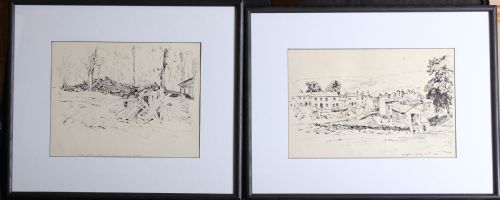
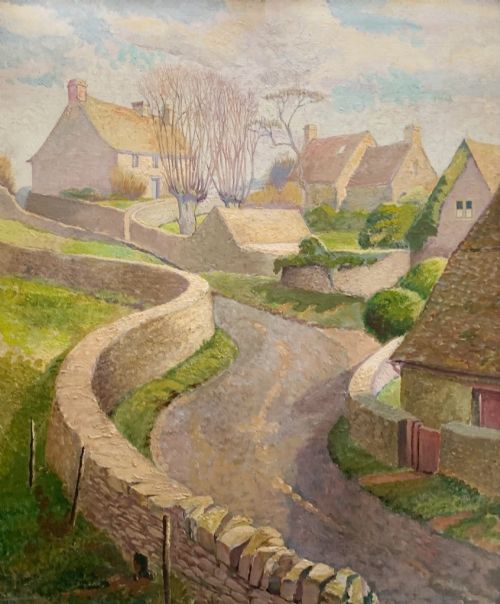


Country Village Landscape
A country village landscape captures rural life through historical paint and paper, offering an intimate window into past community scenes.
Country Village Landscape
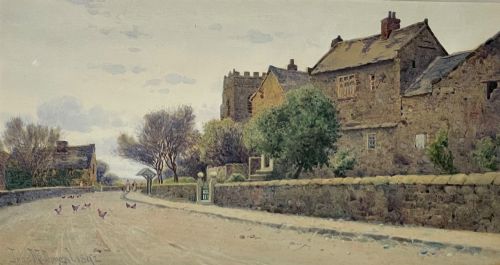
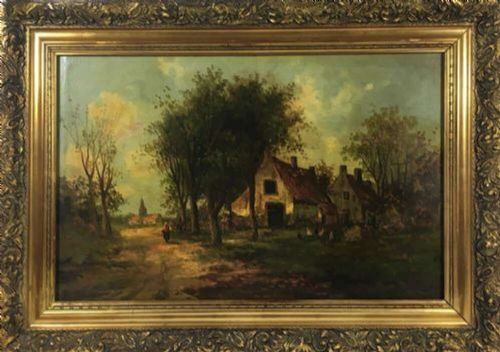
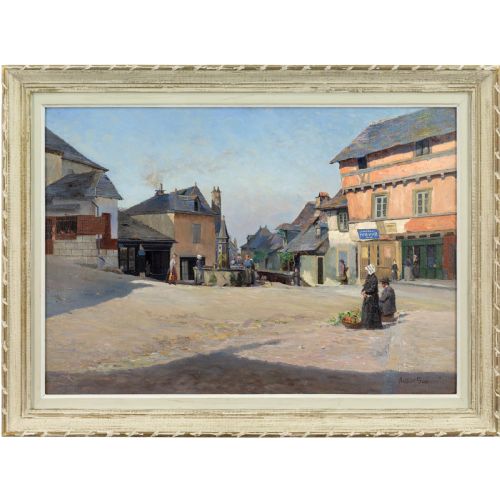
A country village landscape depicts rural settlements, rural lanes, and agricultural communities created during the nineteenth and twentieth centuries. These artworks record specific geographical locations, local inns, churches, and everyday village activities across Britain and Europe.
The selections on this page appear primarily as watercolours on paper and oil paintings on canvas, wood, or paper. Subjects range from named English, Welsh, and Scottish villages to French rural scenes rendered by named artists and regional schools.
How they were made
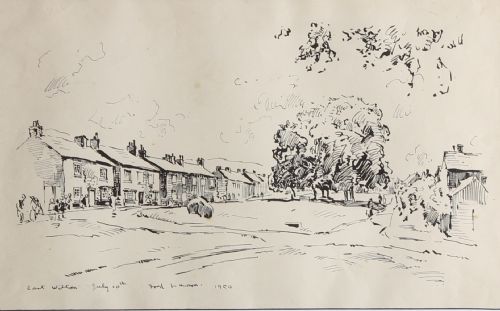
Artists deployed oil paint and watercolour pigments, applying them to prepared canvas, wooden panels, or heavy paper sheets. Works frequently incorporate ink for foundational drawing before colour washes or thick impasto oil applications build the final composition.
Framing often involves gilt wood mouldings that complement the period aesthetic of the artwork. Conservators note backing repairs on older wooden panels where artists stabilised the material against natural warping.
Named English, Welsh, and Scottish locations appear alongside continental European rural scenes recorded by regional artists.
What varies in quality
Compositional balance and brushwork dexterity separate standard topographical records from masterful artistic interpretations. Stronger pieces display confident handling of light, atmospheric depth, and naturalistic figures integrated into the rural setting.
Condition plays a role in evaluation, distinguishing works with vibrant original pigment preservation from those affected by fading, foxing on paper, or historic canvas damage.
John McDougal·Arthur Gué·Fred Lawson·M. C. Hider·Louie Stanley Maurice Prince·Frederick G. Coulridge·John Smith Atherton·Robert Hollands Walker·David Woodlock·Robert McGregor·B W Leader·J.V.R. Parsons·John Ritchie·Walter Henry Sweet·Herbert Royle·Georgina Lara·Carleton Grant·John J. Hamer·Stanley Orchart·Alfred Rimmer·Joseph Thors·David Heward·William Greaves·Joseph Hughes Clayton·Stephanie Cooper
The Country Village Landscape Glossary
- Topographical
- Depicting a specific real place rather than an imaginary scene. These works serve as visual historical documents of named villages and streets.
- Impasto
- Paint applied thickly to a canvas or panel so that it stands proud of the surface. This technique creates a textured, tactile quality that catches the light.
- Foxing
- Brown spots or discoloration on paper caused by chemical reactions over time. It frequently appears on older watercolours and drawings.
- Gilt
- A thin layer of gold or gold-coloured material applied to wood or plaster frames. It provides a decorative border that enhances the artwork.
Country Village Landscape: Frequently Asked Questions
What subjects appear in these scenes?
These artworks focus on rural community life, featuring village streets, country lanes, local inns, and agricultural buildings. Artists documented specific topographical locations alongside figures, horses, and daily activities.
Many pieces capture named locations across British counties and continental Europe, preserving historical architecture and rural topography from past centuries.
How do I date a rural landscape?
Dating relies on stylistic evidence, artist signatures, framing materials, and inscribed location titles on the mount or reverse. Victorian pieces display distinct realism, while later works adopt twentieth-century British impressionist methods.
Clothing styles of figures within the landscape and architectural details of village buildings also provide clear chronological markers for attribution.
Where should I hang a landscape painting?
These works suit traditional living spaces, studies, or hallways where natural light illuminates the fine details of oil and watercolour. Avoiding direct sunlight protects delicate pigments and paper from fading over time.
Pairing smaller watercolours or matching pairs together creates a balanced display that reflects domestic hanging styles of the nineteenth and twentieth centuries.
What is the difference between oil and watercolour?
Oil paintings utilise suspended pigments in drying oil applied to canvas or wood, allowing for rich textures and layered impasto work. Watercolours combine water-soluble pigments on paper, producing translucent washes and lighter, luminous effects.
Both mediums offer distinct aesthetic qualities while documenting identical rural village themes across different artistic traditions.