


Country Vernacular Coffer
A country vernacular coffer is a robust domestic storage piece built by regional makers, prized for honest timber construction and regional character.
Country Vernacular Coffer
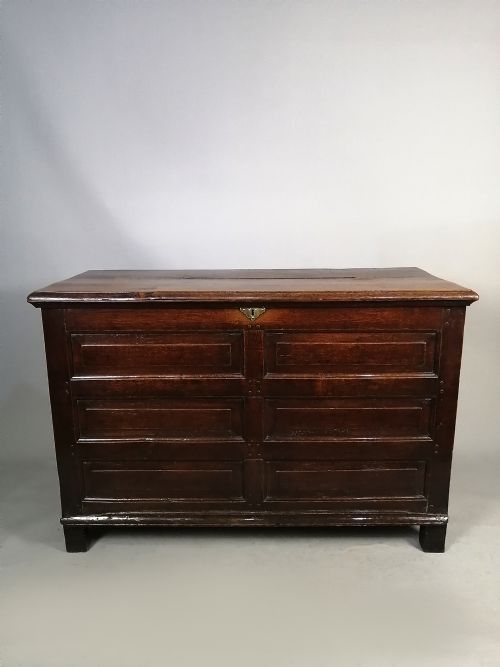
When you search for a country vernacular coffer, you encounter practical storage furniture built from local timbers by regional carpenters rather than urban cabinetmakers. These domestic boxes and chests served families for generations, storing linens, provisions, or precious documents securely in farmhouse interiors.
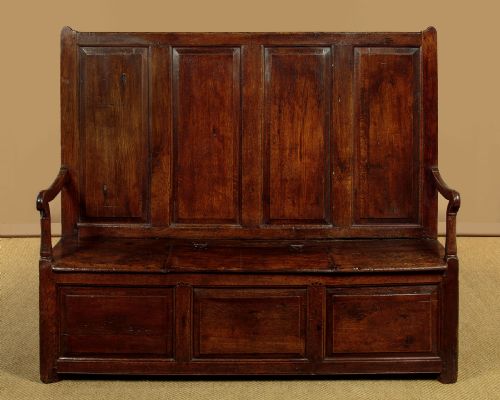
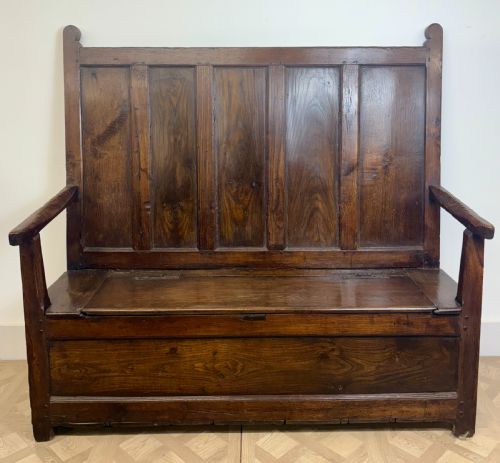
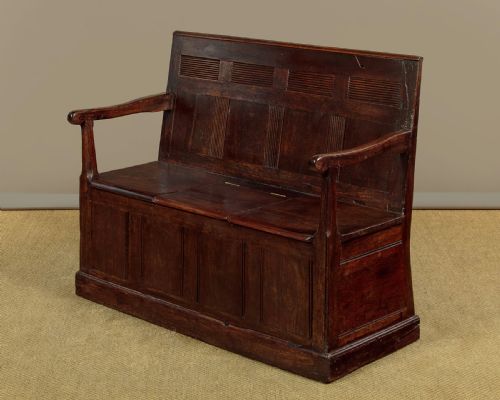
You will frequently meet Welsh examples on this page, including diminutive coffor bach boxes and high-backed box settles that combine seating with enclosed storage beneath the seat. The forms span from seventeenth-century Stuart designs through eighteenth-century country oak pieces to nineteenth-century painted pine items.
The selection ranges from sturdy grain arks and elm dough bins to chip-carved bible boxes and miniature chests resting on turned feet. Each regional variation reveals the specific domestic needs of rural households across different centuries.
Materials and Construction
These pieces rely primarily on native timbers such as oak, elm, ash, and pine, selected for local availability and durability. Carpenters joined heavy boards using traditional methods, often incorporating pegged joints and hand-planed surfaces that display the natural grain of the wood.
Iron and brass hardware, including hinges, latches, and lock plates, were forged locally to secure heavy lids and doors. Some domestic items also feature decorative paint surfaces or intricate chip carving worked directly into the solid timber.
Shepherds kept personal valuables dry in primitive field coffers while tending flocks on remote hillsides.
Assessing Quality and Character
The quality of a vernacular piece rests in the integrity of its construction and the depth of its surface timber. Untouched timber surfaces bearing years of handling display a rich patination that factory finishes cannot replicate.
Proportion and regional detail distinguish finer examples from plain utility boxes. Crisp chip carving, well-turned feet, and original ironwork elevate pieces beyond simple utilitarian containers while retaining their honest rural character.
The Country Vernacular Coffer Glossary
- Vernacular
- Furniture made by regional craftsmen for local use rather than following metropolitan academic styles. These pieces reflect local traditions and available materials.
- Coffor Bach
- A Welsh miniature coffer or small chest, often given as a wedding gift or dowry piece. They typically feature small drawers beneath the main lidded compartment.
- Box Settle
- A wooden bench featuring a high back and enclosed storage space beneath the seat. They kept draughts away from the hearth in farmhouse kitchens.
- Grain Ark
- A heavy storage chest designed to hold dry grain or flour safely off the floor. They represent the most utilitarian end of domestic rural joinery.
- Chip Carving
- A decorative technique where small chips are removed from the surface of the wood with gouges or knives to create geometric patterns.
- Patina
- The surface sheen and colour developed by timber through age, handling, and wax polishing over many decades.
Country Vernacular Coffer: Frequently Asked Questions
How were box settles used?
Box settles served double duty as hallway or kitchen seating and secure household storage. The high wooden back protected families from cold draughts near the open hearth.
Lifters raised the bench seat to access blankets or winter provisions stored safely within the base of the frame.
What timbers were used?
Regional makers utilised whatever native hardwoods and softwoods grew near their workshops. Oak and elm provide the greatest structural durability in seventeenth and eighteenth-century examples.
Pine and ash appear frequently in later regional furniture, sometimes finished with traditional painted surfaces rather than exposed wood grain.
How do I date a coffer?
Dating relies upon construction techniques, hinge types, and regional stylistic markers rather than maker signatures. Early seventeenth-century pieces display heavier pegged frames and distinct chip carving.
Eighteenth-century examples transition towards finer proportions, while nineteenth-century items occasionally incorporate painted finishes and simpler plank construction.