



Country Style Oak Chairs
Country style oak chairs bring robust timber frames and rush or wood seats into domestic spaces, offering enduring utility rooted in centuries of vernacular craftsmanship.
Country Style Oak Chairs
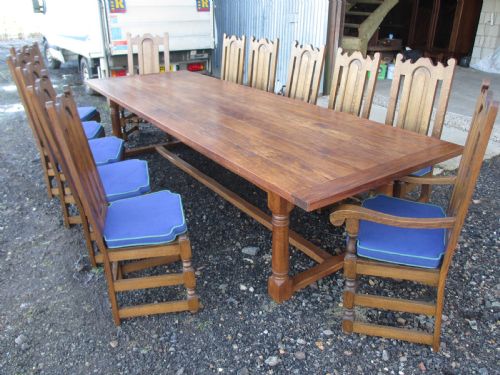
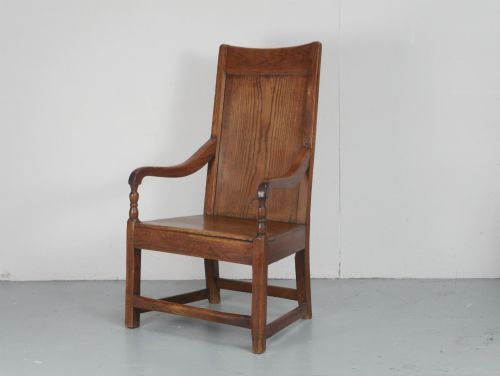
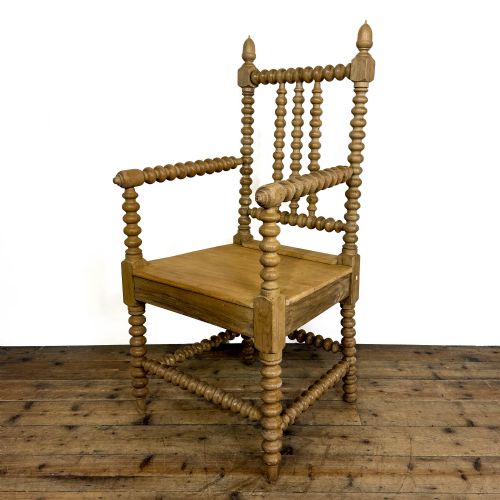
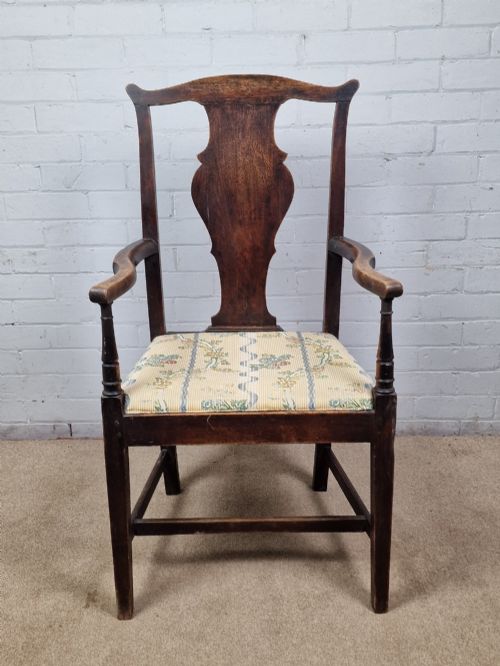
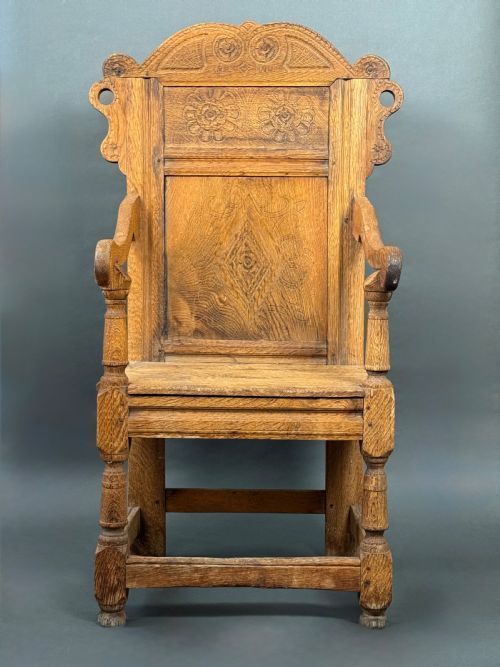
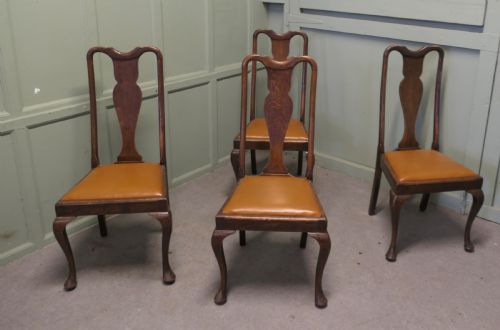
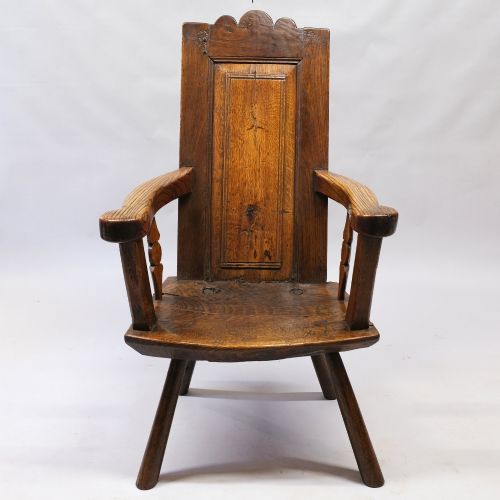
Country style oak chairs encompass practical seating from the eighteenth, nineteenth, and early twentieth centuries, spanning straightforward kitchen chairs to substantial panel backed wainscot armchairs. Buyers searching this phrase typically encounter robust dining sets, single armchairs, and spindleback rocking chairs shaped by regional British and French vernacular traditions.
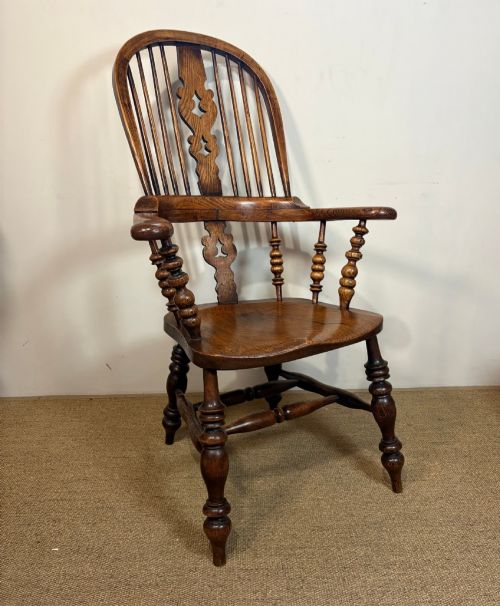
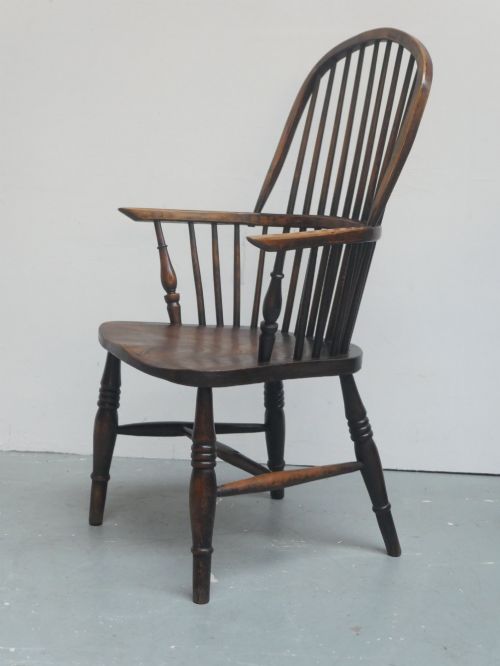
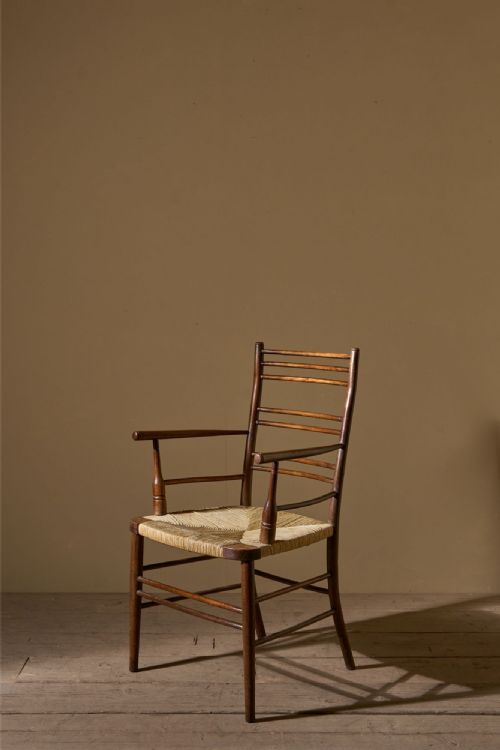
The selection frequently includes ladderback dining chairs alongside Windsor forms featuring elm or ash seats paired with oak frames. Makers built these pieces for daily domestic service, resulting in enduring forms that range from simple farmhouse kitchen seating to decorative Arts and Crafts interpretations.
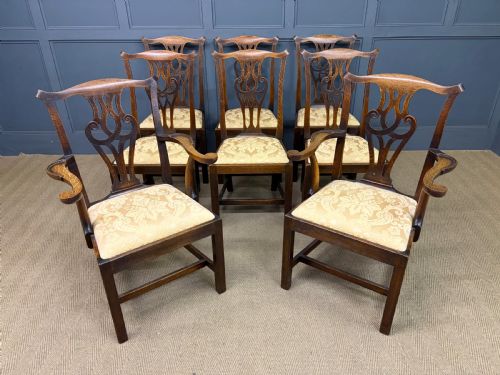
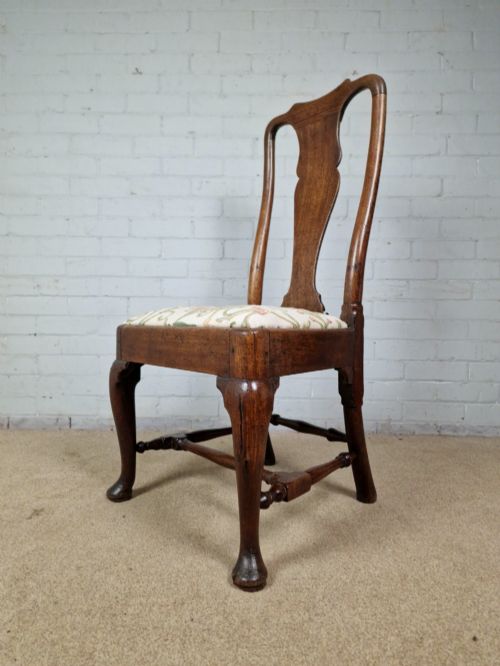
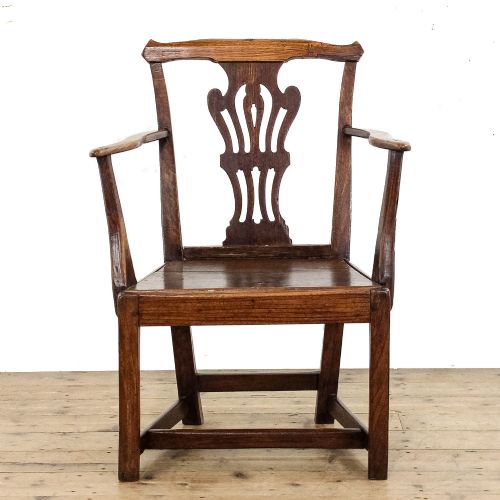
Period examples incorporate historical revivals such as Jacobean, Tudor, and Queen Anne styles, alongside vernacular country house adaptations of Georgian Chippendale designs. Sets of four, six, or eight dining chairs appear alongside individual armchairs, settles, and smaller children's chairs.
Materials and construction methods
Carpenters relied primarily on oak for structural frames, combining it with complementary timbers such as elm, ash, beech, and fruitwood for seats, spindles, and bending parts. Rush, cane, fabric, and leather provided varied seating surfaces across different regional traditions and periods.
Joinery techniques combined pegged mortise and tenon joints for rigid frames with turned spindles and steam-bent components for Windsor and ladderback forms. Craftsmen shaped solid timber seats using adzes and scorps, creating ergonomic depressions within thick planks of elm or oak.
Country Style Oak Chairs Retail Price Guide 2026
Typical asking prices for country style oak chairs among the pieces listed under this phrase on Sellingantiques today, from the lower quarter to the upper quarter. They describe what is for sale here now, not the wider market.
Listings feature oak combined with rush, elm, beech, ash, leather, and cane across nineteenth and twentieth century periods.
Factors determining quality
Quality rests upon the integrity of the timber selection, the tightness of traditional joints, and the preservation of original surface patination. Pieces retaining their original rush seats or early joined oak frames command greater appreciation than those subject to extensive structural timber replacement.
Proportion and the fluidity of turned spindlework or carved panel details separate standard utility seating from finer examples produced within established regional workshops. The balance between sturdy domestic utility and refined stylistic interpretation defines the standing of each piece.
Liberty & Co·Edward Gardener
The Country Style Oak Chairs Glossary
- Wainscot armchair
- A heavy, solid wood armchair dating predominantly from the seventeenth and eighteenth centuries, constructed with panelled backs and substantial arm supports.
- Ladderback
- A chair back featuring multiple horizontal arched slats between two upright posts, frequently paired with rush seating in regional country traditions.
- Windsor chair
- A seat built with a solid wooden saddle-shaped seat into which the legs and back spindles are wedged directly, often incorporating a steam-bent bow.
- Rush seat
- A seating surface woven from dried marsh rushes twisted into cords, creating a resilient textured pad common in traditional country chairs.
- Spindleback
- A chair design utilising numerous slender turned vertical wooden rods to form an open backrest, typical of vernacular seating from the eighteenth and nineteenth centuries.
Country Style Oak Chairs: Frequently Asked Questions
How do I clean country oak chairs?
Dust surfaces regularly with a dry, soft cloth to prevent the accumulation of grit in carved details and joints. Apply microcrystalline wax sparingly when the timber appears dry, buffing gently to maintain the natural finish.
Avoid liquid furniture polishes containing silicone, which can penetrate porous historic timber and damage the underlying surface patina over time.
Can I use these chairs daily?
Most country style oak chairs were constructed for heavy domestic use and remain entirely suitable for everyday dining and seating. Inspect joints periodically to ensure pegs and glue remain secure under regular daily movement.
Place protective felt pads beneath legs on hard flooring to prevent excessive wear and potential splitting of the foot timbers.
How do I date an oak chair?
Examine the tool marks, construction methods, and timber colour variations to estimate the period of manufacture. Hand-sawn surfaces, pegged joinery without modern metal screws, and deep natural patination typically indicate earlier production.
Compare the style against documented vernacular forms from the eighteenth and nineteenth centuries to narrow down the decade or regional origin.
What is a rush seat?
A rush seat consists of dried marsh reeds twisted into strong cords and hand-woven tightly around a wooden frame. This technique produces a flexible, supportive surface that adapts to the sitter while remaining durable.
Keep rush seats away from excessive dampness and direct heat sources to prevent the natural fibres from becoming brittle and fracturing.