

Country Pine Farmhouse Table
A country pine farmhouse table brings hard-wearing timber character and practical utility into a domestic interior, providing a functional surface shaped by decades of honest service.
Country Pine Farmhouse Table
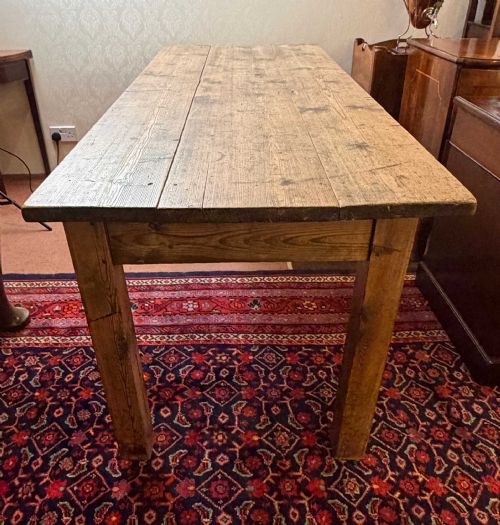
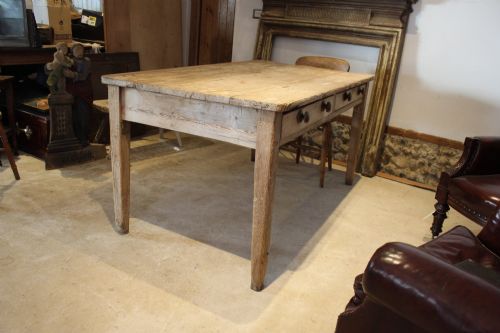
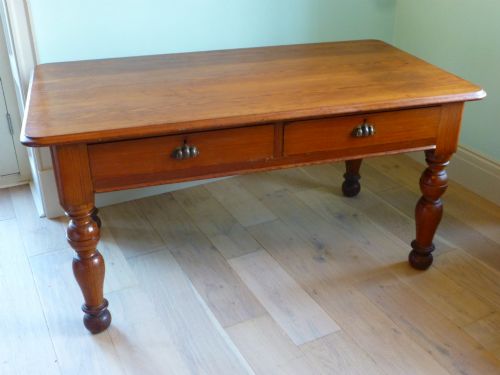
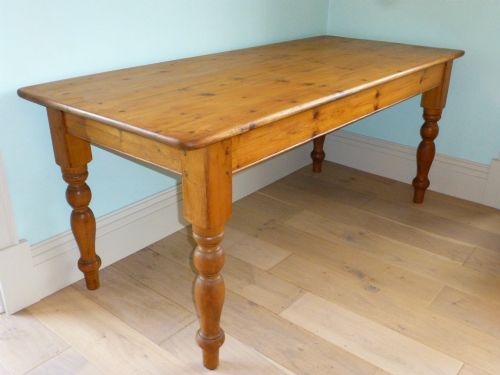
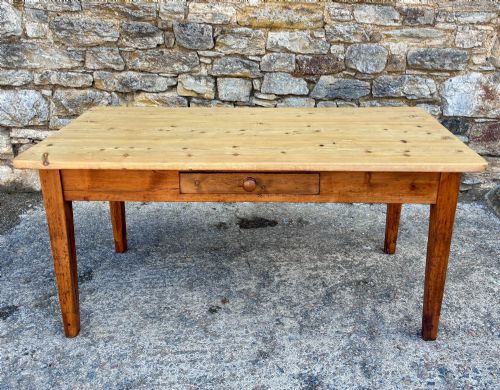
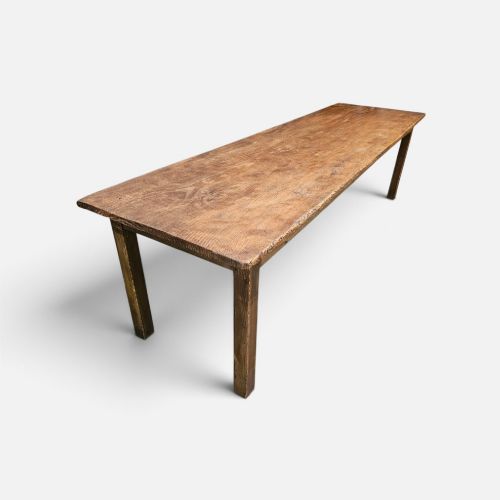
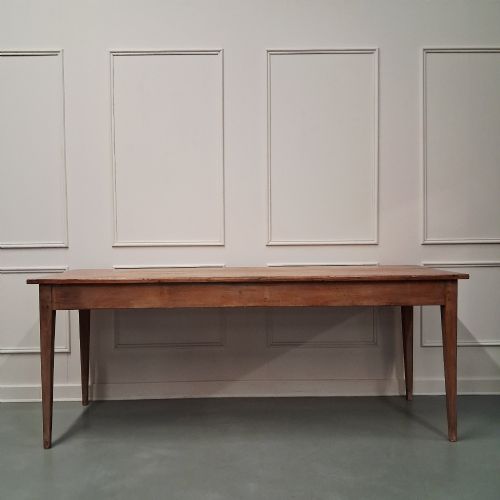
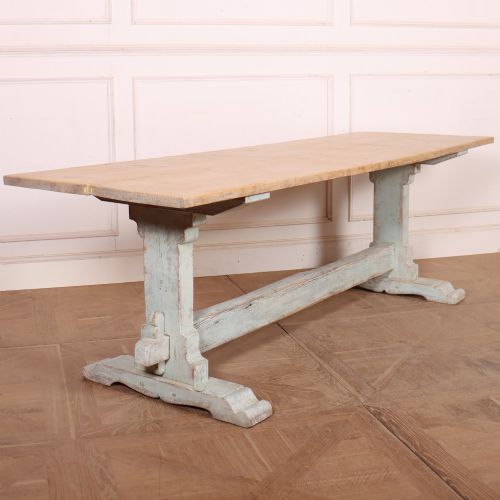
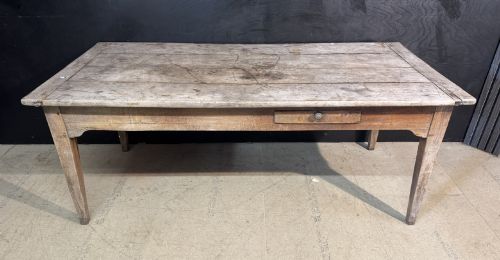
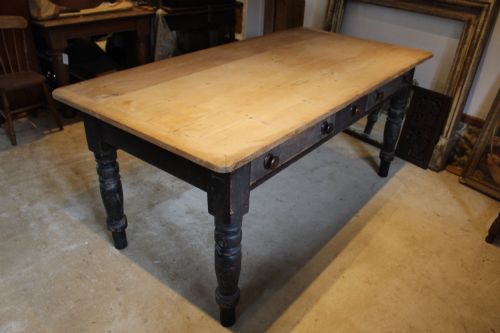
A country pine farmhouse table serves as a robust domestic gathering surface, constructed primarily from timber to endure the demands of daily kitchen or dining use. These pieces often feature scrub tops, drawers, or trestle bases designed for utility rather than ornamentation.
Most examples encountered date from the nineteenth century or the Victorian period, though twentieth-century interpretations also appear in various regional styles. Forms range from long refectory formats and harvest tables to smaller kitchen prep tables and console variants.
Origin influences structural character, encompassing English, French, Scottish, Welsh, and Swedish provincial traditions. Such diversity ensures that buyers find dimensions and proportions suited to both compact breakfast rooms and expansive dining spaces.
Materials and construction methods
Construction relies heavily on solid pine, frequently joined with secondary woods such as oak, fruitwood, and pitch pine for structural stability. Many surfaces display the marks of heavy scrubbing or retain traces of old paint applied during working life.
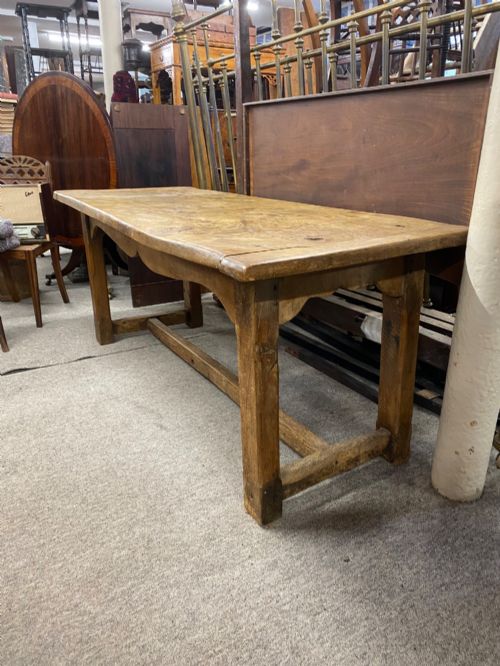
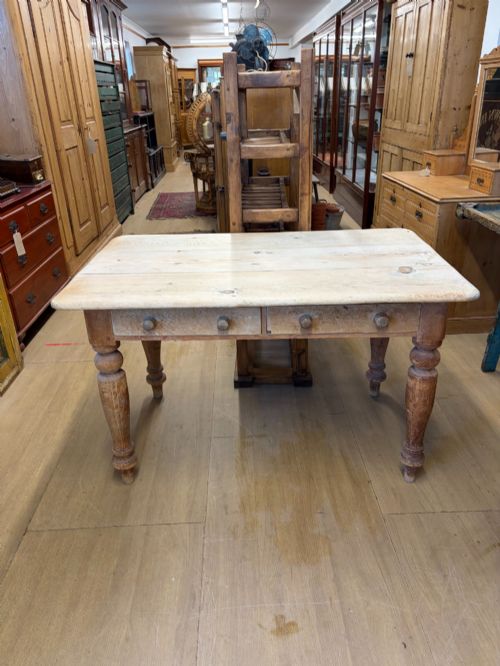
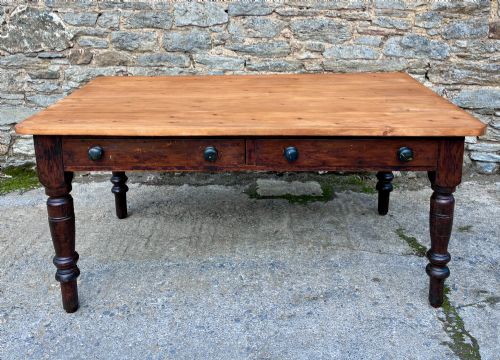
Cabinetmakers utilised traditional joinery techniques, incorporating trestle supports, turned legs, and planked tops that expand and contract with seasonal humidity. Iron hardware appears on drawers and folding mechanisms, adding utilitarian strength to the timber frame.
Country Pine Farmhouse Table Retail Price Guide 2026
Typical asking prices for country pine farmhouse table among the pieces listed under this phrase on Sellingantiques today, from the lower quarter to the upper quarter. They describe what is for sale here now, not the wider market.
Some worktables retain stubborn flour dust lodged deep inside nineteenth-century drawer corners.
Distinguishing quality across examples
Quality separates primitive utility pieces from finer vernacular items through the integrity of timber selection and the retention of original surfaces. Tables constructed with thick, solid pine tops and well-proportioned underframes demonstrate superior structural endurance.
The Country Pine Farmhouse Table Glossary
- Scrub top
- A wooden table top designed to withstand vigorous daily cleaning with water and sand, leaving a pale, smooth grain. This surface treatment exposes the natural texture of the timber.
- Refectory table
- A long dining table traditionally utilised in communal halls and later adopted for domestic farmhouse use. These pieces provide extended seating capacity along their length.
- Trestle table
- A format supported by two or more upright frames connected by a horizontal stretcher. This design maximises legroom beneath the top surface.
- Potboard
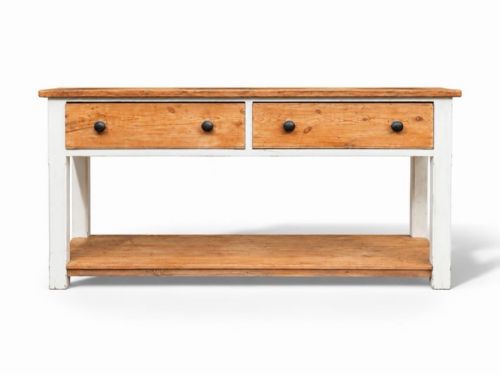
- A low slatted shelf positioned beneath a table or dresser base for storing heavy kitchen utensils and provisions. It provides open storage close to the floor.
- Harvest table
- A narrow dining table built for seasonal communal meals, often featuring drop leaves or extended lengths. These tables accommodate large gatherings in agricultural settings.
Country Pine Farmhouse Table: Frequently Asked Questions
How do I clean a country pine farmhouse table?
Maintenance requires mild soap and a damp cloth to preserve the historic patina and grain of the timber. Avoid harsh chemical cleaners that strip the surface character.
Applying natural beeswax periodically protects the wood from excessive drying while maintaining a soft, authentic sheen.
Can I use a farmhouse table outdoors?
These tables are designed for interior domestic environments and lack weather-resistant finishes. Exposure to rain and temperature fluctuations causes timber warping and joint failure.
Keep them within dry rooms to preserve the structural stability of the pine and oak components.
How do I date an antique pine table?
Dating relies on examining tool marks, fastener types, and construction wear patterns across the frame and drawers. Hand-sawn boards and wrought iron fixings point toward nineteenth-century origins.
Turned leg styles and secondary wood choices also offer clues regarding the period of manufacture.