



Country Pine Counter
These country pine counter pieces are practical workspace surfaces built for daily utility, bringing honest warmth and sturdy character to modern kitchens.
Country Pine Counter
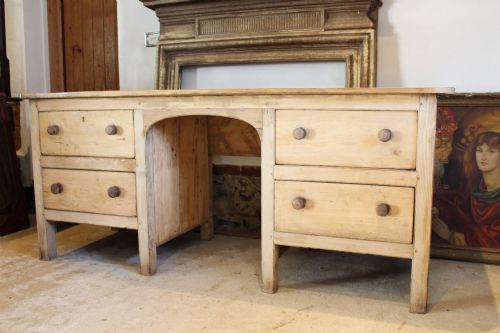
A country pine counter encompasses robust workspace forms such as shop counters, prep tables, drapers tables, and dresser bases designed for heavy use. These items bridge domestic and commercial origins, emerging primarily from nineteenth-century workshops and farmhouses.
Buyers browsing this selection most frequently encounter nineteenth-century pieces alongside early twentieth-century examples. The forms lean heavily into rustic farmhouse, Victorian country, and French provincial styles, showing hard-wearing surfaces and practical storage configurations.
Origins stretch across British, French, and Scandinavian traditions, offering a range of timber patinas and structural proportions. Whether configured as a bank of drawers or a long farmhouse sideboard, each piece provides grounded utility rooted in historical trade and domestic life.
How they were made
Construction relies heavily on solid pine, frequently paired with secondary hardwoods like elm, beech, sycamore, and oak for structural integrity. Selected timbers were chosen for density and resilience rather than decorative grain, ensuring the furniture could withstand rigorous daily labour.
Joinery techniques reflect utilitarian demands, utilising thick planks and sturdy framing designed to bear heavy loads without flexing. Metal elements such as iron hardware and zinc surface reinforcements appear on specific functional variants like shop counters and prep tables.
Country Pine Counter Retail Price Guide 2026
Typical asking prices for country pine counter among the pieces listed under this phrase on Sellingantiques today, from the lower quarter to the upper quarter. They describe what is for sale here now, not the wider market.
The current selection spans nineteenth-century pieces to the early twentieth century, incorporating materials like solid pine, sycamore, and zinc.
What varies in quality
The distinction between ordinary utility items and superior examples lies in the integrity of the timber and the honesty of the wear. Pieces retaining original surface patinas without excessive modern intervention command greater appreciation among purists.
Proportion and structural balance separate simpler utilitarian builds from more refined regional interpretations. Finer pieces demonstrate thoughtful joinery details and harmonious scale despite their demanding working origins.
The Country Pine Counter Glossary
- Drapers table
- A long, narrow workspace originally utilised in textile shops for folding and measuring cloth. These tables often feature multiple drawers or lower tiers.
- Dresser base
- A low cabinet form featuring top surface workspace and lower storage compartments such as drawers or cupboards. It represents the lower portion of a traditional kitchen dresser.
- Bank of drawers
- A multiple-drawer storage unit designed for commercial or domestic organisation. They are frequently found in shop counter configurations.
- Prep table
- A sturdy freestanding table constructed for food preparation or trade tasks. These items prioritize flat, durable wooden surfaces and stable frames.
Country Pine Counter: Frequently Asked Questions
How were country pine counters originally used?
These pieces served as functional workhorses in domestic kitchens, rural farmhouses, and retail shops. They provided stable surfaces for food preparation, fabric cutting, and daily trade.
Over time, many transition pieces moved from commercial spaces into domestic settings, retaining their robust utility and practical storage layouts.
How do I fit a country pine counter into a modern kitchen?
A country pine counter works exceptionally well as a freestanding kitchen island, a breakfast bar base, or a side workspace. Its warm timber tone softens contemporary cabinetry and industrial elements.
Ensure you measure your clearance space carefully around the piece, as historical proportions often accommodate movement and standing work rather than tight fitted kitchens.
How can I tell the age of a pine counter?
Age is determined by examining construction methods, tool marks, and timber shrinkage patterns. Hand-sawn boards, forged iron fastenings, and natural surface wear indicate nineteenth-century or earlier origins.
Later twentieth-century examples typically show more uniform machine milling and standardised internal joinery techniques.
What maintenance does a pine counter require?
Pine is a softer wood that responds well to simple care, such as wiping down with a damp cloth and avoiding excessive moisture. Regular applications of natural beeswax help nourish the dry timber and protect the historical patina.
Accepting minor surface knocks and marks is part of living with these pieces, as they carry the physical history of their working past.