




Country Painted Wall Mirror
A country painted wall mirror brings reflective depth and decorative charm to an interior through time-worn surfaces and hand-applied pigments.
Country Painted Wall Mirror
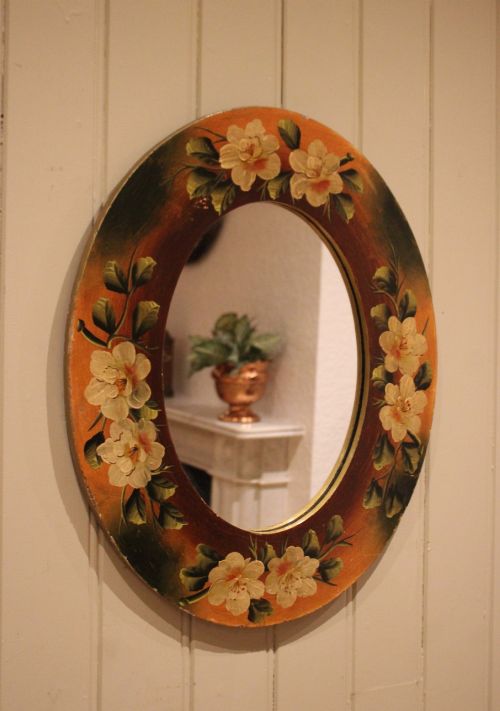
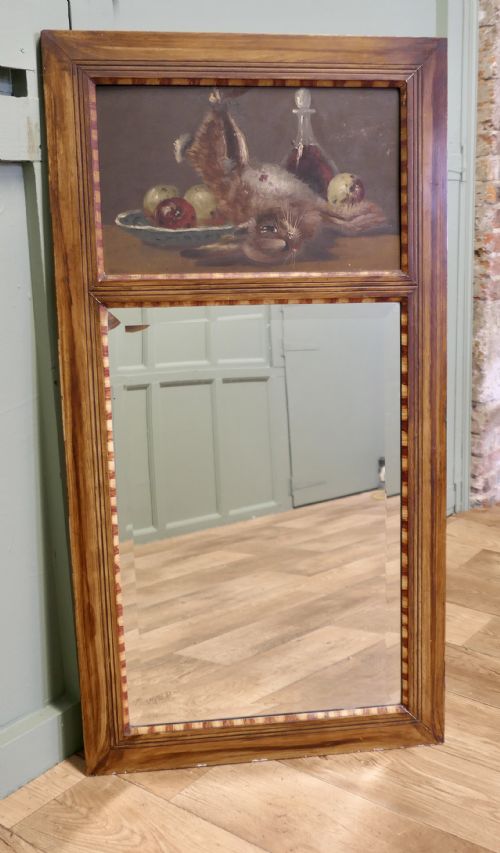
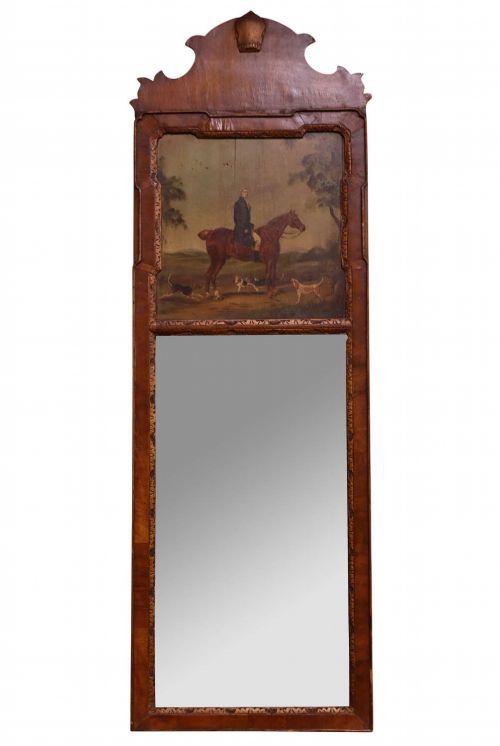
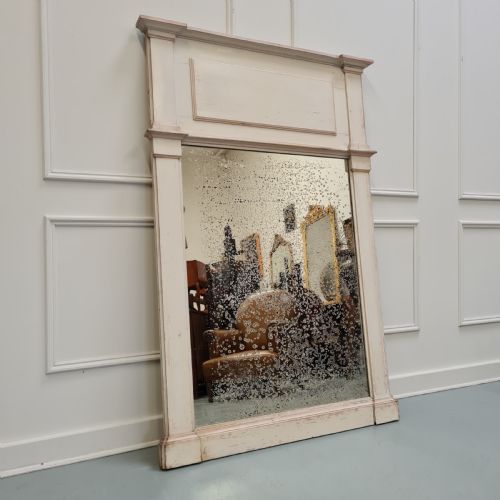
A country painted wall mirror is typically a wooden hanging glass designed to open up a room while adding rustic or provincial character to a wall. These pieces frequently date from the nineteenth century, encompassing styles such as French provincial, Victorian rustic, and Queen Anne revival. Buyers encounter formats ranging from simple cushion frames to elaborate trumeau panels complete with integrated oil paintings.
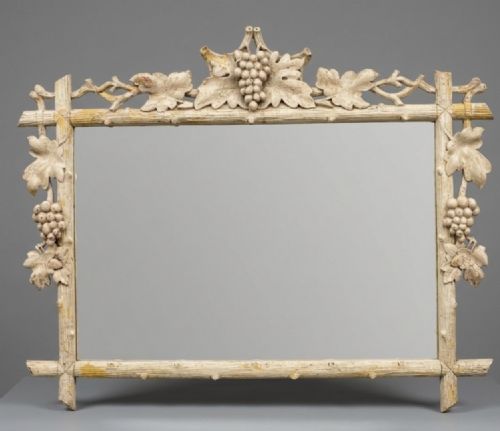
The selection leans heavily toward substantial formats, with overmantel mirrors and tall pier glasses appearing regularly alongside smaller oval or shaped-top wall varieties. French examples often incorporate pastoral, floral, or equestrian painted scenes directly into the frame structure. English versions tend to favour carved wood and gesso compositions finished in painted or parcel-gilt treatments.
Materials and construction
Makers constructed these frames primarily from solid wood, frequently applying layers of gesso to build up decorative reliefs and shaped mouldings. Paint was then applied directly to the timber or gesso ground, sometimes combined with partial gilding to highlight carved details. Original mirror glass was secured within the rebate, often exhibiting the subtle imperfections and soft silvering characteristic of older manufacturing methods.
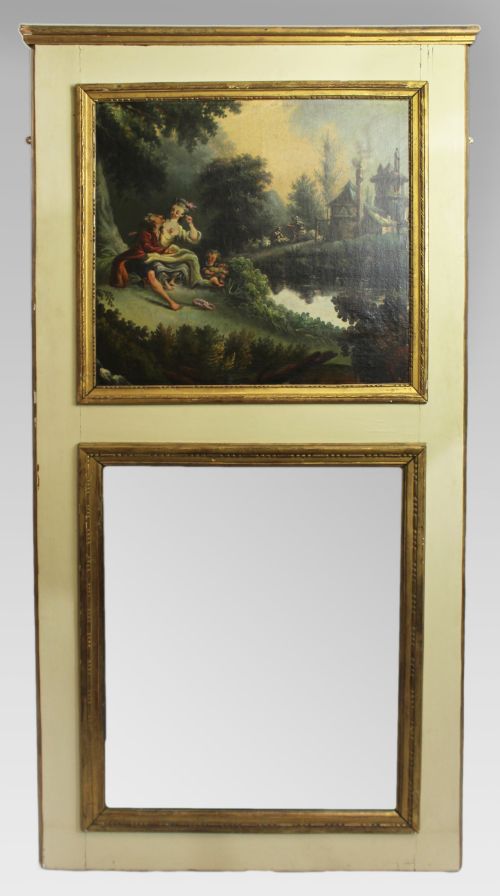
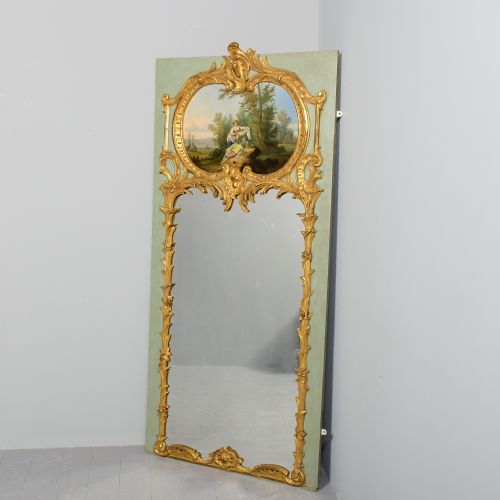
Many trumeau and pier mirrors incorporate oil paintings on canvas or panel inserted into the upper section of the wooden framework. Carved wooden elements, from simple rustic borders to ornate Louis XV rococo scrolls, were fashioned by hand before receiving their painted finish. Structural joints rely on traditional carpentry techniques appropriate to the period.
Materials recorded across the inventory include carved wood, gesso, painted surfaces, and original mirror glass.
Distinguishing quality
Quality in these pieces is dictated by the depth and execution of the carved wood elements, the crispness of the gesso mouldings, and the harmony of the painted surface. Superior examples demonstrate confident hand-carving and well-executed integral oil paintings rather than generic decorative additions. The retention of original painted finishes and untouched mirror glass significantly elevates the character of a piece.
Proportion and scale also play a role, as larger overmantel and trumeau formats require robust internal framing to support heavy glass and wooden panels safely over time. The integration between the mirror plate and any accompanying artwork reveals the original maker's skill in creating a unified decorative object.
The Country Painted Wall Mirror Glossary
- Trumeau mirror
- A wall mirror featuring an integrated painted panel or artwork positioned above the glass plate. These pieces originated in eighteenth-century France and remained popular throughout the nineteenth century.
- Gesso
- A plaster-like mixture applied to wood frames to create a smooth surface for painting or to build up raised decorative mouldings. It allows for crisp carved details on antique mirrors.
- Overmantel mirror
- A large horizontal mirror designed specifically to be hung above a fireplace mantelpiece. They often feature shaped or arched tops to draw the eye upward.
- Pier glass
- A tall, narrow mirror traditionally hung on the pier or wall space between two windows. These pieces often incorporate lower console tables or integral paintings.
- Parcel-gilt
- A finish where portions of an object are highlighted with thin leaves of gold metal while the rest remains painted or stained. This technique accentuates specific carved details on the frame.
Country Painted Wall Mirror: Frequently Asked Questions
Where should I hang a large overmantel mirror?
These mirrors work best mounted securely above a fireplace mantelpiece, where their generous proportions reflect light across the room. They also function effectively on principal walls in dining rooms or hallways to create a sense of expanded space.
Ensure the wall construction can support the substantial weight of carved wood and glass before installation. Positioning the mirror opposite a window maximises the natural light it brings into the interior.
What is a trumeau mirror?
A trumeau mirror combines a looking glass with an upper decorative panel, frequently containing an oil painting with pastoral, floral, or equestrian themes. This French wall mirror style served as a permanent architectural feature in period drawing rooms and parlours.
The integrated artwork and mirror plate share a single unified frame, making the object both a painting and a functional glass. They suit placement above sideboards or console tables.
Are the oil paintings on these mirrors original?
Many nineteenth-century trumeau and pier mirrors retain their original painted panels, depicting scenes executed in oil on canvas or wood. These artworks were designed as an integral part of the mirror's decorative scheme from the outset.
Close inspection of the paint surface and the surrounding frame rebate helps confirm that the panel has remained with the mirror since its creation. The style of the painting typically corresponds to the period of the woodwork.
How do I care for antique painted mirror frames?
Dust the carved wood and painted surfaces gently with a soft, dry cloth to prevent the accumulation of dirt. Avoid chemical cleaning products or excess moisture, which can damage aged paint, gesso, and gilt details.
Clean the glass using a minimal amount of glass cleaner applied to a cloth rather than directly onto the mirror plate. This prevents liquid from seeping behind the antique silvering or into the frame joints.
What distinguishes a French provincial mirror from English styles?
French provincial and chateau mirrors often display softer, curved profiles such as Louis XV rococo scrolls, arched tops, and painted floral motifs. They frequently take the form of tall trumeaus or bistro mirrors intended for domestic or commercial spaces.
English country house and Victorian mirrors tend to feature more robust carved wood frames, rectilinear cushion shapes, or heavy overmantel formats with parcel-gilt highlights. Both traditions rely on hand-applied paint finishes rather than pristine factory surfaces.