



Country Oak Writing Slope
A country oak writing slope is a sturdy, practical box designed for correspondence, prized for its honest vernacular construction and rich timber character.
Country Oak Writing Slope
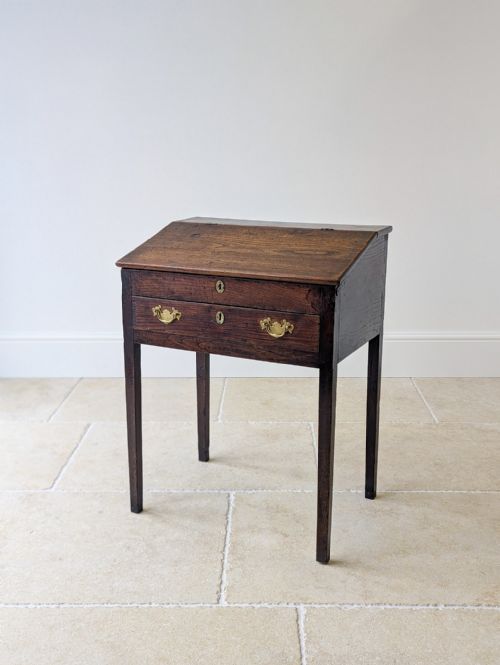
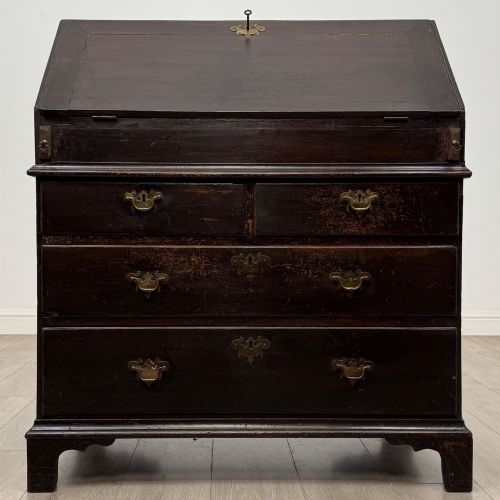
A country oak writing slope encompasses practical desk boxes, slope-topped boxes, and early bureaux made from solid oak and elm. These pieces range from seventeenth-century vernacular examples to eighteenth-century Georgian forms designed for portable or domestic correspondence.
Buyers will most frequently encounter compact desk boxes, table desks with owner initials, and slope-fronted bureaux on this page. Many examples originate from regional traditions, including Welsh workshops and provincial English makers utilising local timber.
The selection includes desk tops, bible boxes, and early bureaux mounted on later stands. These objects reflect the changing domestic writing habits of past centuries, combining storage for papers with a sloping writing surface.
How they were made
Construction relies on solid oak and elm, timber chosen for durability and distinctive grain pattern. Makers utilised traditional joinery suited to provincial workshops, creating robust carcases designed to withstand daily use.
Hardware elements such as brass hinges and iron fastenings secure lids and interior compartments. These metal components were hand-forged or cast to fit the specific requirements of each desk box or bureau.
Country Oak Writing Slope Retail Price Guide 2026
Typical asking prices for country oak writing slope among the pieces listed under this phrase on Sellingantiques today, from the lower quarter to the upper quarter. They describe what is for sale here now, not the wider market.
Several Welsh writing boxes preserve the personal touch of their original owners through carved initials and specific dates of manufacture.
What varies in quality
The distinction between standard provincial pieces and finer examples rests upon the selection of timber and the integrity of the original construction. Pieces retaining their initial stands or untouched surfaces hold greater interest than those altered over time.
Proportion and surface patination dictate the visual success of each slope. Subtle details such as carved owner initials, dated inscriptions, and well-preserved interior compartments elevate specific pieces above plain utility boxes.
The Country Oak Writing Slope Glossary
- Writing slope
- A portable box with a slanted lid designed to provide a convenient surface for handwriting. Inside, compartments hold inkwells and stationery.
- Bureau
- A desk featuring a sloping lid that opens to reveal a fitted interior with pigeonholes and small drawers. Early versions often sit on table bases or stands.
- Bible box
- A small wooden box traditionally used to store folio volumes such as family Bibles. Many doubled as general document boxes or rudimentary writing desks.
- Vernacular
- Describing artefacts made by local craftsmen following regional traditions rather than high-style metropolitan fashions. These pieces prioritise utility and local materials.
- Patina
- The surface sheen and colour developed by timber over centuries of handling, exposure to light, and waxing. It serves as an indicator of age and genuine use.
Country Oak Writing Slope: Frequently Asked Questions
How were these writing boxes used?
Owners placed the slope on a table or lap to provide an angled surface for writing letters with quill and ink. The interior compartments kept paper, ink, and sealing wax organised.
Many boxes also served to secure important family papers and household accounts away from damp and dust.
How do I date an early oak desk?
Dating relies upon examining construction methods, timber preparation marks, and hardware types such as brass hinges or iron latches. Regional styles and vernacular characteristics often provide strong clues to the period.
Inscribed dates and owner initials occasionally appear carved directly into the woodwork.
Are these desks portable?
Many of the smaller boxes and table desks were designed to be moved between rooms or carried on journeys. Larger bureau forms on stands were intended for stationary domestic use.
Their solid oak and elm construction makes them heavier than later mahogany or veneered writing slopes.