



Country Oak Tripod Stand
These small country oak tripod stand pieces offer sturdy timber surfaces raised on three legs for simple domestic use.
Country Oak Tripod Stand
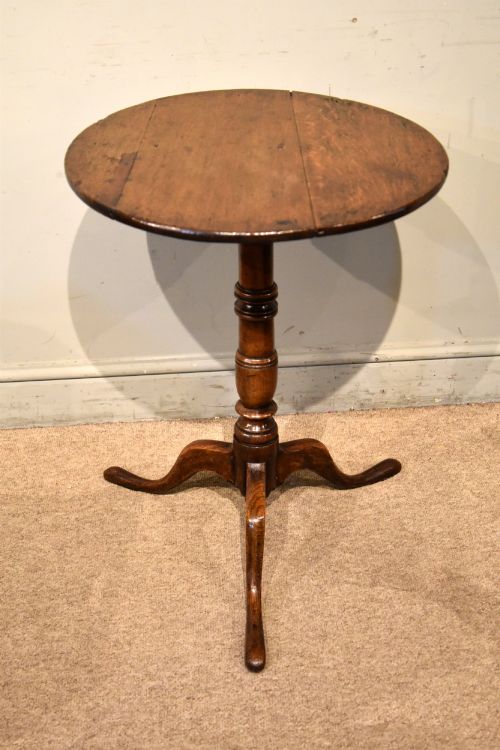
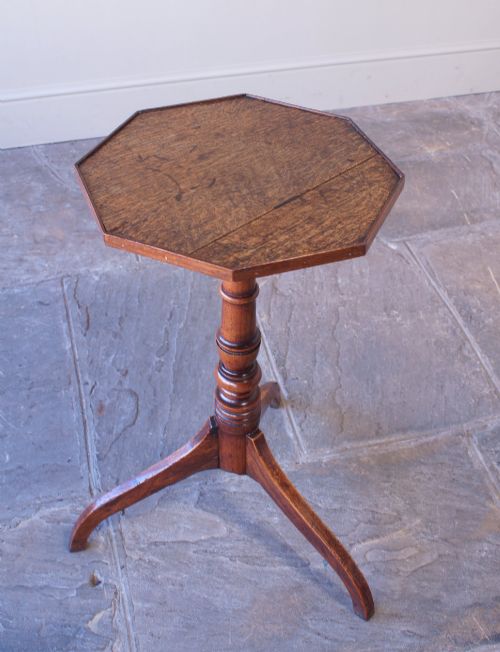
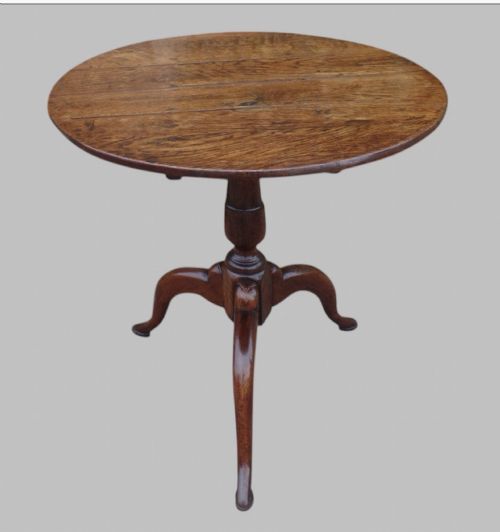
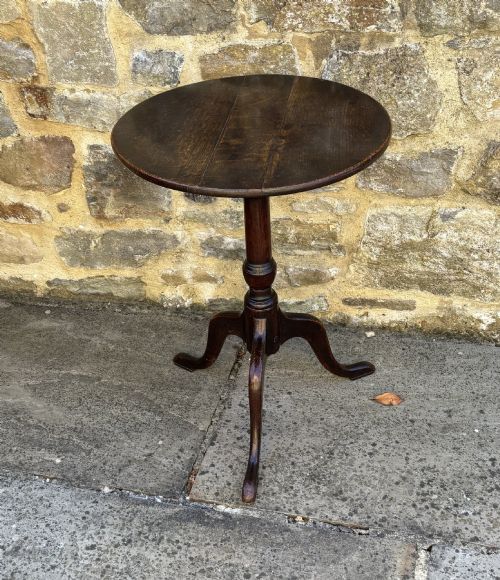
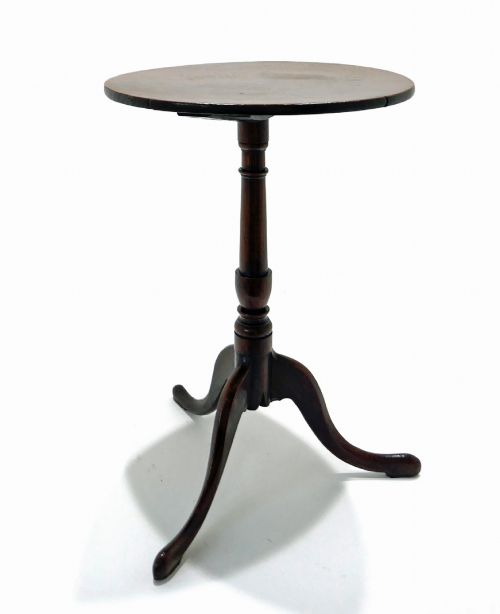
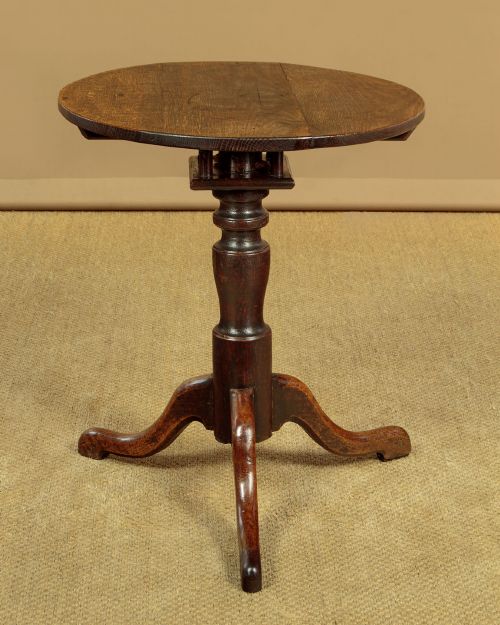
A country oak tripod stand takes the form of a small occasional table, cricket table, or tilt-top table supported by three legs. These practical items appear frequently from the eighteenth century and the Georgian period, often showing vernacular country characteristics.
Makers built these pieces for domestic utility in rural homes, resulting in compact occasional tables and tilting tops that could be stored against walls. The selection on this page includes examples featuring elm, fruitwood, and yew alongside the primary oak timber.
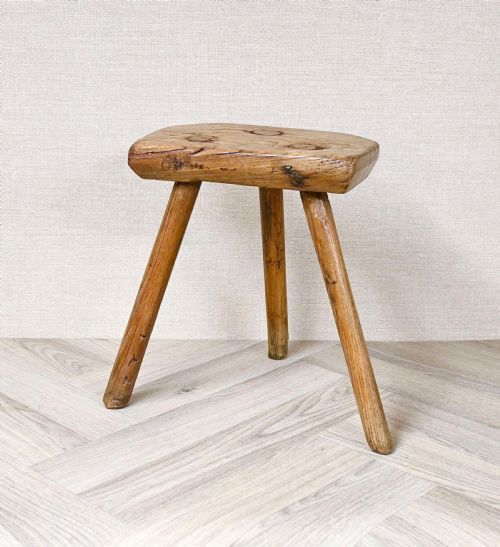
Buyers also encounter related primitive forms such as milking stools and chopping blocks within this category. These pieces span the eighteenth century, nineteenth century, and Edwardian periods, maintaining rustic vernacular qualities throughout.
What varies in quality
Quality in a country oak tripod stand rests on the proportional harmony between the top and the slender supporting column. Superior examples display thoughtful timber selection with pleasing grain patterns in the oak and secondary woods.
The degree of hand-shaping and the integrity of the original joints distinguish finer vernacular pieces from heavier, utilitarian items. Surface texture and the depth of patina developed through decades of domestic use elevate certain examples above others.
Country Oak Tripod Stand Retail Price Guide 2026
Typical asking prices for country oak tripod stand among the pieces listed under this phrase on Sellingantiques today, from the lower quarter to the upper quarter. They describe what is for sale here now, not the wider market.
Some sturdy oak surfaces retain the deep chop marks of nineteenth-century butchers and French game dressers.
The Country Oak Tripod Stand Glossary
- Tilt-top table
- A table with a hinged top that rotates to a vertical position when not in use. This clever mechanism allowed rural households to save valuable floor space in small rooms.
- Cricket table
- A small three-legged table with a round wooden top. The three legs ensure stability on uneven flagstone or earth floors.
- Vernacular
- Everyday objects built by local craftspeople using regional traditions rather than high-style metropolitan designs. These pieces prioritize function and local material availability.
- Snaptop table
- An alternative term for a tilt-top table where the surface secures horizontally with a catch. The mechanism snaps into place to prevent accidental tipping.
- Elm
- A tough, interlocking timber often used for table tops and stool seats to resist splitting. Its characteristic grain adds visual texture to country furniture.
Country Oak Tripod Stand: Frequently Asked Questions
What is a country oak tripod stand?
A country oak tripod stand is a small, three-legged occasional table designed for functional use in rural homes. These pieces typically feature a round timber top supported by a central pillar and three splayed legs.
Craftsmen built them from local woods like oak, elm, and fruitwood during the eighteenth and nineteenth centuries. They served versatile roles as tea tables, lamp stands, or general surfaces in modest interiors.
How do I date an 18th-century tripod table?
Dating relies on examining the construction methods, turning styles on the central column, and the type of tilt mechanism used. Earlier eighteenth-century examples often display simpler, heavier turnings and pegged tenons.
Later pieces from the Georgian period incorporate more slender columns and refined leg profiles. Timber shrinkage and hand-tool marks also provide clues to the age of the wood.
Were these stands used in kitchens?
Many of these stands and related chopping blocks functioned directly in food preparation and domestic chores. Their compact footprint made them easy to move around farmhouse kitchens and sculleries.
Sturdier blocks and primitive stools handled heavy tasks, while lighter occasional tables held candles or small utensils. Oak and fruitwood surfaces withstood daily exposure to moisture and wear.
How do I care for antique oak furniture?
Maintaining antique oak requires stable indoor humidity and protection from direct heat sources that can dry the timber. Dust the surface regularly with a soft, dry cloth rather than applying modern silicone polishes.
Occasional applications of traditional beeswax nourish the wood and preserve the historic patina. Avoiding excessive moisture keeps the original joints and timber stable.