
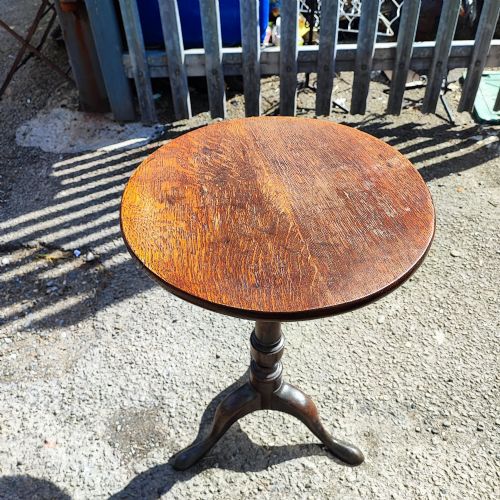
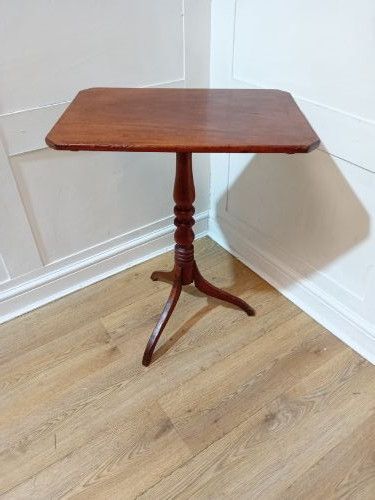
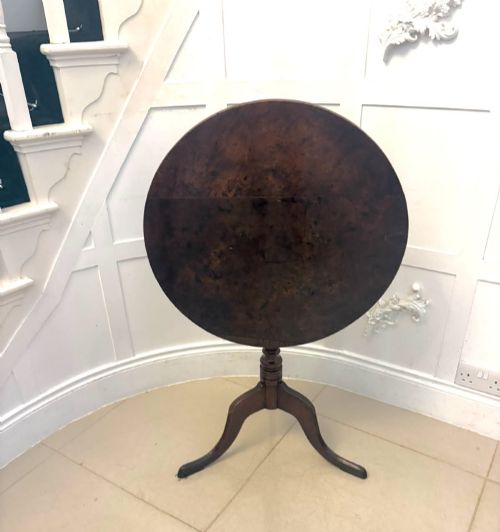
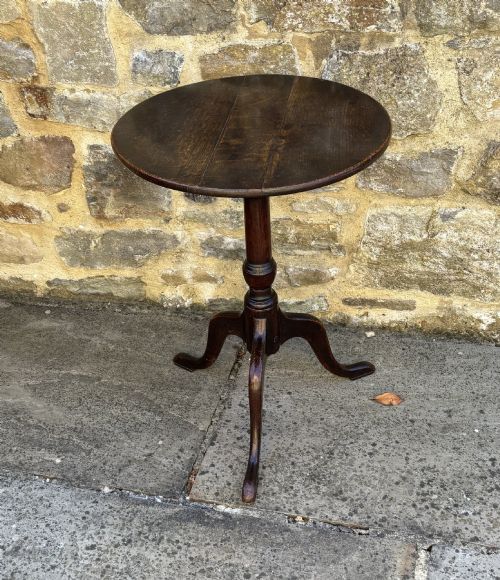


18th Century Oak Pedestal Table
An 18th century oak pedestal table brings sturdy country craftsmanship and practical small-scale surfaces to a room.
18th Century Oak Pedestal Table
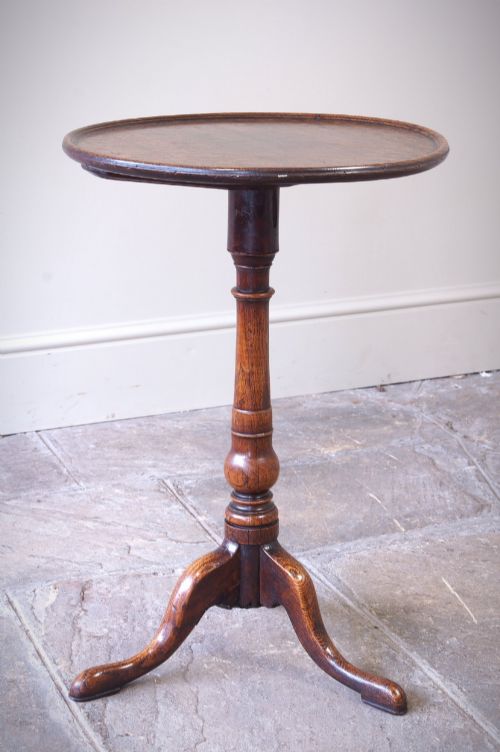
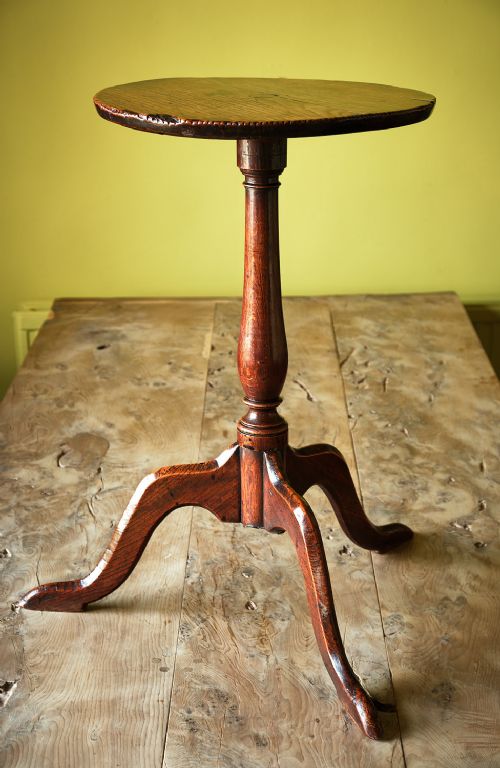
An 18th century oak pedestal table principally takes the form of a compact tripod wine table, lamp stand, or tilt-top occasional piece resting on a single central pillar and three legs. These items served functional roles in domestic interiors for holding candles, serving drinks, or supporting small lamps.
The selection on this page leans heavily toward small tripod tables from the Georgian period, alongside occasional side tables, candle stands, and kneehole pedestal desks in timber. Vernacular pieces from Wales and regional English workshops appear frequently, showing simpler regional characteristics than metropolitan London furniture.
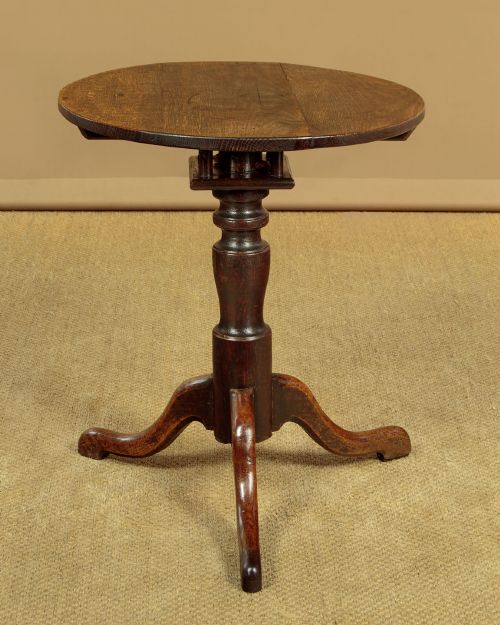
Makers produced these tables to be easily moved around a room as needed, utilising tilt mechanisms or light tripod bases for portability. Buyers encounter circular tops, rectangular tops, and birdcage mechanisms designed to let the tabletop pivot and lock.
How they were made
Carpenters constructed these pieces primarily from solid oak, frequently incorporating burr oak for figured tabletops, alongside complementary timbers such as elm, walnut, yew wood, and mahogany. Secondary woods and structural supports often relied on whatever local stock was readily available in regional workshops.
Makers turned central pedestals on lathes and shaped tripod legs by hand, joining them to the pillar with sturdy joints. Tops were attached either directly or via pivoting birdcage blocks, sometimes incorporating tilt mechanisms operated by wooden catches or brass fittings.
Object forms include wine tables, occasional tables, candle stands, and kneehole pedestal desks.
What varies in quality
Quality separates ordinary utility pieces from superior examples largely through the choice of timber figure, such as highly decorative burr oak tops, and the elegance of the pedestal turnings. Well-balanced proportions in the tripod legs and slender pillar profiles indicate careful workshop design rather than hasty provincial production.
The sophistication of the mechanism also distinguishes finer examples, particularly birdcage snaptop actions that operate smoothly without excessive play in the joints. Original surface patination and minimal structural alteration preserve the integrity prized by collectors.
The 18th Century Oak Pedestal Table Glossary
- Tripod table
- A small occasional table supported by a central pillar resting on three legs. This design allowed the table to stand stable on uneven floors.
- Tilt top
- A tabletop mounted on a hinge mechanism that allows it to fold flat against the pedestal when not in use. This saved floor space in smaller period rooms.
- Birdcage
- A revolving wooden framework beneath the tabletop that allows the surface to both tilt and rotate. It consists of small turned columns connecting two parallel plates.
- Vernacular
- Furniture made by local regional carpenters following traditional local styles rather than metropolitan London fashions. These pieces often display charming primitive construction details.
- Kneehole desk
- A pedestal desk featuring a central recessed space for the legs flanked by banks of drawers. They appeared in walnut and oak during the early and mid-eighteenth century.
18th Century Oak Pedestal Table: Frequently Asked Questions
What rooms suit an 18th century oak pedestal table?
These compact tables fit easily beside armchairs as lamp or wine stands, or serve as display surfaces in hallways and sitting rooms.
Their modest footprints allow them to occupy awkward corners where larger furniture cannot go.
How do I spot a tilt top mechanism?
Look beneath the tabletop where a wooden block catch secures the pivoting mechanism to the central pillar.
When released, the top tips vertically to rest flat against the shaft.
Are these tables heavy to move?
Most tripod tables and candle stands are lightweight and designed to be carried easily from room to room.
Larger pedestal desks and supper tables, however, require two people to lift safely.