
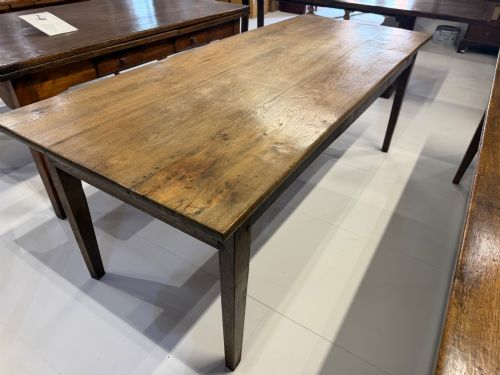
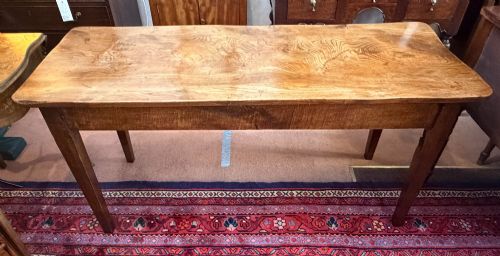
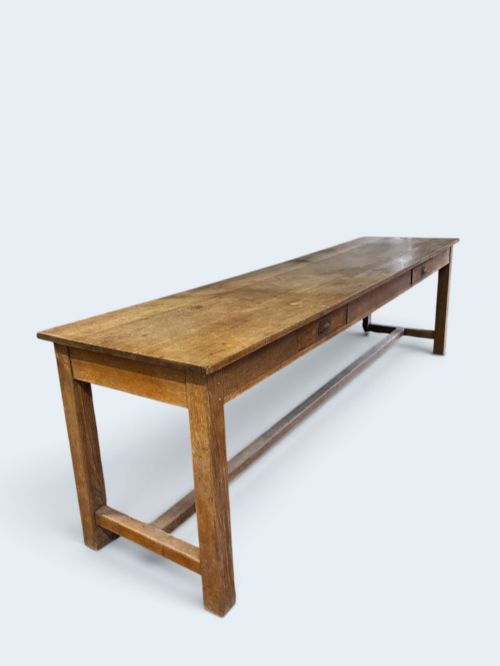
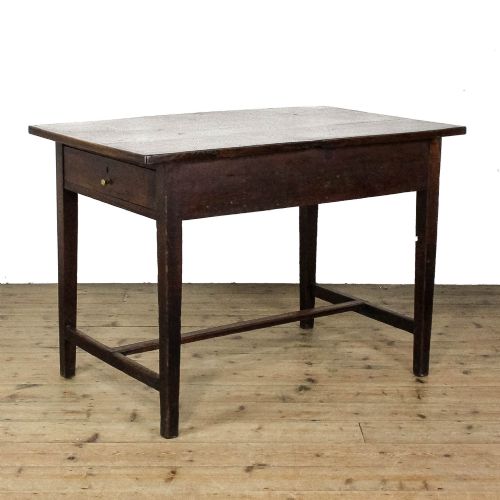



Country Oak Prep Table
These country oak prep tables are hard-working functional furniture pieces built for domestic labour, offering enduring utility and character for modern homes.
Country Oak Prep Table
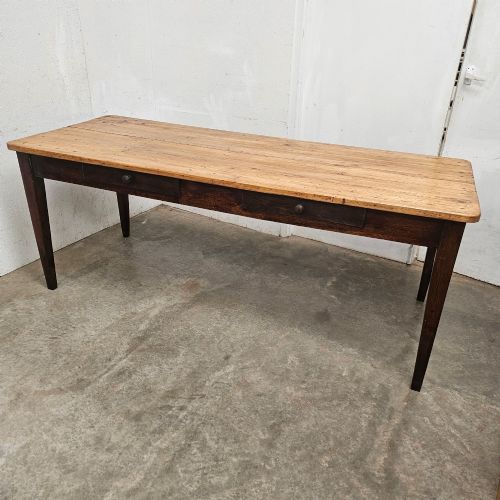
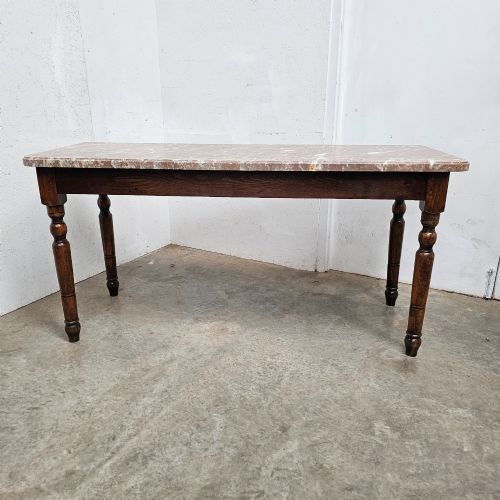
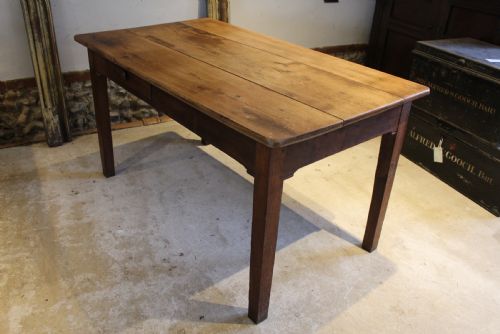
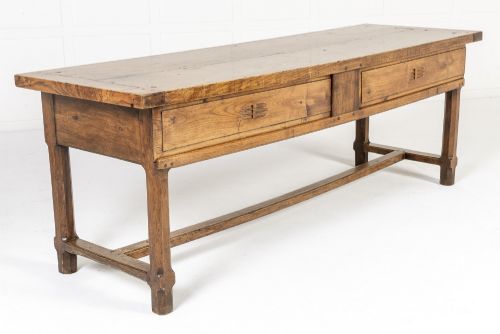
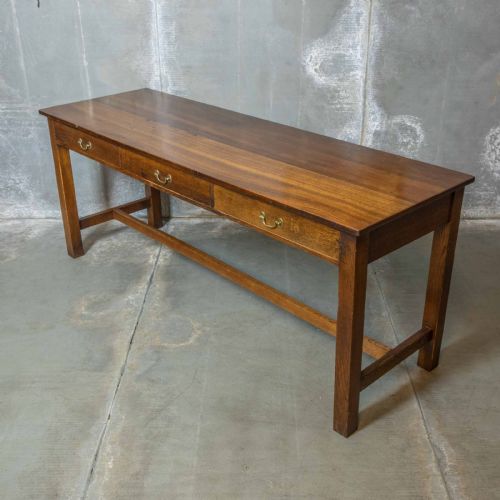
A country oak prep table is a utilitarian surface designed for practical domestic labour, spanning kitchen work tables, drapers tables, and harvest tables. When you search for this phrase, you encounter heavy oak construction often paired with pine, elm, or poplar from the eighteenth, nineteenth, and early twentieth centuries.
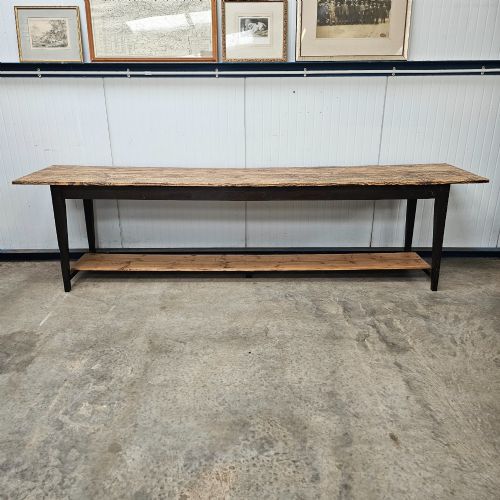
The versions you meet most frequently on this page originate from English and French country traditions, including farmhouse, refectory, and serving forms. These pieces often feature drawer storage, two-tier designs, or substantial timber tops suited to daily food preparation and communal dining.
Origins stretch from Welsh country workshops to French provincial settings, showing regional preferences in leg styles, timber combinations, and dimensions. Examples range from compact chopping blocks to long harvest tables exceeding nine feet, reflecting diverse historical domestic requirements.
How they were made
Construction relies heavily on solid oak timber for main structures and tops, frequently combined with secondary woods such as pine, beech, and poplar for drawers and internal framing. Iron and brass hardware appear on select pieces as hinges, pulls, or structural reinforcement.
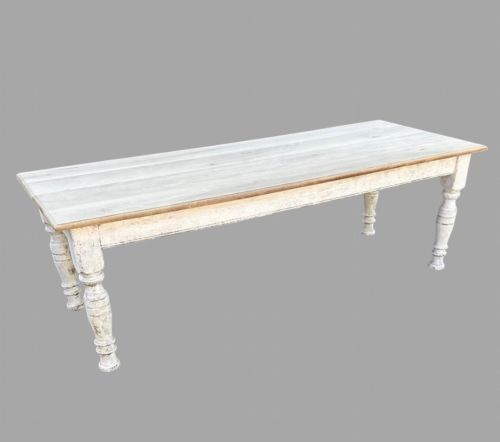
Joinery techniques prioritize durability over ornamentation, utilising pegged mortise and tenon joints to withstand heavy downward pressure during food preparation and trade use. Surface treatments range from unadorned timber to scrubbed bleached oak finishes and occasional painted elements.
Listings feature pieces spanning the eighteenth, nineteenth, and early twentieth centuries, incorporating oak alongside pine, elm, and bleached oak.
What varies in quality
The distinction between tiers rests on the integrity of the primary timber and the proportion of original material remaining in the top and base. Substantial historical wear on working surfaces reflects authenticity, whereas alterations or replaced structural components shift a piece away from its original domestic context.
Refinement in regional joinery and timber selection separates utilitarian vernacular items from more finished dining or serving furniture. The presence of integrated storage drawers, sound structural framing, and honest patination defines the upper tier of surviving examples.
The Country Oak Prep Table Glossary
- Drapers Table
- A long, narrow work table traditionally utilised in textile shops or large country houses for folding cloth, often featuring multiple drawers or a lower shelf.
- Harvest Table
- An extended dining or work table designed to accommodate large groups during seasonal agricultural gatherings, typically narrow to facilitate passing food.
- Refectory Table
- A long, substantial dining table originating from monastic or institutional use, characterised by sturdy legs connected by low floor stretchers.
- Bleached Oak
- Oak timber treated or scrubbed to lighten its natural tone, a finish commonly found on French and English country tables.
- Patination
- The surface sheen and colour acquired by wood through decades of handling, cleaning, and exposure to light and air.
Country Oak Prep Table: Frequently Asked Questions
What is a country prep table?
A country prep table is a heavy utility table originally built for kitchen work, baking, or trade tasks rather than formal dining. These pieces prioritize robust timber construction and stable surfaces over delicate ornamentation.
Surviving examples often display working marks, drawer storage, and honest signs of daily domestic use that reflect their functional origins.
How do I clean an oak table?
Cleaning historic oak tables requires minimal moisture, utilising a soft, dry cloth to remove dust and debris from the timber grain. Avoid harsh chemical cleaners that strip natural oils and historical patination from the surface.
For stubborn marks, a damp cloth with mild soap followed immediately by thorough drying preserves the integrity of the wood.
Can I use these for dining?
These tables adapt readily to modern dining spaces, offering generous proportions and sturdy surfaces for everyday meals and gatherings. Their varied heights and lengths accommodate different seating arrangements and room dimensions.
Checking clearance heights underneath drawers ensures comfortable seating before pairing the table with chairs.
How do I date an antique table?
Dating relies on observing construction methods, tool marks, timber selection, and regional design characteristics evident in the legs and framing. Hand-sawn boards, pegged joints, and secondary woods offer clues to the period of manufacture.
Comparing proportions and hardware styles helps place pieces within eighteenth, nineteenth, or early twentieth century timeframes.