
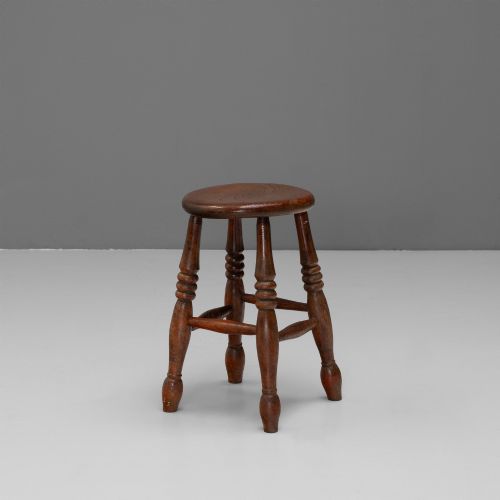
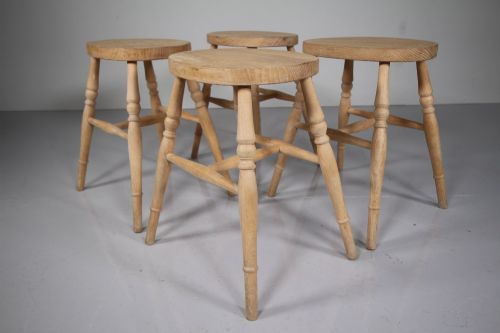
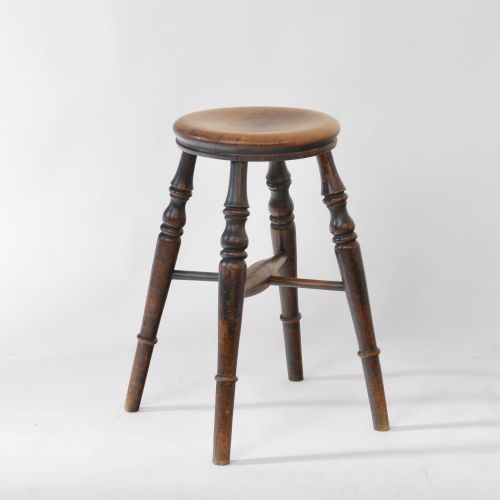
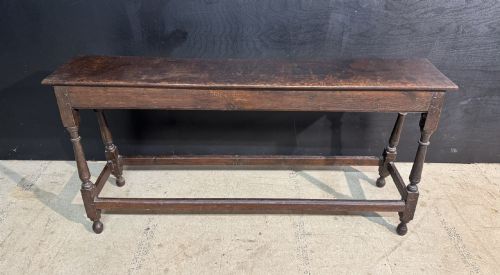
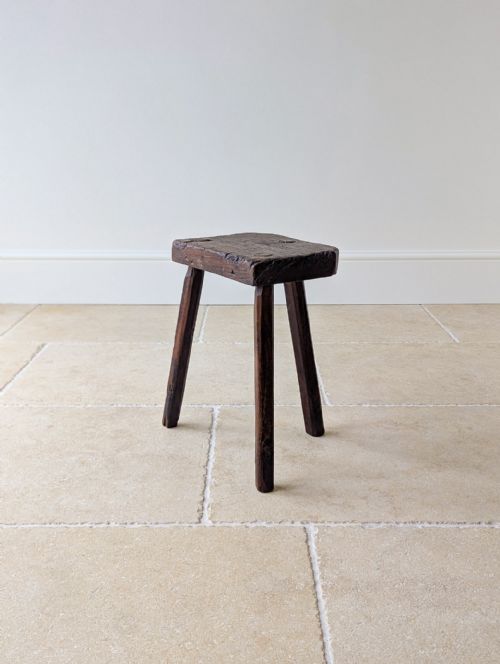
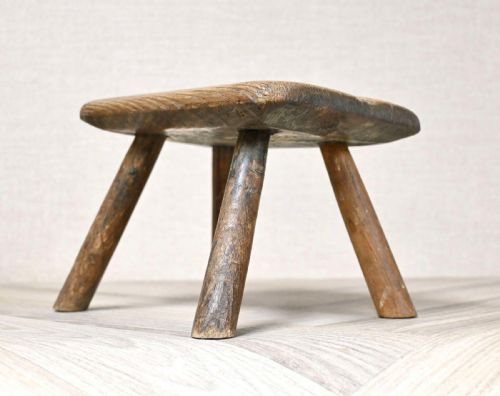
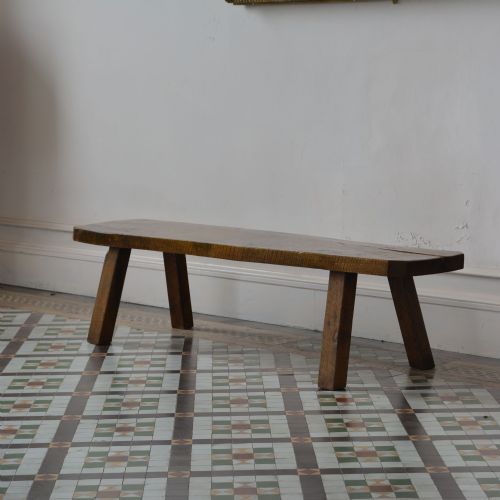
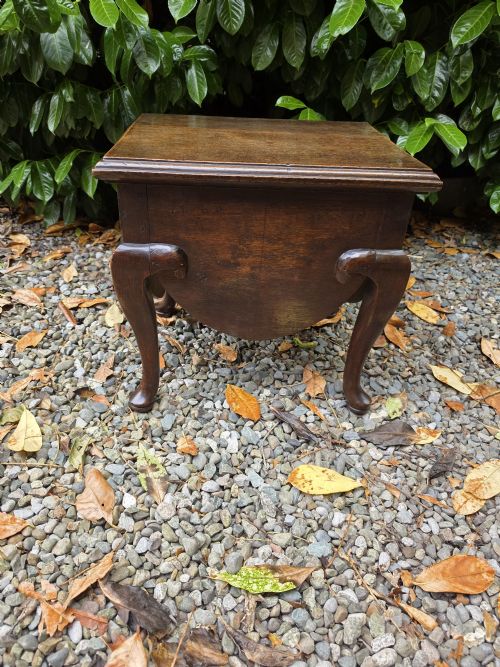
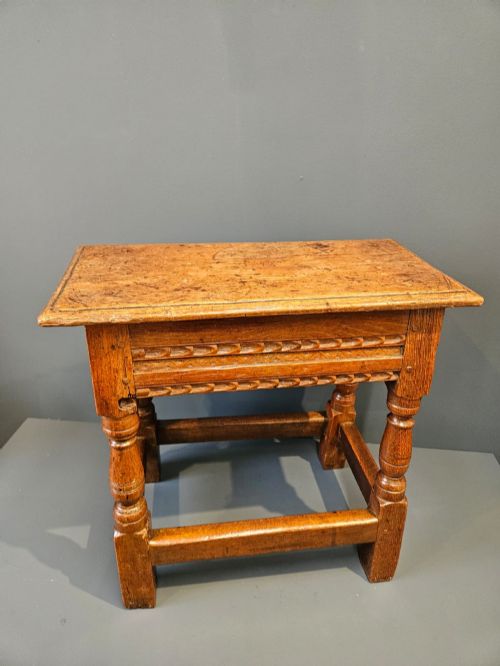
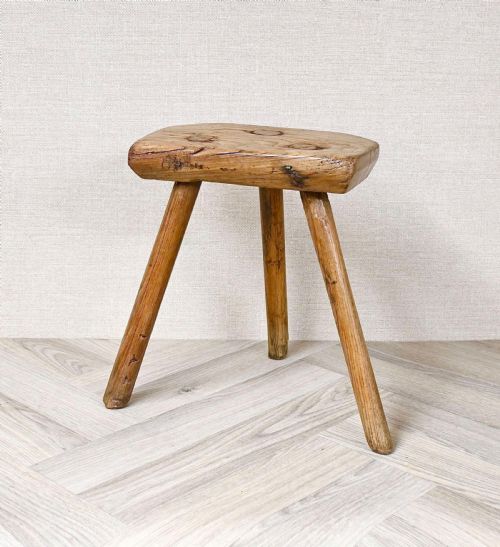

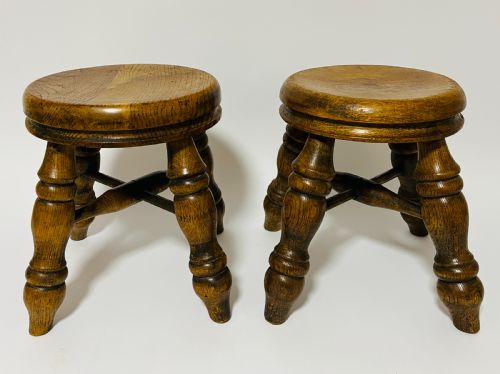


Country Oak Low Stool
A country oak low stool brings honest utility and centuries of practical craftsmanship straight into a modern interior.
Country Oak Low Stool
A country oak low stool represents a sturdy form of historic seating, born from farmhouse kitchens, workshops and taprooms. When you search for a country oak low stool, you encounter pieces designed for daily service rather than formal display.
The selection here draws primarily upon nineteenth-century examples alongside eighteenth-century and Georgian pieces. Forms range from joint stools and milking stools to low hearth stools and tavern seating.
Regional variations appear across the inventory, utilising local timbers and vernacular construction methods suited to specific rural trades. These items offer compact proportions that integrate easily beside low seating or firesides.
What varies in quality
Quality rests upon the integrity of the timber and the honesty of the construction. Pieces retaining their original unthinned tops and untrimmed legs stand above those altered or heavily sanded during later restorations.
Proportion and stance separate ordinary utilitarian items from exceptional vernacular examples. A balanced form with pleasing wear marks commands greater appreciation among collectors than a stiffly repaired equivalent.
Listings feature oak, elm, ash and sycamore across periods spanning the seventeenth to the twentieth century.
The Country Oak Low Stool Glossary
- Joint stool
- A sturdy wooden stool constructed with pegged mortise and tenon joints, commonly used for seating or as a small table in early homes.
- Milking stool
- A simple three-legged seat traditionally used by agricultural workers during dairy tasks, prized for its rustic simplicity and stable stance on uneven ground.
- Hearth stool
- A low stool positioned near a fireplace for warmth or food preparation, usually featuring modest dimensions.
- Vernacular
- Everyday objects made by local tradesmen using regional materials and traditional designs rather than high style academic patterns.
- Turned wood
- Timber shaped on a lathe to create cylindrical, tapered or decorative legs and stretchers.
Country Oak Low Stool: Frequently Asked Questions
How were low stools used originally?
These low stools served varied roles in rural and domestic life, acting as seats by the hearth, steps for reaching high shelves, or perches for milking and workshop tasks.
Their compact height made them easily movable around crowded rooms or farm buildings where space was limited.
Can I use an antique stool as daily seating?
Most historic stools remain structurally sound and handle normal daily weight without issue, provided the joints stay firm.
Placing them on level flooring prevents undue strain on the legs and peg connections over time.
How do I distinguish eighteenth-century from nineteenth-century stools?
Earlier eighteenth-century pieces often display thicker hand-sawn timbers and deeper patination alongside simpler, heavier joint construction.
Nineteenth-century examples frequently incorporate machine-sawn components and lighter turned elements reflecting changing rural woodworking tools.
What woods should I expect to find?
Oak forms the primary material for joined framework, whilst seats often utilise tough timbers like elm, ash, sycamore or beech.
These varied hardwoods were selected for their resistance to splitting under heavy daily wear.