
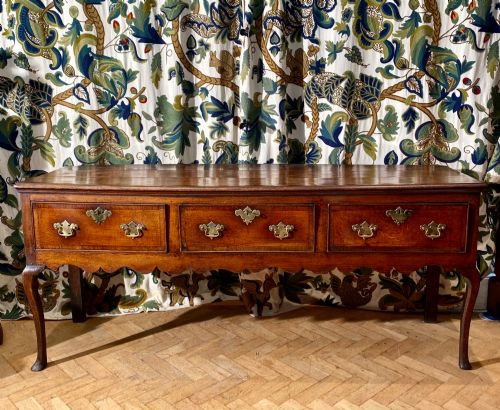
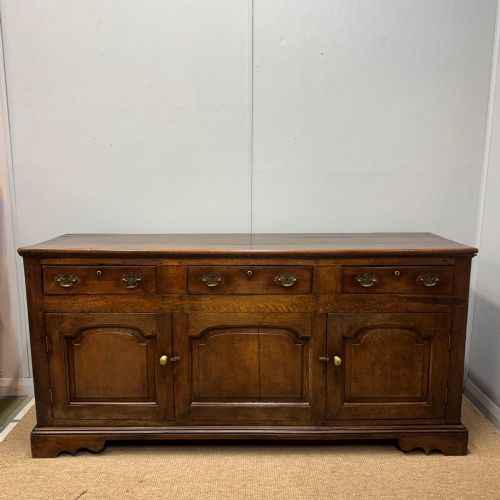
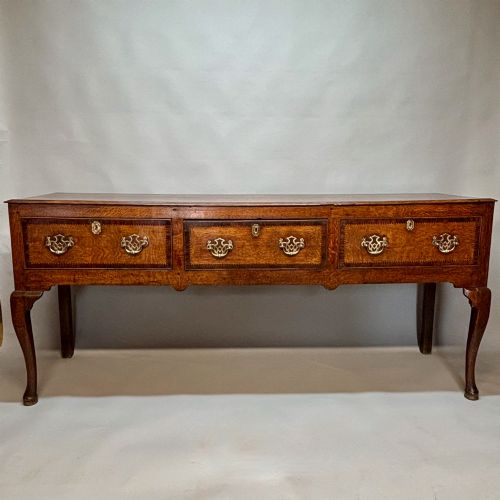
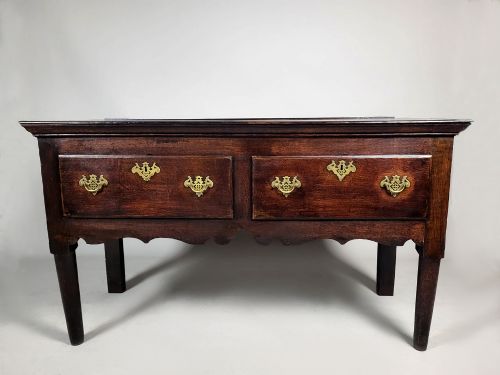
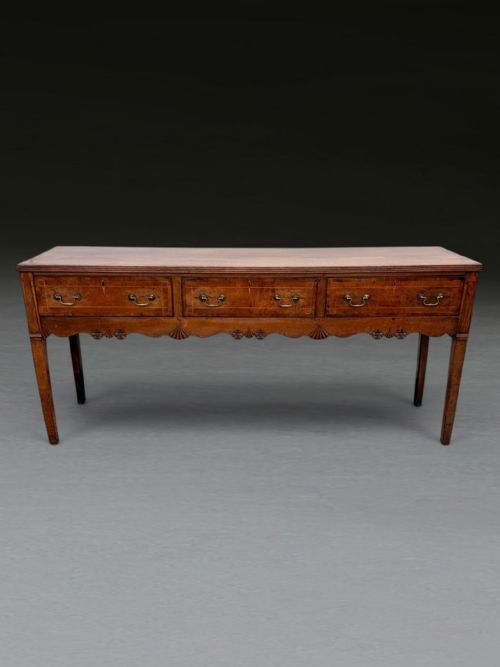
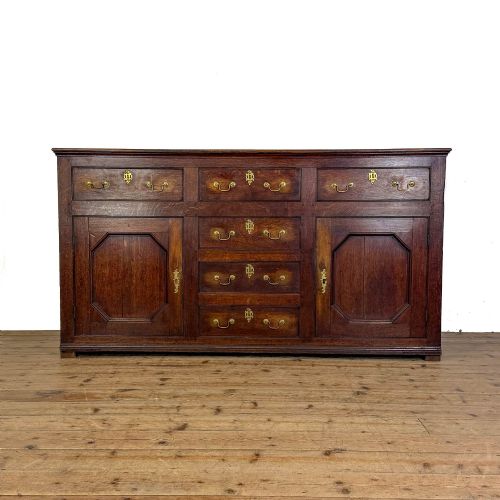

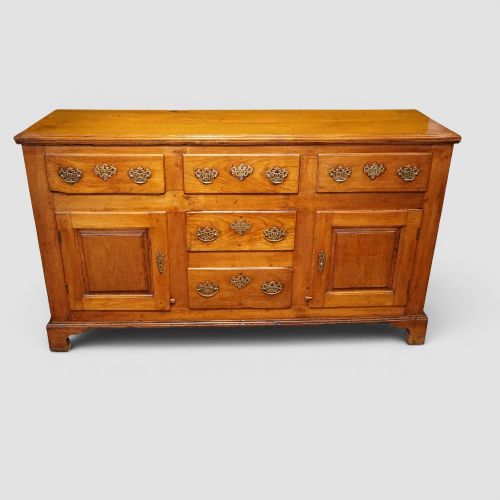
Country Oak Low Dresser
A country oak low dresser brings solid utilitarian presence to a room, offering broad surface utility alongside deep drawer storage.
Country Oak Low Dresser
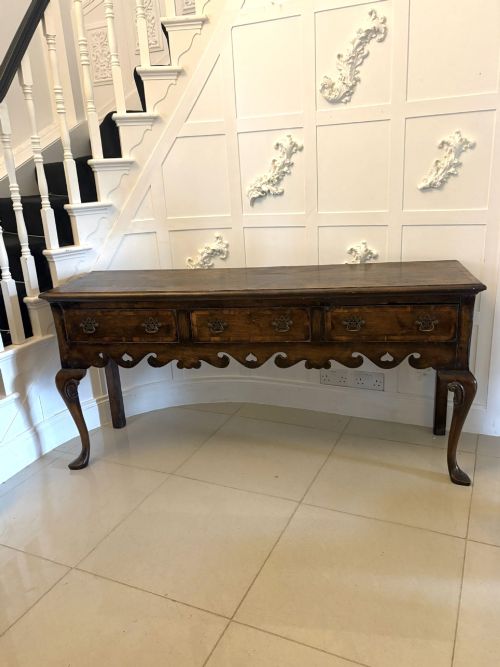
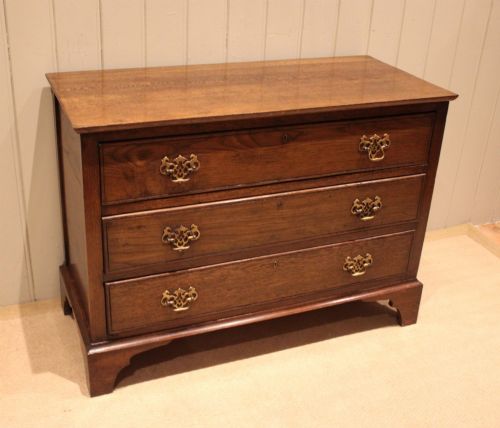
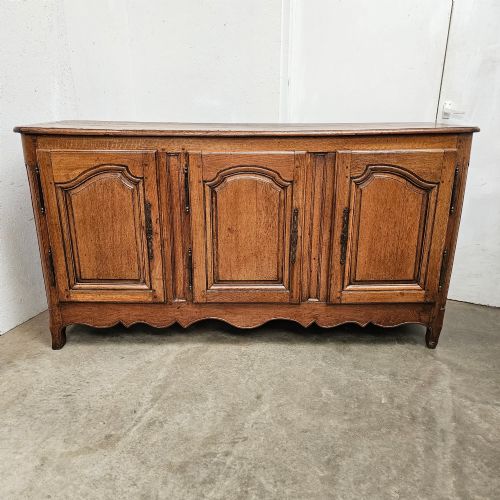
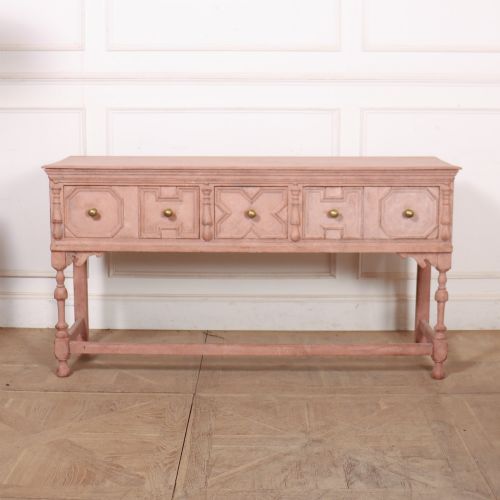
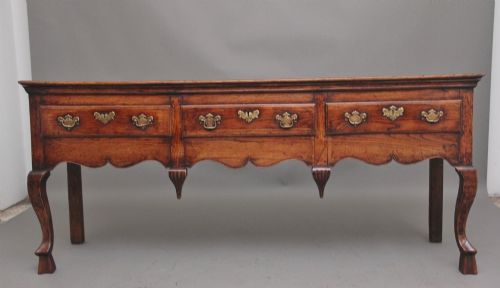
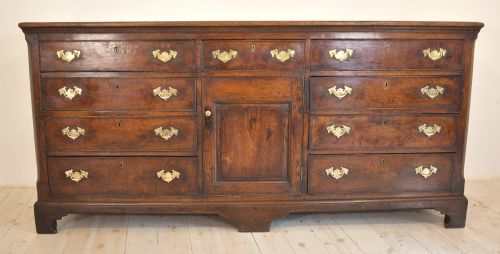
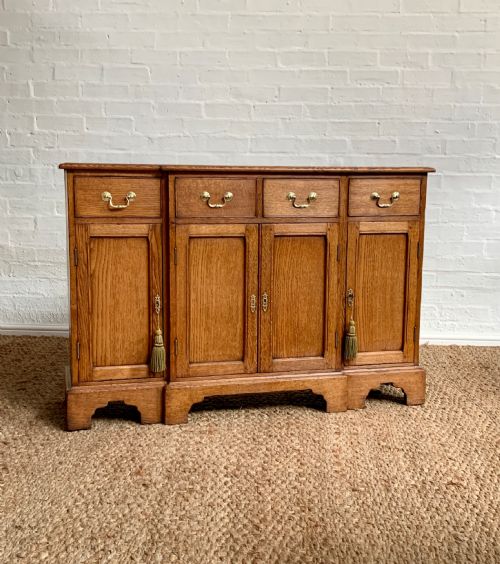
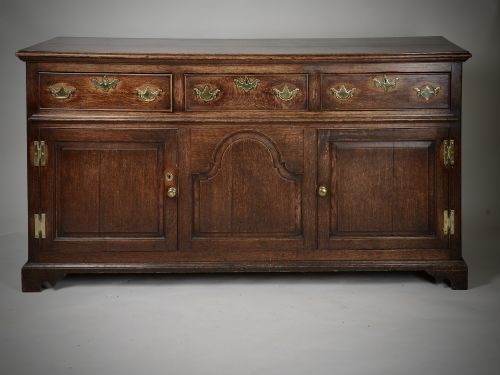
A country oak low dresser is a heavy, functional storage piece designed primarily for domestic utility in rural households. When searching this phrase, a buyer encounters forms ranging from simple sideboards and potboard bases to open pot board dressers dating from the seventeenth, eighteenth, and nineteenth centuries. English and Welsh regional variations dominate the selections, alongside occasional French provincial examples.
The pieces typically manifest as low-slung bases featuring banks of drawers, sometimes incorporating open lower shelves known as potboards for displaying or storing heavy kitchenware. Proportions tend to be grounded and horizontal, diverging from the towering superstructure of formal court cupboards or tall display dressers. Construction relies heavily on regional traditions that prioritise robust daily service over delicate ornamentation.
Materials and Construction
Carpenters built these sturdy carcasses predominantly from native timber, using solid oak supplemented by secondary woods such as elm, fruitwood, and pine. Structural elements often combine pegged mortise and tenon joints with hand-cut dovetails on drawer construction, ensuring long-term durability under heavy loads.
Hardware details typically include brass pulls and escutcheons, alongside occasional painted finishes or wrought iron hinges. Secondary timbers like elm and fruitwood frequently appear in secondary panels or drawer linings, reflecting the practical utilisation of whatever local materials were readily available to regional cabinetmakers.
Listings feature oak alongside elm, fruitwood, and pine across eighteenth-century Georgian and nineteenth-century periods.
Assessing Craftsmanship
Quality rests primarily on the integrity of the timber, the subtlety of the moulding profiles, and the preservation of original structural components like potboards and brasses. Superior examples display tight, even grain in the oak boards and minimal timber replacement over centuries of domestic service.
The finesse of the joinery distinguishes standard utility work from finer regional craftsmanship, particularly visible in the execution of drawer dovetails and the alignment of moulded framing. Surface patina developed through decades of cleaning and handling separates untouched examples from those altered by aggressive modern stripping or heavy restoration.
The Country Oak Low Dresser Glossary
- Potboard
- A lower open shelf positioned beneath the main body of a dresser base, traditionally used for storing pots and pans. This platform sits just above the floor on sturdy legs or stiles.
- Enfilade
- A long sideboard or cabinet featuring a line of multiple doors, commonly associated with French provincial dining and serving rooms. These low storage units provide expansive top surfaces.
- Dresser Base
- The lower portion of a traditional dresser, functioning as a standalone sideboard or cabinet with drawers and cupboards. It lacks the upper plate racks typically found on full dressers.
- Elm
- A tough, interlocking timber frequently utilised for drawer bottoms, secondary framing, or paired with oak in country furniture. Its dense grain resists splitting under heavy daily wear.
Country Oak Low Dresser: Frequently Asked Questions
Where did country oak low dressers originate?
These functional storage units originated primarily in rural regions across England, Wales, and France, where local craftsmen built them for domestic farmhouse kitchens.
Cabinetmakers utilised locally sourced hardwoods like oak, elm, and fruitwood to construct pieces tailored to the daily storage needs of country households.
How do I care for antique oak furniture?
Maintain antique oak by keeping it away from direct heat sources and sudden humidity shifts that can cause timber to split. Apply a microcrystalline wax polish occasionally to nourish the wood and preserve the historic surface sheen.
Avoid using modern silicone sprays or harsh chemical cleaners, as these strip away the accumulated patina built up over centuries.
What is the difference between a dresser base and a sideboard?
A dresser base traditionally originates from a kitchen or pantry context, featuring deep drawers and sometimes an open potboard for heavy crockery. Sideboards evolved more specifically for formal dining rooms to serve food and store silverware.
In practical modern living, both low furniture types serve identical functions as hallway consoles, living room credenzas, or dining room servers.
How can I tell an eighteenth-century dresser from a later copy?
Examine the construction methods inside the drawers, looking for hand-cut dovetails, irregular board widths, and pegged joinery that reveal pre-industrial hand tools. Timber shrinkage, hand-planed surfaces, and authentic wear patterns around handles and feet indicate genuine age.
Later Victorian or Edwardian revival pieces often display uniform machine-sawn components, tighter modern screws, and symmetrical grain patterns lacking deep historic patination.