

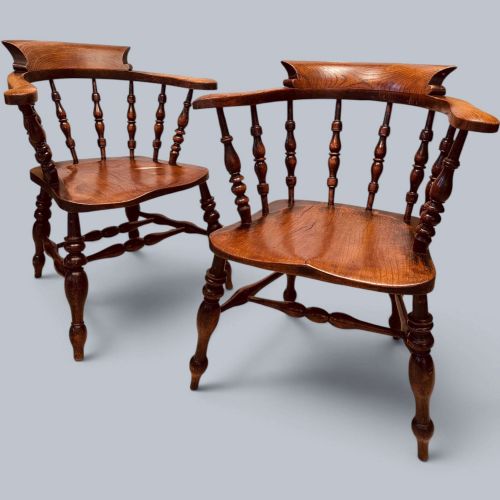
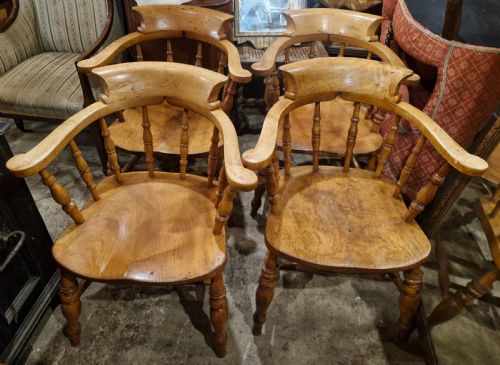
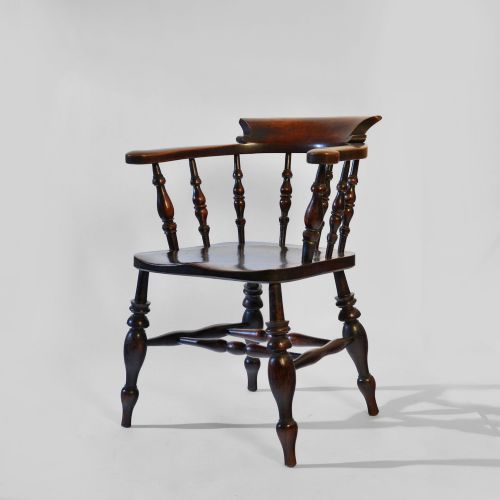
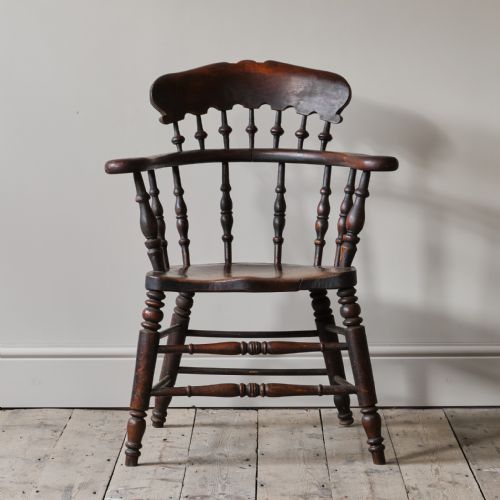
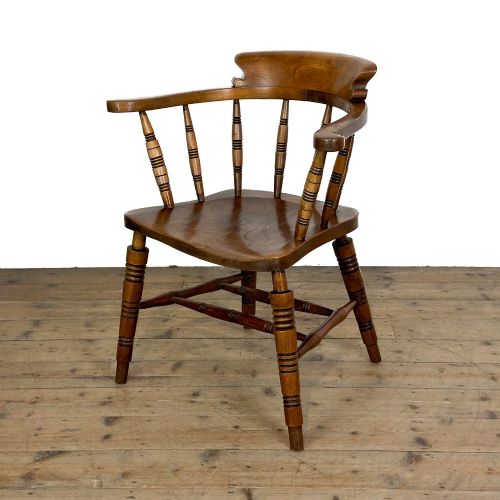
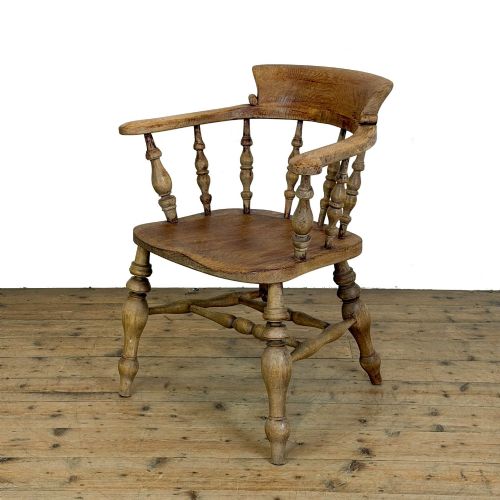
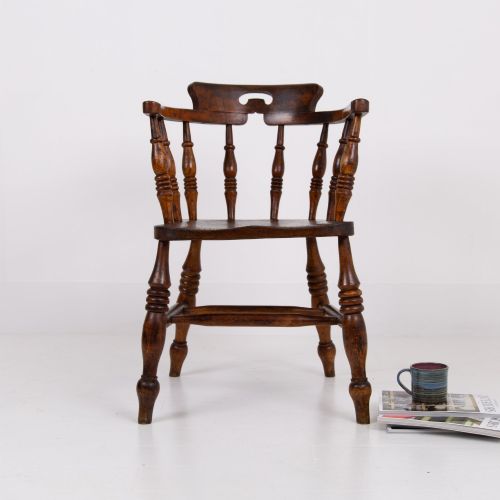


Country Oak Captains Chair
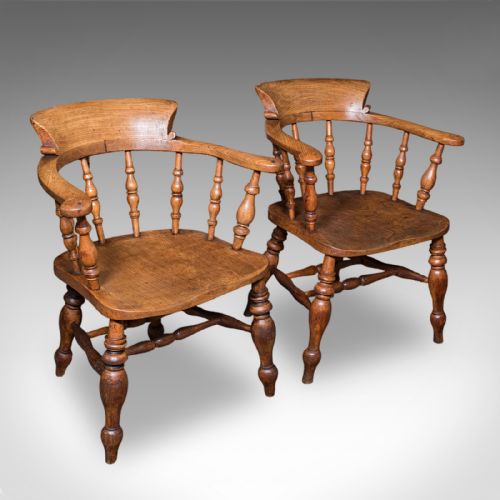
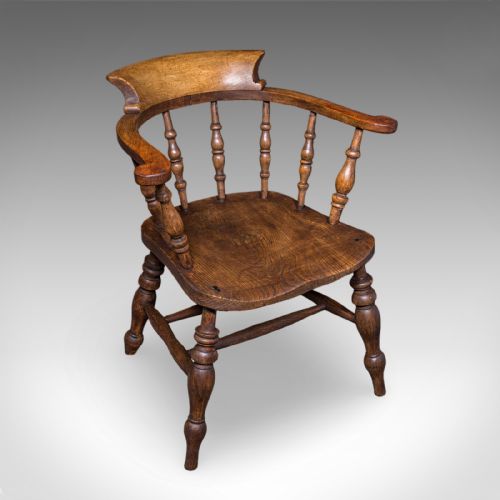
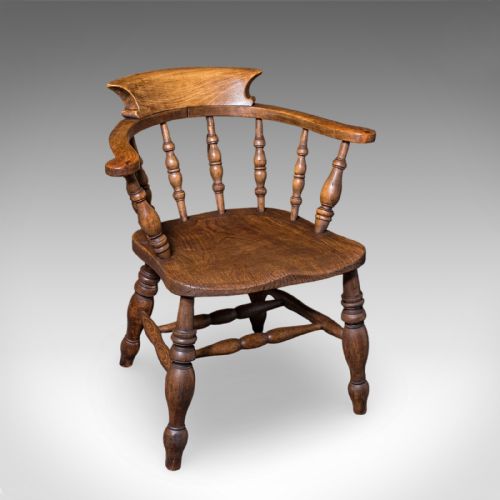
A country oak captains chair brings sturdy domestic comfort to a room, offering low-slung elbow support built for heavy daily use.
Country Oak Captains Chair
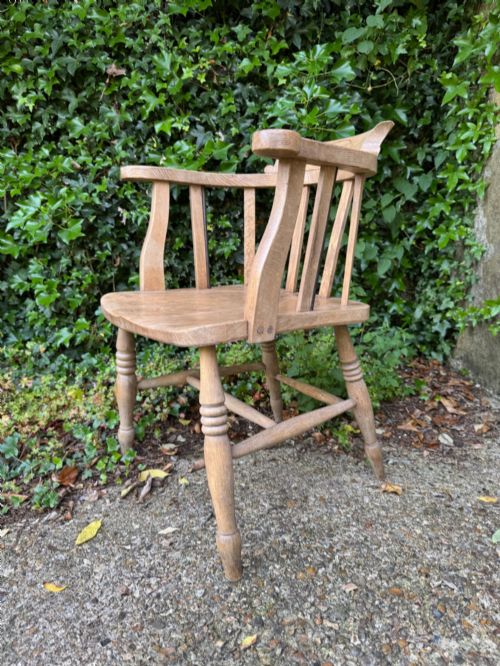
A country oak captains chair combines the solid construction of vernacular seating with the low, rounded back of a traditional smokers bow. These pieces appear frequently across the Victorian and Edwardian periods, often framed as sturdy desk or office seating.
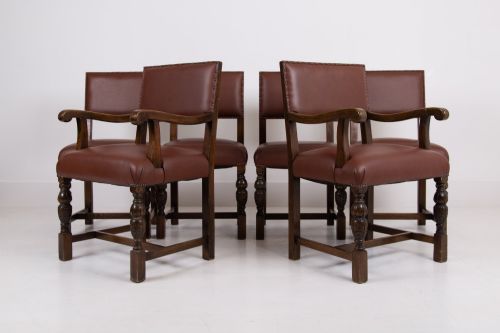
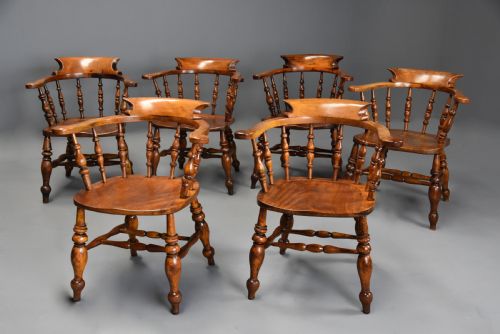
Makers shaped these armchairs using traditional English vernacular designs, drawing on regional Windsor forms and regional elbow seats. Buyers encounter single pieces as well as sets of dining chairs originating from country houses and taverns.
The form spans from the mid nineteenth century into the early twentieth century, incorporating George II styling and Jacobean revival influences. They serve practical roles as desk chairs and carvers around a dining table.
Materials and Construction
Craftsmen built these chairs using robust timbers including oak, elm, ash, and beech, frequently combining woods within a single frame for strength. Seats were often carved from solid elm planks, shaped to receive the sitter.
Turned spindle supports and steam-bent rails formed the curved armrests and low backs, secured with traditional pegged joints. Additional details like leather pads, brass accents, and woven fabric upholstery appeared on specific desk and dining variants.
Country Oak Captains Chair Retail Price Guide 2026
Typical asking prices for country oak captains chair among the pieces listed under this phrase on Sellingantiques today, from the lower quarter to the upper quarter. They describe what is for sale here now, not the wider market.
Several examples arrived with deep saddle seats carved so thoroughly that generations of sitters left their exact measure in the elm.
Assessing Quality and Character
The distinction between standard utility seating and finer examples lies in the timber selection and the integrity of the joined frame. Superior pieces retain deep patination on the solid wood surfaces, reflecting decades of consistent use.
Proportion and comfort differentiate individual examples, with well-balanced armrests and original turned spindles preserving the intended vernacular aesthetic. Uniformity across matched sets dictates desirability for dining spaces.
The Country Oak Captains Chair Glossary
- Smokers Bow
- A low-backed Windsor armchair featuring a continuous curved rail and thick armrests. This form evolved during the nineteenth century for use in parlours, offices, and smoking rooms.
- Windsor Chair
- A wooden chair constructed with upright spindles inserted into a solid sculpted seat. The legs and back pieces are typically turned on a lathe.
- Vernacular
- Traditional furniture built by local craftsmen using regional timber and practical designs rather than strict high-style pattern books. These pieces prioritise utility and local material availability.
- Carver
- An armchair designed to match a set of dining chairs, traditionally placed at the head of the table. They provide broader elbow room for the person seated.
- Patina
- The surface sheen and colour built up on wood through handling, polishing, and age over many decades. It serves as an indicator of untouched surface history.
Country Oak Captains Chair: Frequently Asked Questions
What is a captains chair?
A captains chair is a sturdy low-backed armchair designed for comfortable upright sitting at a desk or table.
These pieces typically feature a continuous curved arm rail supported by turned wooden spindles above a solid timber seat.
How old is my chair?
Dating relies on observing construction methods, timber choice, and the specific curvature of the back rail. Most examples found today date from the nineteenth and early twentieth centuries.
Earlier pieces often display broader elm seats and hand-turned ash or oak spindles, while later variants show mass-produced factory turning.
Were these used at desks?
Many oak and elm examples served as office or desk seating due to their low profile and robust arm support.
They were also utilised as carvers around dining tables and as general seating in country houses and taverns.
How do I care for the wood?
Maintain the timber by applying natural beeswax periodically to nourish the dry grain and protect the surface. Avoid placing the chair near direct heat sources to prevent the wood from splitting.
Allow the natural patination to develop by keeping the piece away from damp environments.