



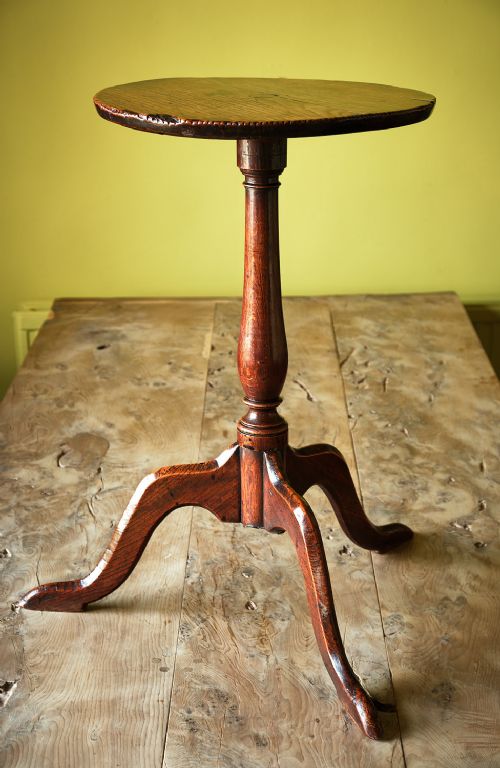


Country Oak Candle Stand
A country oak candle stand brings honest vernacular timber and simple tripod legs into a room, offering genuine utility and character.
Country Oak Candle Stand
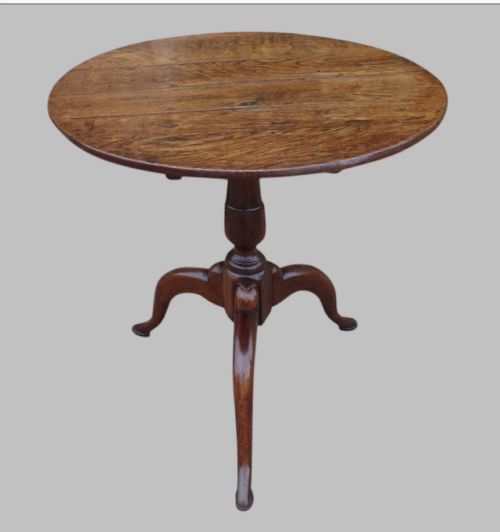
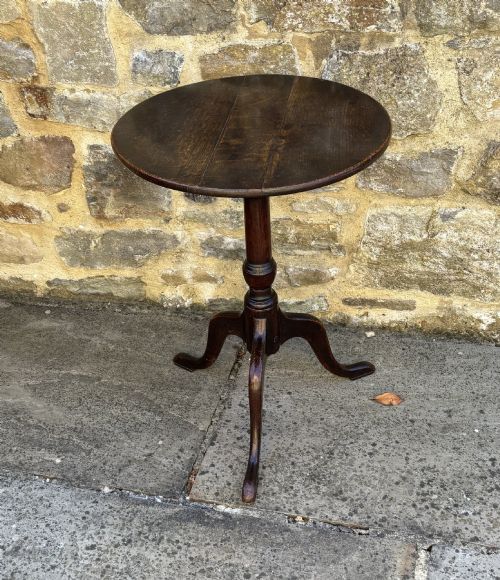
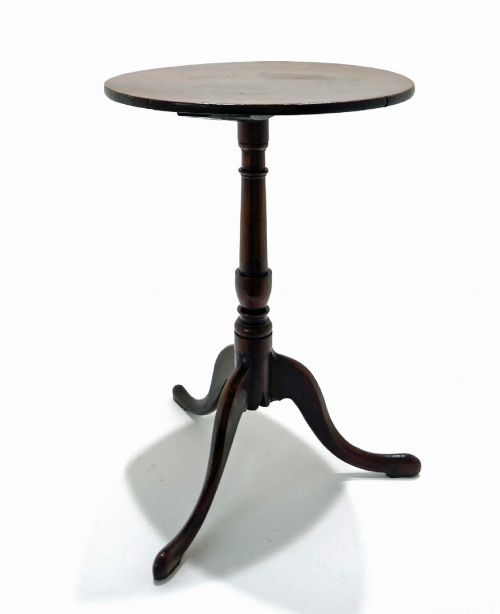
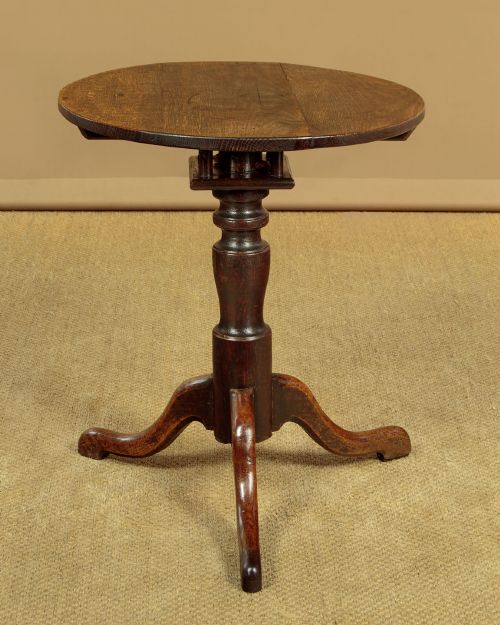
A country oak candle stand represents utilitarian domestic furniture made from sturdy local timber during the eighteenth and early nineteenth centuries. These compact tables typically feature circular or occasionally octagonal tops supported by a slender column and three splayed legs.
The pieces seen here range from small George III tripod tables to straightforward occasional tables and specific low stands. Vernacular examples often show regional character, particularly from Welsh workshops.
Buyers seeking a country oak candle stand usually want a small surface for a lamp or a single stem, relying on the compact tripod footprint to fit tight corners.
Materials and Construction
Construction relies heavily on native hardwoods, combining oak with elm, fruitwood, yew and occasional pine or iron elements. Tops are turned or shaped from solid timber planks and mounted on turned columns.
Legs are joined to the central shaft using primitive yet effective carpentry methods such as dovetail or tenon joints. Some examples incorporate tilting mechanisms with brass catches or wooden latches.
Some diminutive nineteenth-century platforms double happily as miniature stools or bedside perches for an intrepid house cat.
Evaluating Quality
Quality in these domestic pieces rests upon the balance of the proportions and the secondary timbers chosen for the base. A slender column paired with well-turned legs and clean shaping denotes a superior workshop standard.
Surface patination and the preservation of the original timber grain distinguish better examples from heavily restored ones. Retaining the original leg profile and unblemished top blocks elevates the standing of an individual piece.
The Country Oak Candle Stand Glossary
- Tripod table
- A small occasional table supported by three legs radiating from a central pillar. These forms became widespread in domestic interiors during the eighteenth century.
- Tilt top
- A table top hinged to the central column so it can tilt vertically when not in use. This clever design saved valuable floor space in smaller rooms.
- Vernacular
- Furniture made by local craftsmen using regional traditions rather than following strict metropolitan pattern books. Such pieces display charming local quirks in construction.
- Patina
- The deep sheen and surface character acquired by wood through decades of handling, polishing and exposure to light. It serves as a visual record of age.
- Occasional table
- A small, portable table designed for specific, intermittent use around the home. They provide convenient surfaces for lighting or small objects.
Country Oak Candle Stand: Frequently Asked Questions
What is a country oak candle stand used for?
These small stands originally held tallow candles or rushlights to provide concentrated illumination in domestic rooms before widespread gas and electric lighting. Today, they function as compact side tables for holding drinks, small lamps or decorative items.
Their minimal footprint allows them to sit beside armchairs or fill neglected corners without crowding a room.
How do I date an 18th-century oak stand?
Dating relies on examining the turning style of the central column, the method of leg attachment and the overall wear patterns on the timber. Eighteenth-century examples often display hand-planed surfaces and simpler, more robust structural joints.
Later nineteenth-century pieces may incorporate more uniform machine turnings or different secondary woods beneath the top.
Are tilt-top mechanisms original?
Many eighteenth-century tables feature tilting mechanisms that allowed the top to fold flat against the pillar for storage. Inspecting the underside reveals whether the wooden catch, blocks and pivot pins match the age and wear of the rest of the structure.
Replacements or later additions are common due to the strain placed on the pivoting joint over centuries of use.
What wood types are used besides oak?
While oak forms the primary surface on most examples, makers frequently combined local timbers based on availability and structural needs. Elm, fruitwood, yew and pine frequently appear in the legs, columns or secondary framing.
This mixed-timber construction is typical of country workshop practice rather than urban cabinet making.