



Country Oak and Fruitwood Table
These country oak and fruitwood table pieces combine robust utility with regional charm, offering sturdy timbers and honest joinery that suit both traditional and modern spaces.
Country Oak and Fruitwood Table
A country oak and fruitwood table brings together sturdy domestic timbers, offering robust utility for everyday dining or occasional use. Buyers meeting these pieces will frequently encounter French farmhouse tables alongside English tripod tilting examples and lowboys.
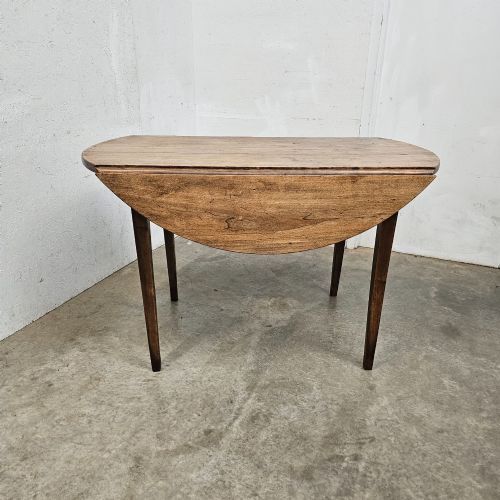
The selection ranges across the eighteenth and nineteenth centuries, including Georgian formats, rustic farmhouse styles, and provincial French designs. Forms span large kitchen dining tables, gate leg tables, drop-leaf tables, and low tables.
How they were made
Craftsmen relied on oak for primary structural framing and legs, providing immense durability and weight. Fruitwood surfaces offered a softer contrast and pleasing grain patterns, frequently utilised for table tops and smaller occasional pieces.
Secondary timbers such as pine appeared in internal framing or drawer construction. Joinery techniques prioritized utility, utilising traditional framing methods alongside brass or iron hardware where necessary.
What varies in quality
Quality separates pieces through the selection of timber figures and the integrity of the original construction. Superior examples display well-matched fruitwood tops and robust oak underframes that have survived centuries of domestic use.
The presence of integrated functional elements, such as working bread slides or multiple drawers, elevates certain provincial and farmhouse formats. Better proportioned tables maintain structural stability without relying on later modifications.
The Country Oak and Fruitwood Table Glossary
- Bread slide
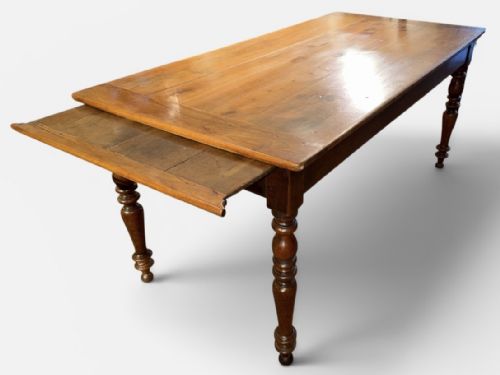
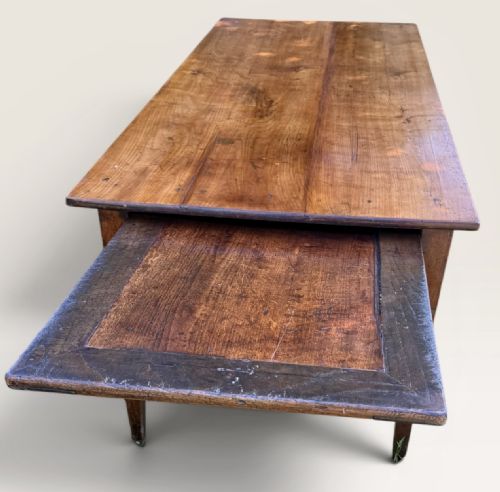
- A pull-out wooden shelf positioned beneath the table top historically used for cooling bread or expanding workspace. This practical addition is frequently found on provincial French farmhouse tables.
- Tripod tilting table
- A small occasional table featuring a central pillar supported by three legs and a mechanism allowing the top to pivot vertically. This format saved space in smaller rooms.
- Lowboy
- A small side table or dressing table fitted with one or more drawers beneath the working surface. These pieces utilise fruitwood and oak to provide compact storage.
- Parquetry
- A geometric mosaic of wood pieces used for decorative surfacing on tables. Fruitwood timbers often contribute contrasting tones to these patterned tops.
- Gate leg table
- A drop-leaf table featuring hinged legs that swing outward to support the raised leaves. This design allows the surface area to expand significantly when needed.
Country Oak and Fruitwood Table: Frequently Asked Questions
What is a bread slide?
A bread slide is a pull-out wooden board integrated beneath the top of a farmhouse table. Historically, it provided extra surface area for slicing bread or cooling loaves.
Today, it remains a charming and practical feature that indicates regional provincial design, particularly on nineteenth-century French tables.
How do I care for a fruitwood top?
Fruitwood surfaces require gentle cleaning with a soft, dry cloth to preserve the natural grain and patina. Avoid harsh chemical cleaners and excessive moisture.
Applying occasional natural wax helps protect the timber from drying out while maintaining its historic finish.
Are these tables suitable for daily dining?
These tables were built for daily domestic labour in farmhouses and kitchens, making them exceptionally sturdy for modern dining use. Oak frames and thick fruitwood tops provide the necessary strength for everyday family life.
Their robust construction ensures they handle regular gatherings while showing the character of age.
How can I tell an 18th-century table from a 19th-century one?
Eighteenth-century examples often exhibit hand-carved details, pegged joinery, and specific regional proportions associated with early country furniture. They tend to show deeper patination accumulated over generations of use.
Nineteenth-century pieces frequently introduce standardised hardware, alternative mechanics like extending frames, and provincial French styling such as parquetry.