
Country Landscape Painting
Selecting a country landscape painting brings the quiet fields, rivers and farmsteads of past centuries directly onto an interior wall.
Country Landscape Painting
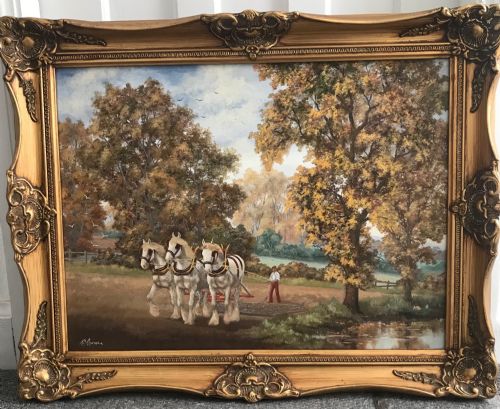
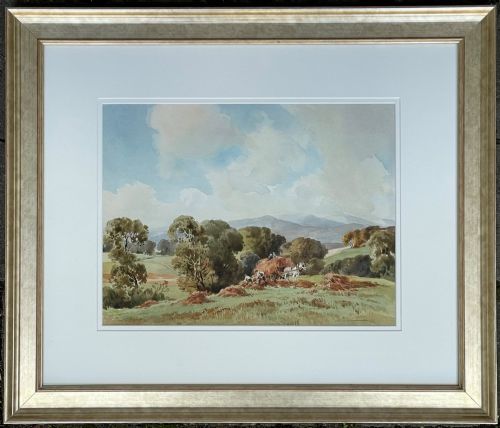
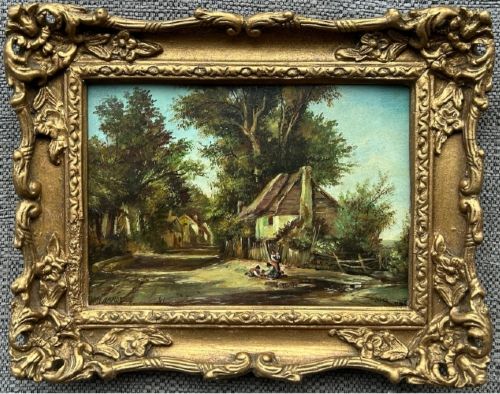
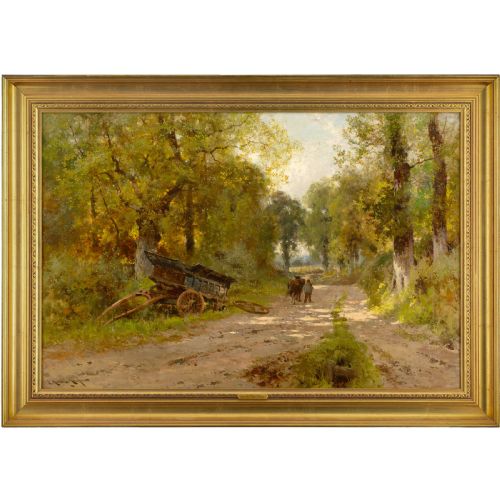
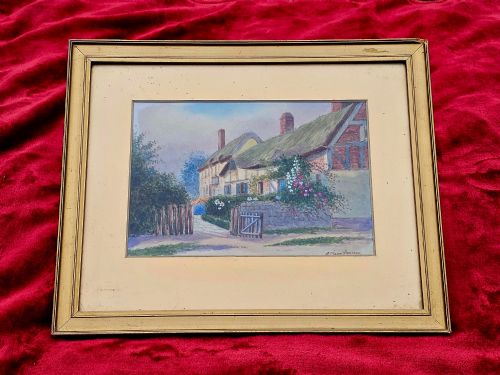
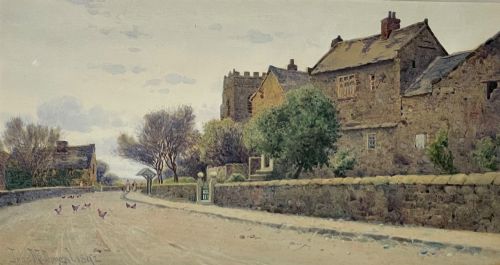
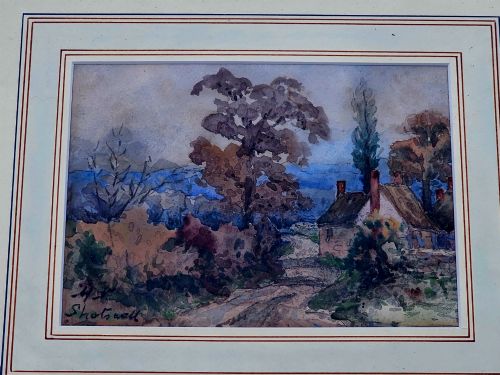
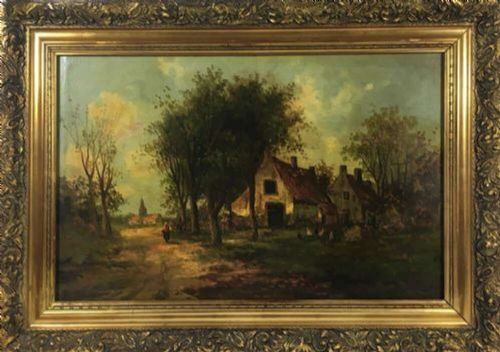
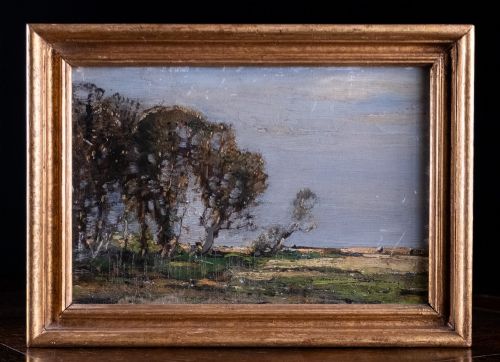
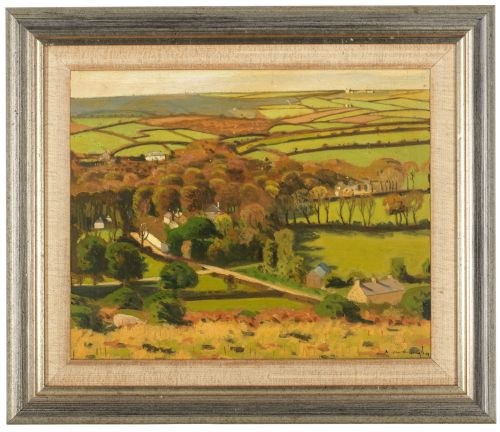
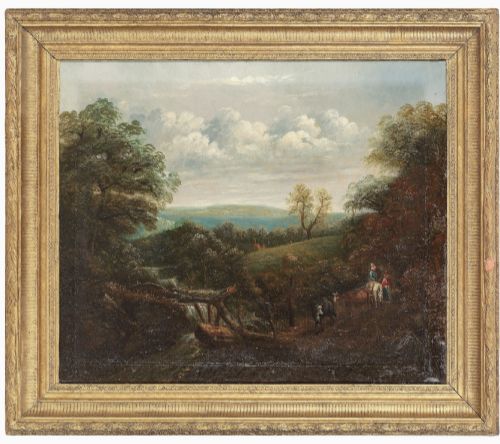
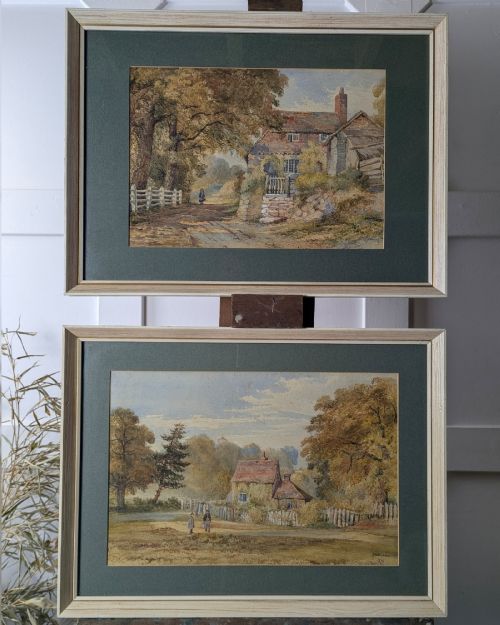
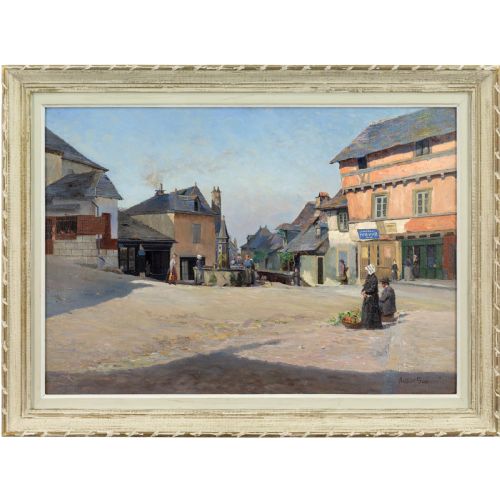
A country landscape painting captures rural scenes, agricultural life, country lanes and pastoral views from the nineteenth and twentieth centuries. These works record changing agrarian communities, rural architecture and local topography across Britain and continental Europe.
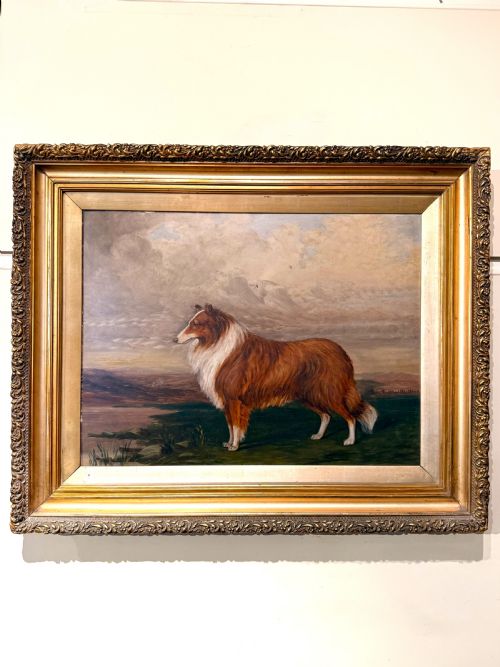
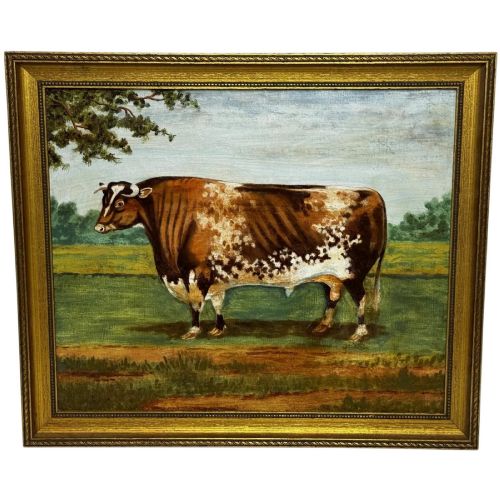
Most examples found here utilise traditional painterly methods on canvas, wood panel, board or paper, often retaining their period frames. Subjects range from uncredited provincial folk art to signed works by regional British and European schools.
How They Were Made
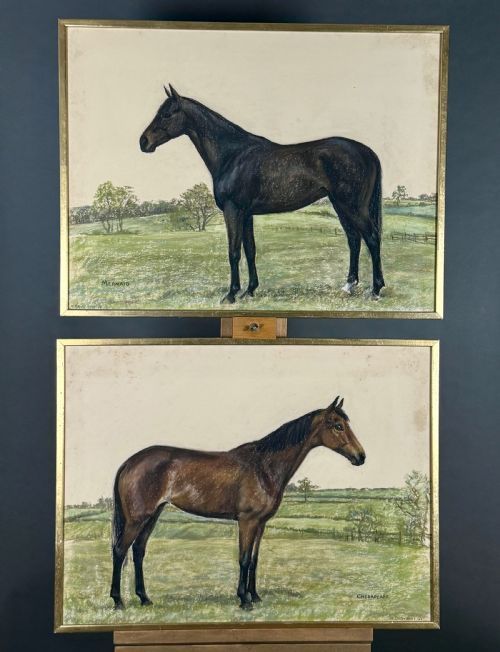
Artists built these compositions primarily using oil paint on stretched canvas or wooden panels, applying pigment with brushes and occasionally palette knives to build texture. Alternatively, many artists worked in watercolour or pastel on paper, capturing fluid light across open fields.
Many surviving pieces retain their original surrounds of carved giltwood, gesso or wood moulding, which protect the edges and complement the tonal palette of the artwork.
Listings feature works spanning the nineteenth and twentieth centuries, executed in oil and watercolour on canvas, wood, paper and card.
What Varies In Quality
Quality rests upon the artist's handling of light, atmospheric depth and brushwork control, separating loosely rendered student copies from masterly observational studies. Compositional balance and the convincing depiction of textures like foliage, water and fabric distinguish finer works.
The condition of the support material and pigment layer dictates overall integrity, alongside the presence of a period-appropriate or original frame that complements the work's historical period.
Percy Lancaster·William Howard Hardy·John Horace Hooper·A. Marie Parsons·John McDougal·Kershaw Schofield·Robert Morson Hughes·Arthur Gué·Robert John Hammond·Walter Heath Williams·Robert Thorne Waite·John Smith Atherton·Ernest Arthur Rowe·Frederick Walker·Frederick James Kerr·George Wright·Herbert Royle·Rene Levrel·Percy Hipkiss·John Syer RI·Claude Hayes·David Thomson Muirhead·Rene Durey·James Stark·John Gilroy
The Country Landscape Painting Glossary
- Barbizon School
- A nineteenth-century French art movement dedicated to naturalistic landscape painting and working directly from nature.
- Gesso
- A plaster-like mixture applied to wood panels or frames to prepare a smooth surface for painting or gilding.
- Norwich School
- The first provincial art movement in Britain, focusing primarily on the Norfolk landscape and rural scenery.
- Provincial Naive
- Art created by self-taught or untrained painters focusing on direct observation rather than academic perspective.
- Pastel
- A medium consisting of powdered pigment mixed with a binder and pressed into sticks, used on paper for soft colour transitions.
Country Landscape Painting: Frequently Asked Questions
How do I hang a heavy oil painting safely?
Heavy oil paintings require sturdy picture hooks fixed directly into wall studs or masonry using appropriate wall plugs. Ensure the hanging wire and D-rings on the back of the frame are secure before mounting.
Position the centre of the canvas at standard eye level to create a balanced focal point within the room.
Where should I display a watercolour painting?
Watercolours are sensitive to bright natural light and should be hung away from direct sunlight to prevent fading of the pigments and paper. Choose a wall in a room with stable humidity levels away from heat sources.
Using conservation-grade glass and backing boards during framing further protects the delicate paper surface from environmental damage.
How do I clean an antique frame?
Dust antique giltwood and wooden frames gently with a dry, soft-bristled brush or a microfiber cloth. Avoid applying water, liquid cleaners or solvents to gilded surfaces, as moisture can strip the delicate metallic leaf.
If the frame shows significant flaking or structural instability, consult a professional conservator rather than attempting repairs at home.
Can I reupholster near a displayed painting?
Dust and airborne particles generated during room renovations or upholstery work can settle on exposed canvas or paper surfaces. Temporarily remove paintings from the room while messy work takes place.
Store the artwork flat in a clean, dry space until the environment is entirely free of dust and debris.