

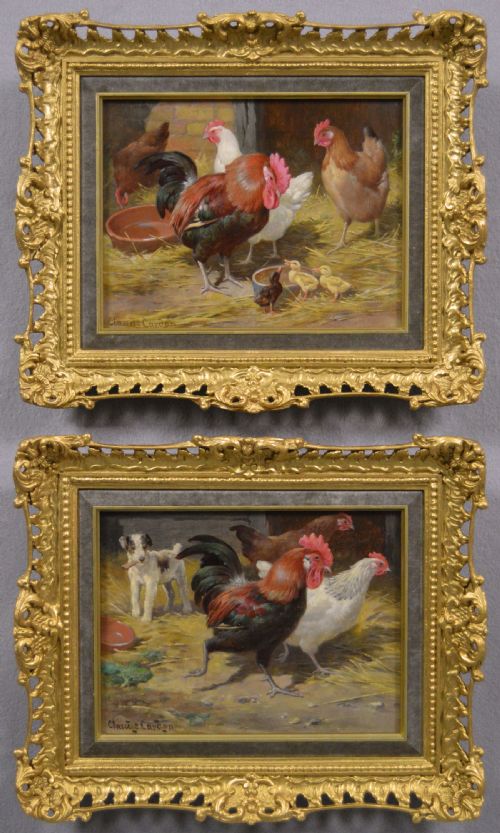


Antique Farmyard Scene
An antique farmyard scene brings the textured life of the nineteenth-century country into a room through oil paint and watercolour.
Antique Farmyard Scene
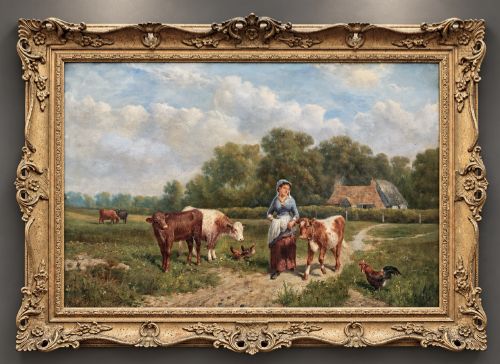
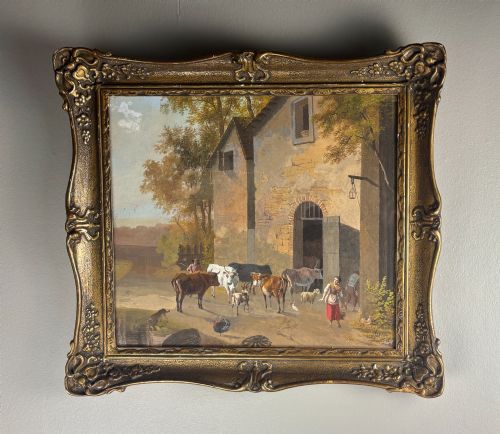
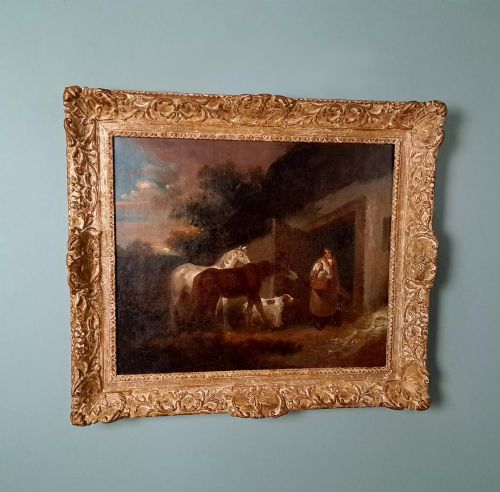
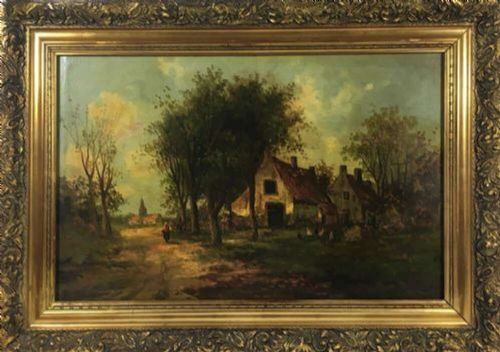
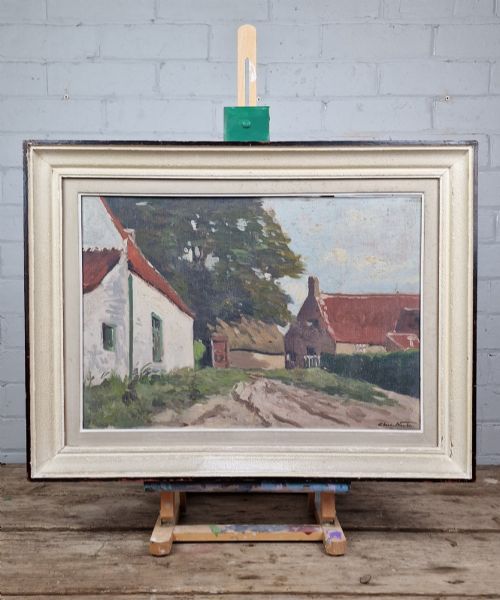
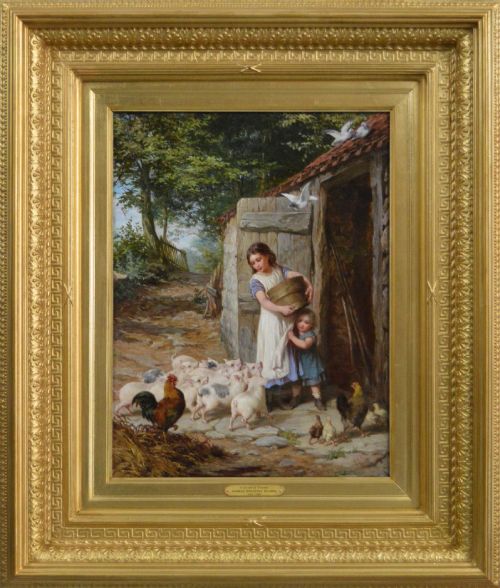
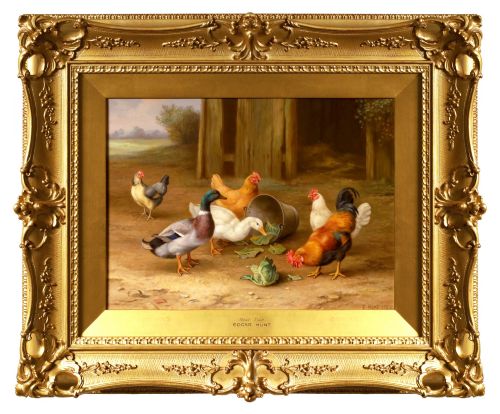
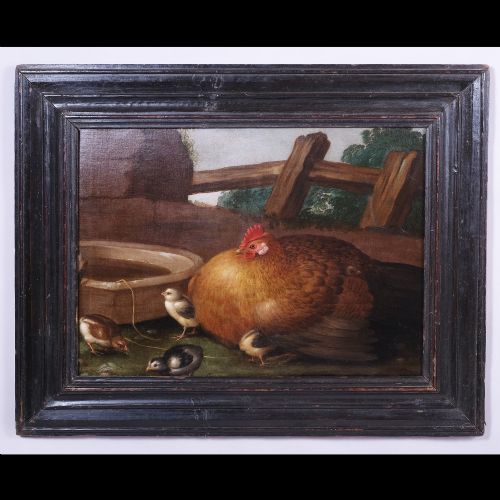
When you search for an antique farmyard scene, you are looking at pastoral paintings that capture nineteenth-century agricultural life, featuring horses, cattle, pigs, and poultry gathered around barns and homesteads. The version you are most likely to meet on this page is an oil painting on canvas or board, created during the Victorian period or the early decades of the twentieth century.
These works range from detailed portraits of prize livestock by recognised animal painters to wider landscape views of labourers resting near stable doors and stack yards. British and European artists embraced this rural subject matter, recording the daily routines of farm animals and rural workers with careful observation.
Oils, watercolours, and wooden supports
The majority of these pieces are built with oil paint applied to stretched canvas or wooden boards, allowing artists to layer rich pigments and build depth in animal coats and rustic timber. Watercolours on paper also appear frequently, often preserved behind glass within period frames.
Makers set these works into wooden frames, frequently finished in giltwood or gold leaf, which provide a traditional border that complements the earthy palette of the pastoral scenes.
Several paintings feature stubborn piglets managing to steal food directly from fruit baskets before the farmer notices.
Brushwork, anatomy, and framing
Quality rests upon the artist's command of animal anatomy and the expressive handling of light across feathers, hides, and weather-beaten barn walls. Stronger works demonstrate confident brushwork that defines the weight of cart horses and the intricate plumage of poultry without stiffness.
The condition of the original canvas or paper and the preservation of the matching period frame also distinguish finer examples from standard decorative pieces.
William Joseph Shayer Senior·Charles Houben·George Augustus Holmes·Edgar Hunt·Claude Cardon·Herbert Royle·John Frederick Herring Jnr·Percival Glenfern·John Linnell·Helena Maguire·Pierre Emmanuel Dielmans·Julius Caesar Ibbetson·Arthur Charles Dodd·Robert Russell MacNee·Owen Bowen·B Kaufmann·Joseph Kirkpatrick·Arthur Walker Redgate·Ernest Higgins Rigg·Georgina Lara·George Morland·Thomas Blinks·Fred Lawson·Henry Charles Woollett
The Antique Farmyard Scene Glossary
- Genre painting
- A style of art that depicts aspects of everyday life by portraying ordinary people engaged in common activities. In these listings, it often describes scenes of farm workers and animals.
- Barbizon School
- A French movement of landscape painters who worked from nature during the mid-nineteenth century. Their naturalistic approach influenced rural painting across Europe.
- Post-Impressionism
- An artistic movement following Impressionism that extended its use of vivid colours and thick brushstrokes while retaining a focus on distinct subject matter. Charles Houben is an example found here.
- Giltwood
- Wood that has been covered with a thin layer of gold leaf or gilt paint. Many nineteenth-century paintings retain their original giltwood frames.
Antique Farmyard Scene: Frequently Asked Questions
What animals appear most often in these scenes?
Chickens, cockerels, and pigs dominate the foregrounds of many works, often depicted pecking at the earth or feeding near rustic troughs.
Horses also feature heavily, from heavy shires resting near cart sheds to hunters standing in stable yards.
How do I care for an antique oil painting?
Keep the canvas away from direct sunlight and dramatic shifts in household temperature to prevent the paint surface from cracking.
Dust the frame gently with a dry, soft cloth and avoid using liquid cleaners on the painted surface.
Are watercolours as durable as oils?
Watercolour paintings require protection behind glass to shield the paper and pigments from atmospheric moisture and fading light.
When framed correctly and kept out of strong sun, they remain stable over centuries.
How can I tell a Victorian farm painting from an Edwardian one?
Victorian works often lean towards high realism and detailed narrative elements, focusing on the texture of livestock and farmyard architecture.
Edwardian and later pieces frequently employ looser brushwork and lighter palettes influenced by impressionist techniques.