
Country Landscape Art
Country landscape art captures the quiet fields, working farms, and rural pathways of past centuries through oil, watercolour, and pastel.
Country Landscape Art
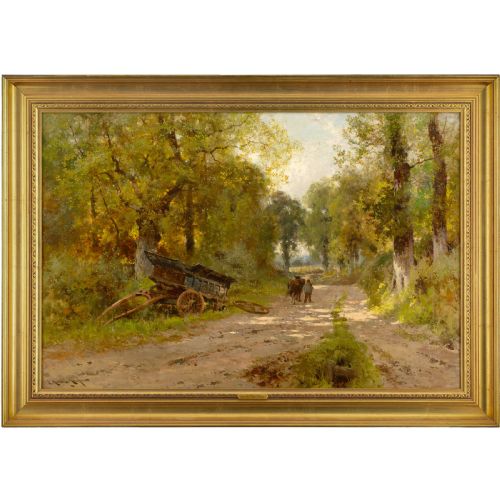
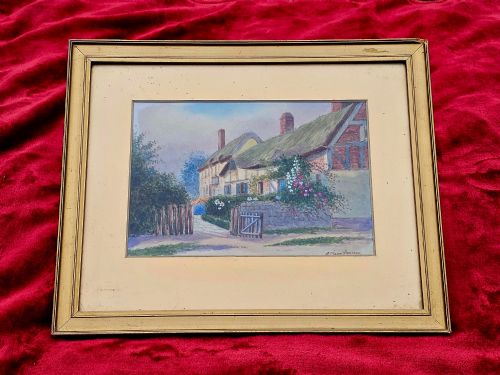
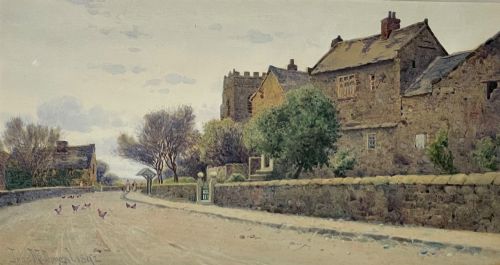
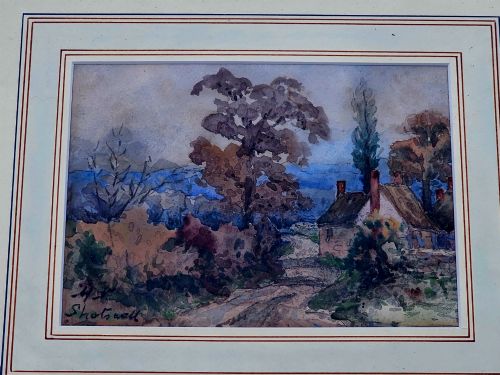
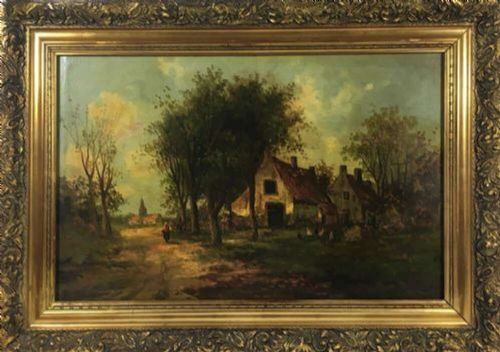
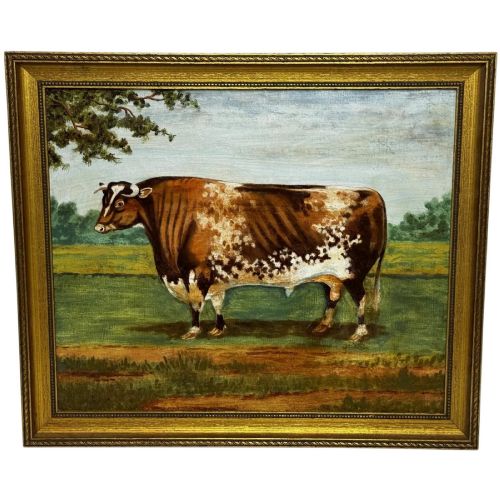
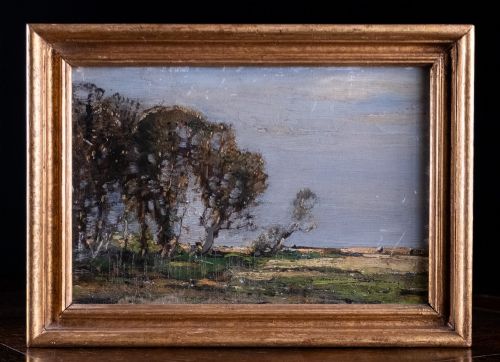
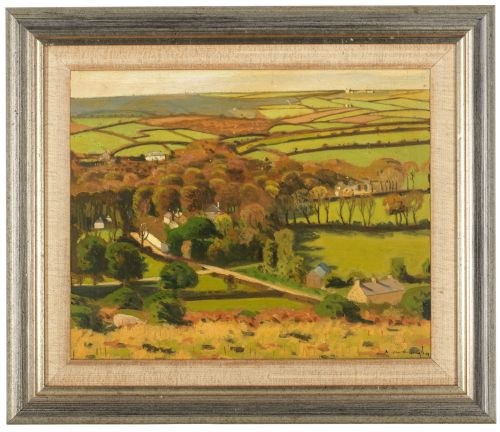
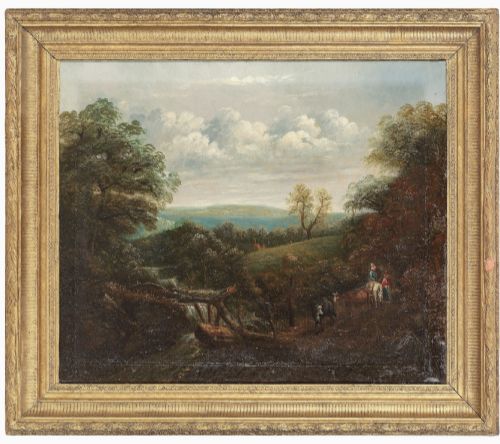
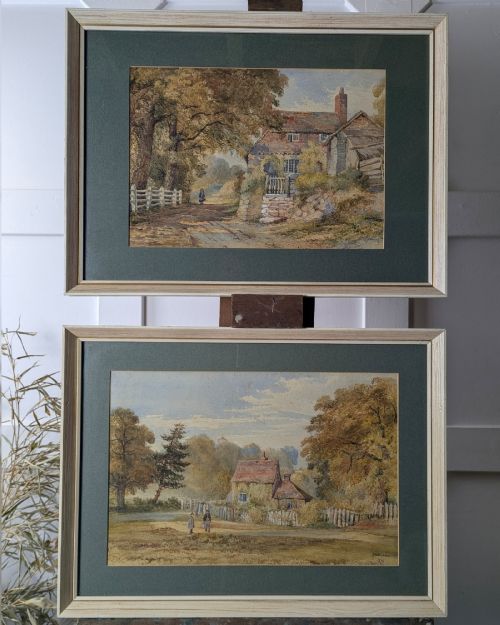
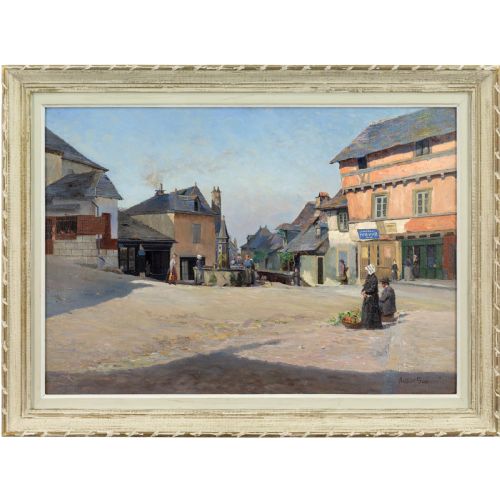
Country landscape art encompasses painted and drawn depictions of rural scenes, ranging from agricultural fields and livestock to quaint cottages and village paths. The pieces here span the Victorian era through the mid-twentieth century, capturing changing attitudes towards the countryside. You will encounter works originating from regional British schools as well as continental European traditions.
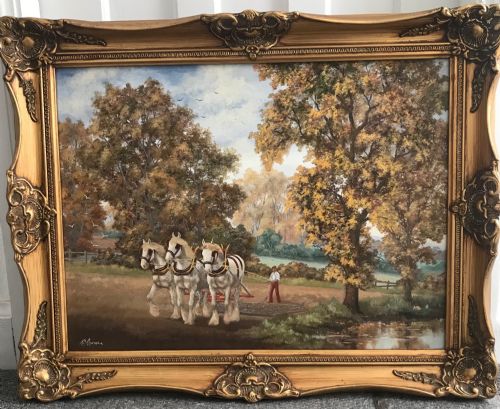
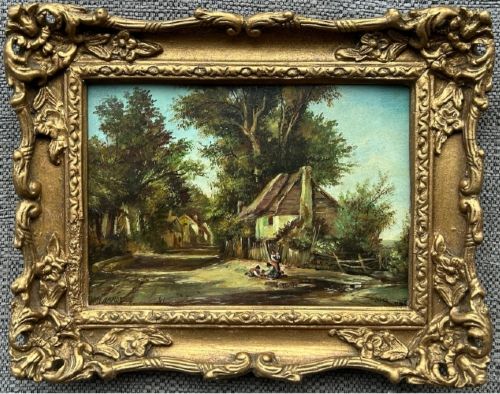
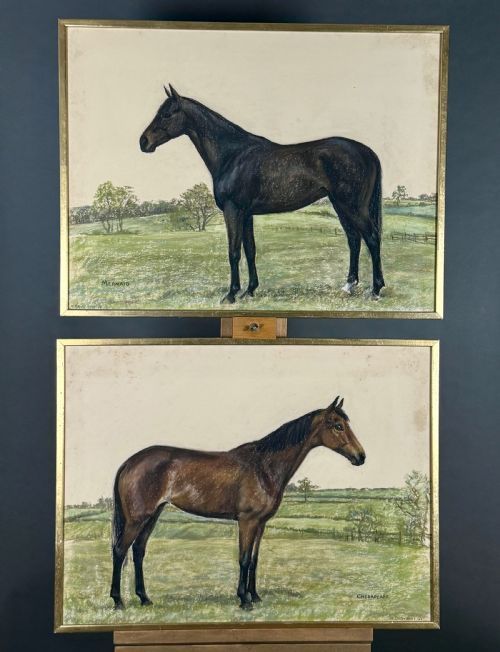
Oil on canvas and watercolour on paper dominate the selection, presented within period frames of wood, gesso, and giltwood. Many of these artworks highlight rural industry, depicting farmers plowing, shepherds herding sheep, or horses working the land. Others present quiet domestic vistas, showing thatched cottages and country lanes framed by natural foliage.
Materials and techniques
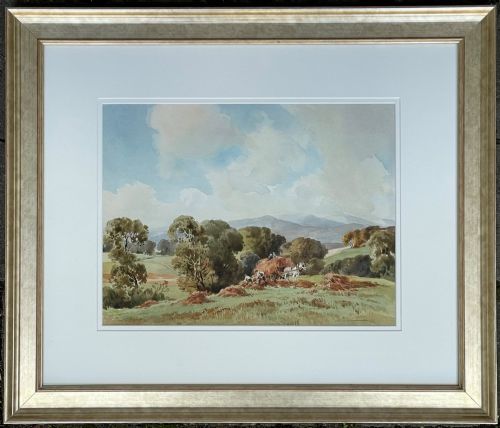
Artists working on these rural subjects relied on oil paint applied to canvas, wooden boards, or cards, alongside delicate watercolours and inks on paper. Oil pigments allowed for textured brushwork and deep layers, capturing the changing light of harvest fields and woodland paths. Watercolour paintings offered translucent washes that suited the atmospheric skies and damp meadows of the British countryside.
Framing played an integral part in the presentation of these works, utilising carved wood, plaster gesso, and applied gilt finish to accent the composition. Drawings and pastels required protective glass coverings to preserve the fragile dry media against moisture and handling. Support panels of solid wood or sturdy board provided rigid foundations for heavier applications of oil paint.
Listings feature works from the eighteenth through the twentieth centuries, utilising oil paint, watercolour, and pastel on canvas, paper, and wood.
Elements of quality
The distinction between standard decorative works and exceptional regional paintings lies in the handling of light, perspective, and atmospheric depth. Masterful brushwork breathes life into foliage and animal forms, whereas lesser examples rely on formulaic repetition and stiff outlines. The strength of the composition dictates visual balance, guiding the eye naturally along paths, rivers, and horizon lines.
Provenance and attribution elevate certain pieces, particularly those bearing the signature of a recognised regional artist or documented school. The preservation of the original surface, unmarred by heavy restoration or overpainting, maintains the integrity of the artist's original vision. Additionally, the craftsmanship of the period frame contributes significantly to the overall presence of the artwork.
Percy Lancaster·William Howard Hardy·John Horace Hooper·A. Marie Parsons·John McDougal·Kershaw Schofield·Robert Morson Hughes·Arthur Gué·Robert John Hammond·Walter Heath Williams·Robert W. Macbeth·Fred Lawson·Robert Thorne Waite·John Smith Atherton·Lucy Pratt·Thomas Sidney Cooper·Raymond Booth·Ernest Arthur Rowe·Frederick Walker·John Sargent Noble·Frederick James Kerr·Edwin Henry Landseer·George Wright·Herbert Royle·Rene Levrel
The Country Landscape Art Glossary
- Watercolour
- A painting method where fine pigment is suspended in a water-soluble binder and applied to paper. This medium creates translucent layers and luminous washes ideal for skies and distant hills.
- Gesso
- A plaster-like mixture applied to wooden frame mouldings to create a smooth surface for gilding. It allows for intricate relief ornamentation around the edges of the artwork.
- Giltwood
- Timber carved and coated with a thin layer of gold leaf or metallic paint. It provides a reflective, ornate border that enhances the tones within the painting.
- Barbizon School
- A mid-nineteenth-century French art movement focused on realistic, unidealized landscape painting rooted in direct observation of nature. These artists worked outdoors to capture natural light and rural scenes.
- Provincial Naive
- An artistic style characterised by a charming disregard for formal academic perspective and proportion. These works are created outside formal training traditions, emphasising direct storytelling and regional character.
Country Landscape Art: Frequently Asked Questions
What subjects appear in country landscape art?
These artworks depict agricultural fields, farm animals, thatched cottages, and rural workers across various European regions. Scenes often capture daily rural life, including plowing horses, sheep grazing, and figures walking along country lanes.
Many pieces focus on specific geographical locations, recording the local architecture and natural topography of places like Yorkshire, Berkshire, and Normandy.
How do I care for antique watercolours?
Watercolour paintings require protection from direct sunlight to prevent the pigments from fading over time. Keeping them in stable humidity conditions safeguards both the paper support and the delicate framing materials.
Displaying these works behind appropriate glazing shields the surface from dust, atmospheric pollutants, and accidental physical contact.
What is the Barbizon School influence?
The Barbizon School represents a nineteenth-century shift toward painting landscapes directly from nature rather than within a studio. This approach prioritized honest depictions of rural French farmyards and forests over classical, idealized compositions.
Artists associated with this movement influenced subsequent generations of painters across Europe to embrace realism and atmospheric light in their rural scenery.