
Country Kitchen Harvest Table
A country kitchen harvest table brings honest timber and generous proportions to the heart of daily life.
Country Kitchen Harvest Table
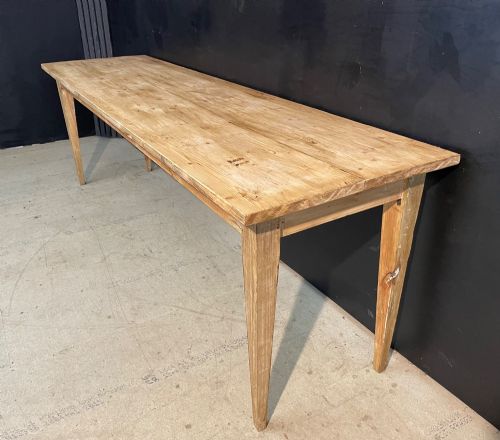
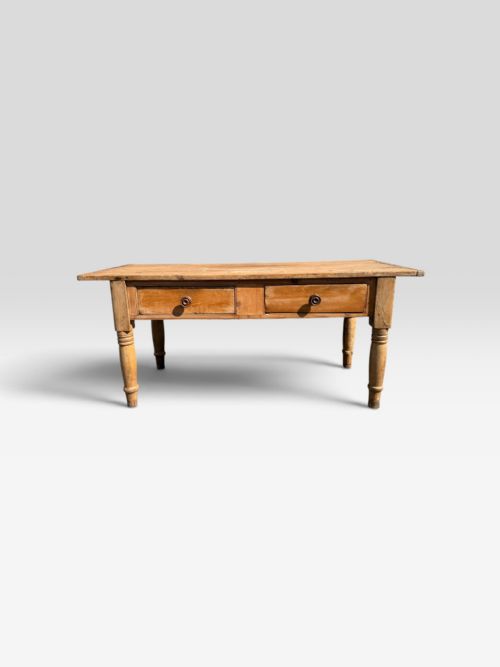
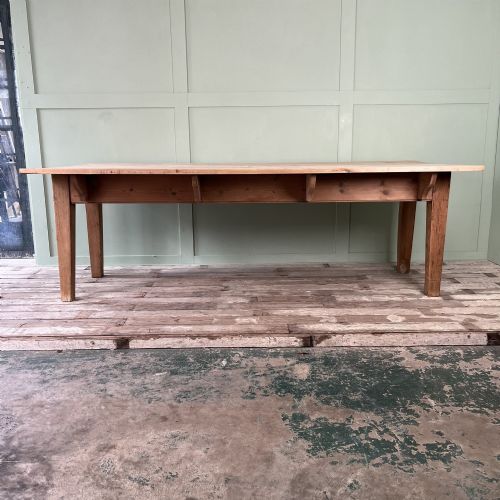
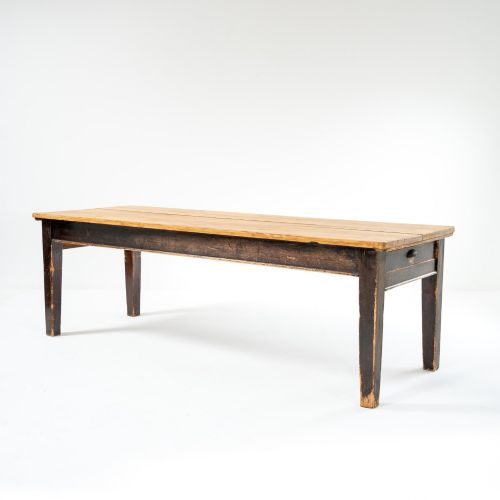
A country kitchen harvest table serves as the primary gathering surface for communal dining and domestic work in traditional homes. These pieces combine utilitarian strength with vernacular charm, built to accommodate large families and constant daily use.
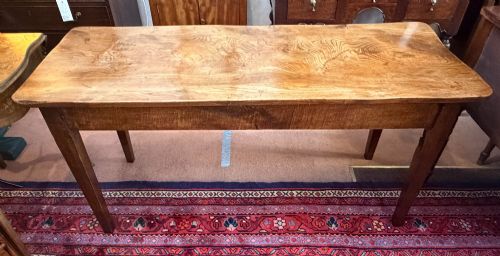
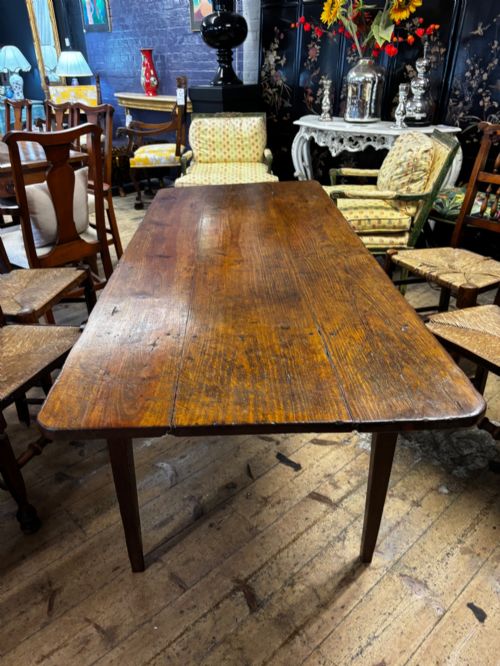
The selections available here span several centuries and regional traditions, featuring English and French iterations in various timber species. Buyers frequently encounter nineteenth-century examples alongside eighteenth-century formats designed for extended seating.
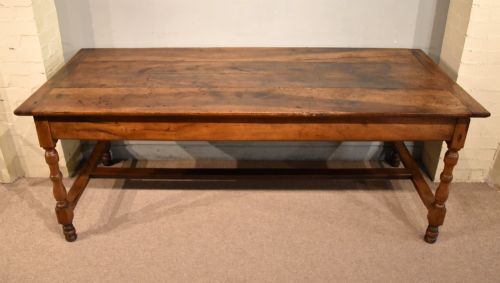
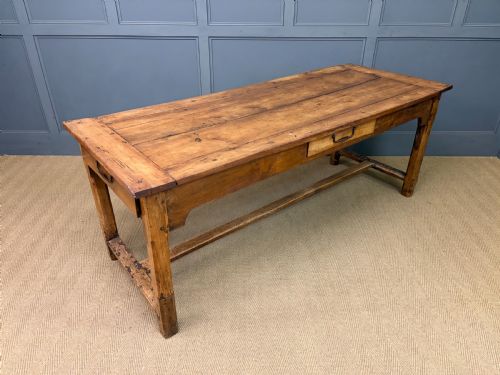
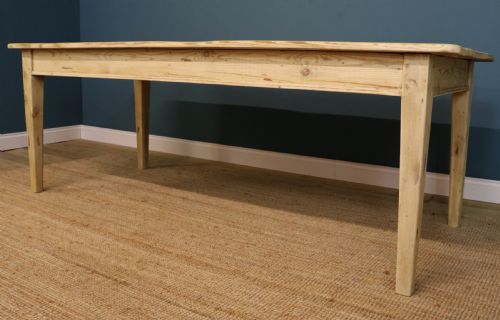
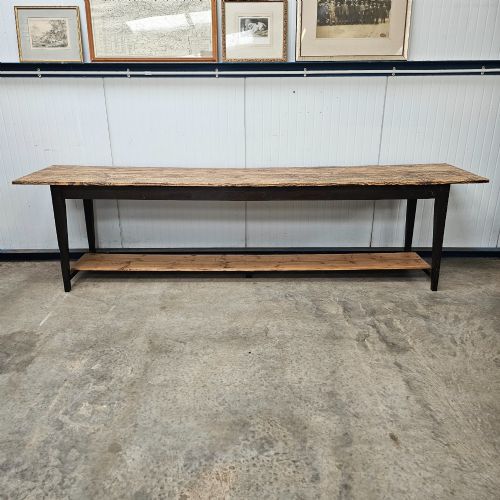
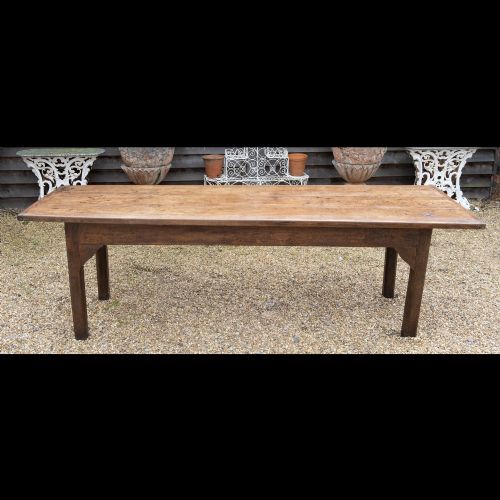
Proportions tend toward the substantial, with lengths stretching to seat eight or twelve guests comfortably. Formats range from simple scrubbed pine variants to refined oak refectory styles fitted with stretchers or drawers.
How they were made
Construction relies upon robust native hardwoods and softwoods selected for durability and local availability. Carpenters utilised solid oak, elm, ash, and fruitwood alongside pitch pine for tops and structural supports.
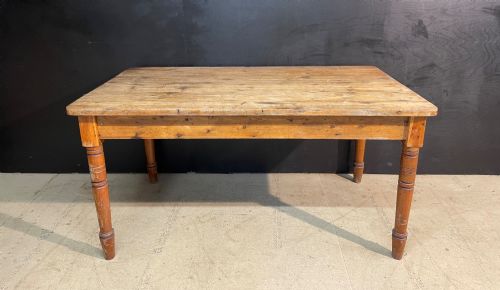
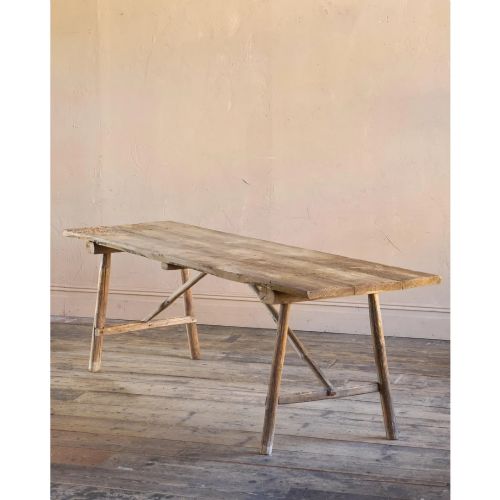
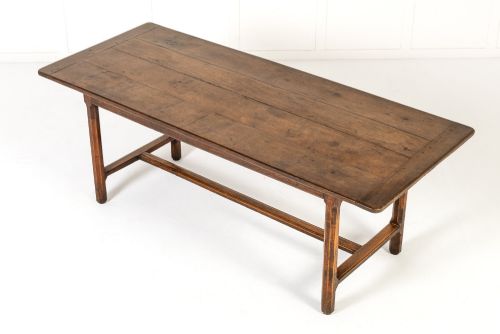
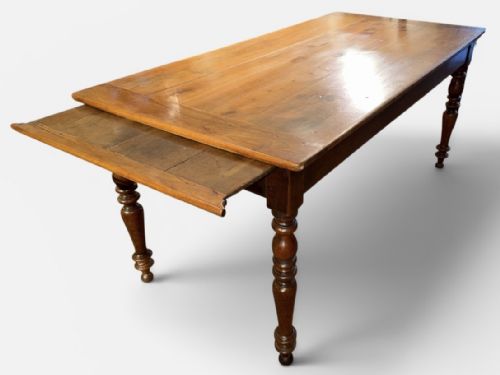
Joinery methods prioritized stability under heavy loads, employing pegged mortise and tenon joints for frames. Legs often feature turned profiles or square section supports, occasionally braced by H-stretchers or end stretchers to prevent movement.
Listings feature oak, pine, fruitwood, elm, and ash across eighteenth and nineteenth-century periods.
What varies in quality
Quality rests upon the integrity of the original timber and the subtlety of its wear over generations. Tables retaining their unpainted scrubbed surfaces or deep patinated fruitwood display superior historical character compared to heavily restored examples.
Proportion and structural harmony dictate value, particularly where length meets appropriate timber thickness without sagging. Finer pieces demonstrate careful selection of grain and robust undercarriage framing that remains tight after centuries of use.
The Country Kitchen Harvest Table Glossary
- Refectory table
- A long dining table historically used in monasteries and large domestic halls for communal meals. These examples typically feature stretcher rails running low between the legs for added rigidity.
- Stretcher
- A horizontal wooden bar connecting the legs of a table to reinforce the lower framework. Variations include H-stretchers and end stretchers depending on the regional carpentry tradition.
- Scrubbed pine
- A finish achieved through repeated washing and scouring of softwood surfaces to remove old finishes and dirt. This process leaves a pale, clean timber texture characteristic of domestic kitchen utility.
- Fruitwood
- Timber sourced from fruit-bearing trees such as cherry, pear, or apple, prized for its warm tone and fine grain. French workshops frequently utilised these dense woods for regional farmhouse furniture.
- D-End
- A table format featuring semi-circular ends that can stand alone or receive drop-in leaves to extend the surface area. This design offers flexibility in domestic dining spaces.
Country Kitchen Harvest Table: Frequently Asked Questions
How do I care for an antique timber top?
Maintain the surface by applying natural beeswax sparingly and buffing with a soft cloth to protect against moisture. Avoid silicone-based polishes that degrade historic finishes over time.
Keep tables away from direct heat sources and rapid humidity shifts to prevent the timber from splitting or warping. Use mats under hot dishes and wipe spills promptly.
Were these tables actually used for harvesting?
The term harvest table is largely a modern descriptor applied to long narrow dining furniture rather than a specific agricultural implement. These boards belonged to large farmhouses where estate workers and families gathered for substantial midday meals.
Their generous lengths and sturdy construction made them ideal for food preparation and communal dining alike. The vernacular design evolved to serve the practical needs of rural households rather than seasonal field work.
How do I seat guests comfortably around them?
Consider the placement of structural stretchers and legs when measuring chair heights and widths. Many refectory designs feature low H-stretchers that restrict how far chairs can push underneath.
Bench seating or stools work well along the longer flanks to maximise legroom and accommodate variable numbers of diners. Check the floor clearance beneath the apron to ensure proper knee height.
How do I distinguish English from French examples?
English pieces frequently utilise oak, elm, or pine with straightforward rectilinear frames and robust stretchers. Their aesthetic leans toward utilitarian strength and unadorned joinery.
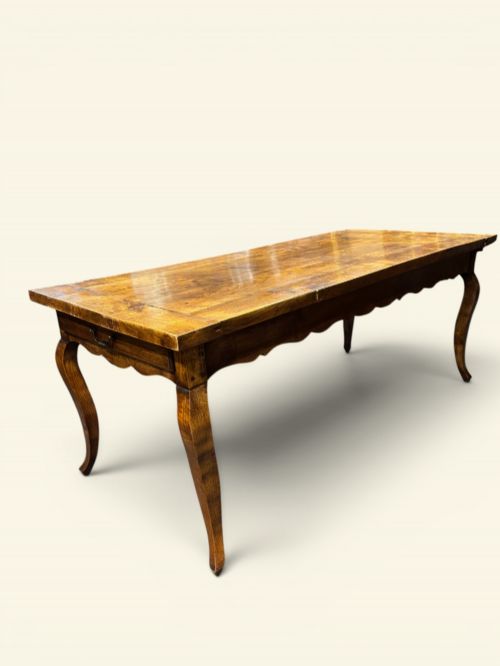
French provincial variants often showcase fruitwood or oak with softer contours, subtle shaping along the aprons, and lighter turned supports. Regional differences reflect the distinct domestic traditions of each carpentry workshop.