
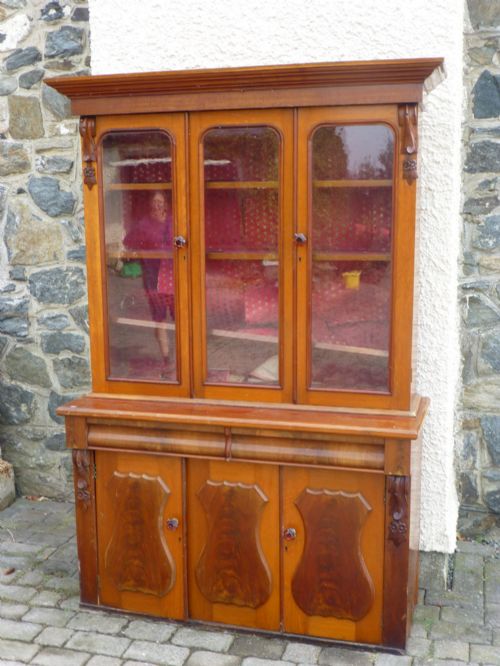
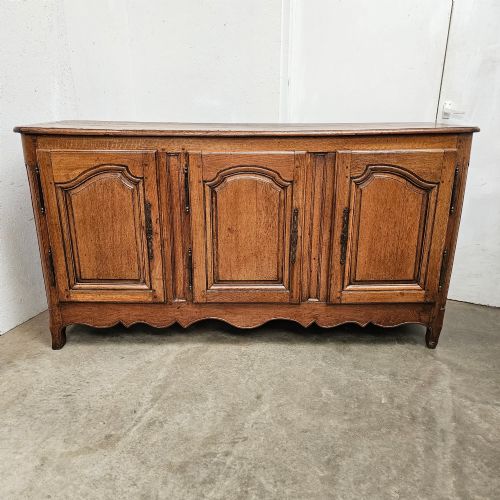
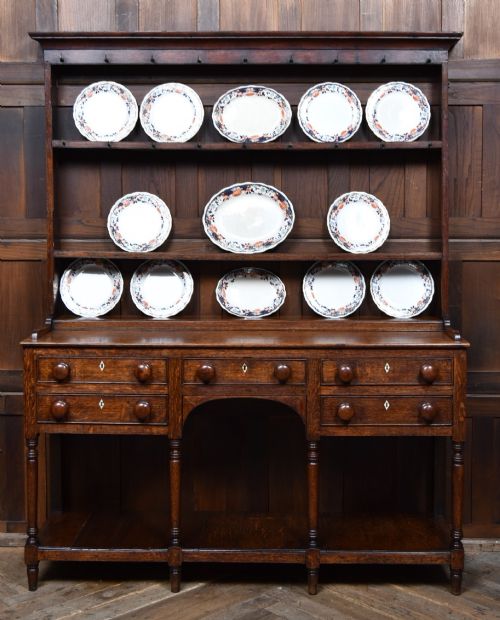
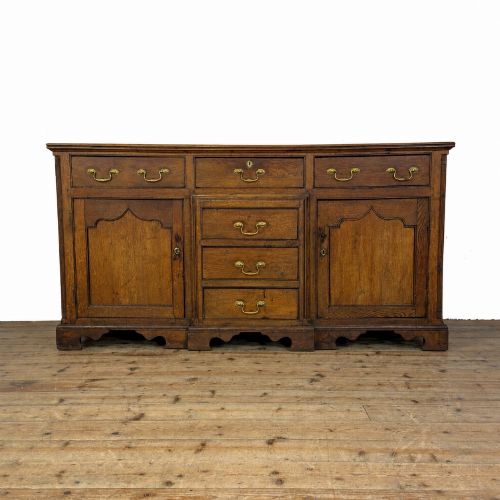


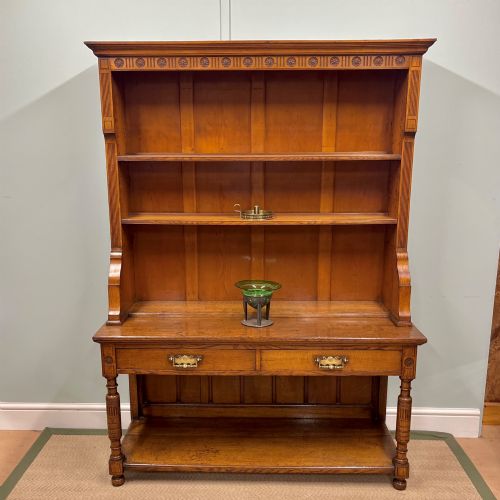
Country House Oak Sideboard
A country house oak sideboard brings rugged character and deep storage to a room, uniting utility with centuries of traditional woodworking.
Country House Oak Sideboard
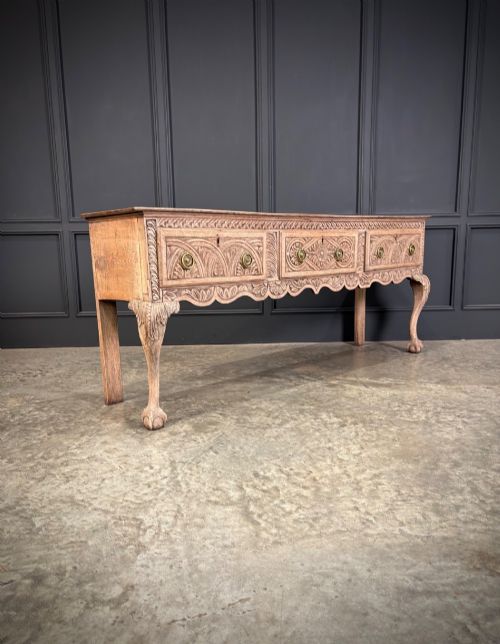
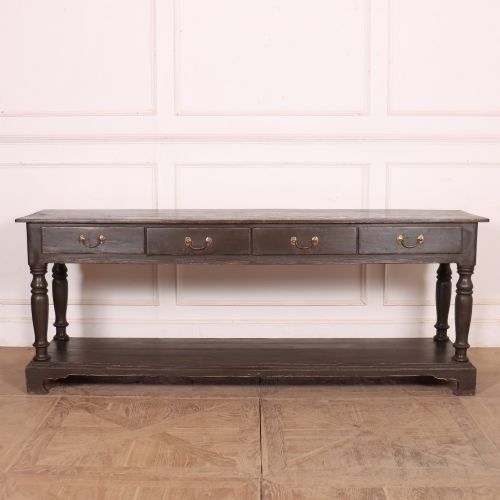
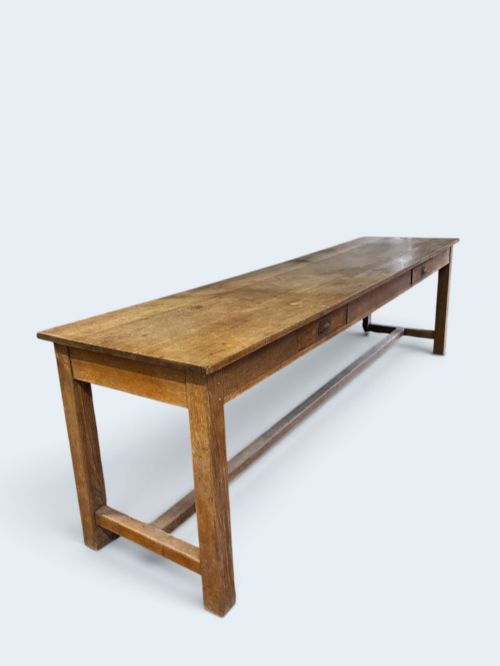
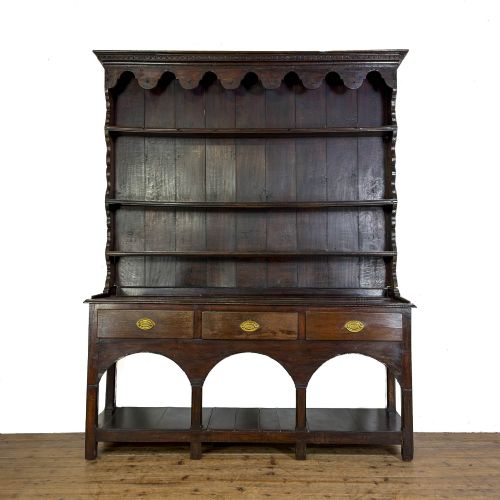
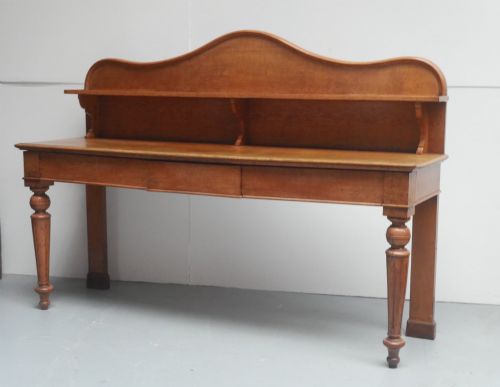
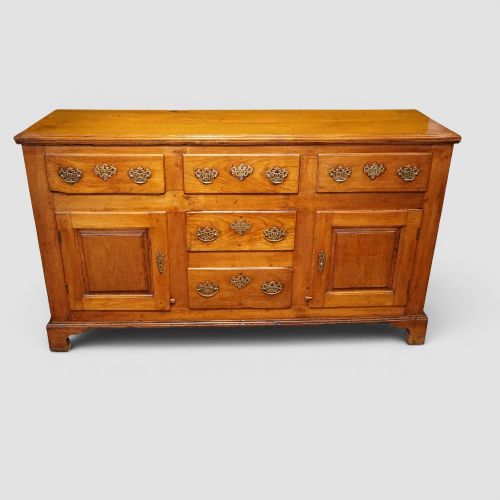
When searching for a country house oak sideboard, buyers encounter heavy, practical forms rooted in domestic life rather than courtly fashion. These pieces include sturdy dresser bases, serving tables, and large kitchen cupboards designed for daily service.
The versions most commonly met on this page span the eighteenth and nineteenth centuries, alongside regional interpretations such as Welsh vernacular styles, English country pieces, and French provincial enfilades. Their presence reflects a long history of domestic provisioning and regional craftsmanship.
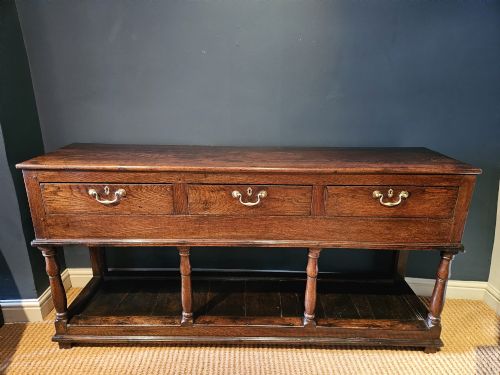
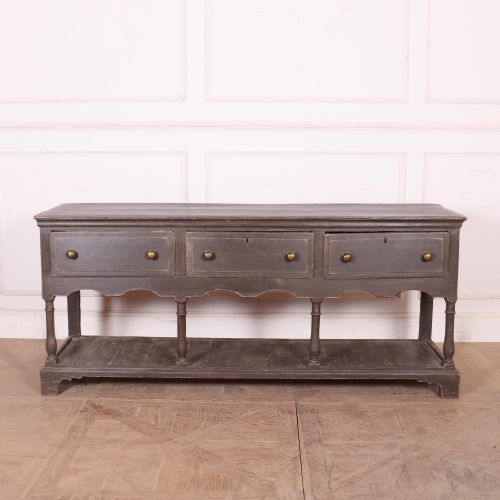
Makers built these items to shoulder heavy use, incorporating deep drawers, potboards, and spacious cupboards that accommodated household stores. Their straightforward architecture prioritises utility while offering a commanding presence in contemporary interiors.
Materials and construction methods
Makers relied principally on solid oak, frequently paired with secondary timbers like pine, elm, or fruitwood for drawer linings and internal framing. This heavy use of native hardwoods gave the furniture its structural resilience and enduring stability.
Joinery methods focused on robust pegging, mortise and tenon joints, and hand-planed panels that could withstand seasonal humidity shifts without failing. Surface finishes evolved from natural wax to painted treatments, reflecting regional tastes and later domestic updates.
Listings feature oak alongside elm, fruitwood, and mahogany, spanning the seventeenth through to the early twentieth century.
Judging quality and proportion
The upper tier of pieces exhibits untouched surface patination, original brass or iron hardware, and timber selected for its rich grain and honest weight. Lower quality often stems from excessive restoration, stripped surfaces, or poorly integrated replacement elements.
Proportion and regional integrity separate standard pieces from exceptional examples. A well-balanced silhouette with original feet, undisturbed backboards, and coherent regional detailing commands greater admiration than a heavily altered hybrid.
The Country House Oak Sideboard Glossary
- Potboard
- An open lower shelf built into a dresser base designed for storing heavy pots and pans. This lower tier often defines regional Welsh and English vernacular designs.
- Enfilade
- A long sideboard or cabinet form originating in France featuring a continuous row of doors. These pieces provide expansive surface and interior storage space.
- Dresser base
- A low cabinet fitted with drawers and cupboards, originally used for food preparation and serving. It forms the foundation of many dining and kitchen arrangements.
- Plate rack
- Shelving attached above a dresser base to display ceramic tableware and platters. Original racks feature integrated plate grooves and plate rails.
Country House Oak Sideboard: Frequently Asked Questions
Where were these sideboards used?
These pieces served primarily in domestic kitchens, dining rooms, and estate sculleries where heavy storage and preparation space proved essential.
Their robust construction allowed them to handle daily culinary duties and house large quantities of tableware and provisions.
How do I care for oak furniture?
Maintain the timber by applying natural beeswax sparingly and buffing it with a soft cloth to preserve the historic surface sheen.
Keep pieces away from direct heat sources and strong sunlight to prevent timber shrinkage and finish degradation.
What defines regional variations?
Regional styles reveal themselves through distinct moulding profiles, drawer layouts, and the choice of secondary woods like fruitwood or elm.
Welsh and West Country pieces often incorporate open potboards and specific cornice details unique to local workshops.
How do I spot original hardware?
Examine the fit, patina, and fastening methods of the brass drop handles or iron pulls against the surrounding timber wear.
Original hardware bears consistent age marks and fits cleanly into historical nail or screw apertures.