
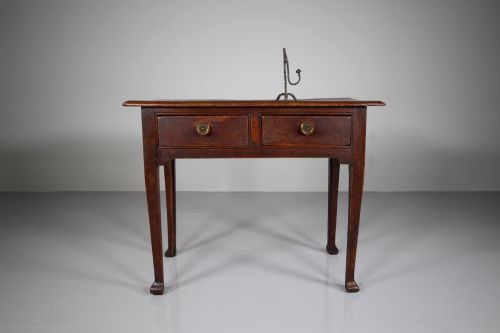
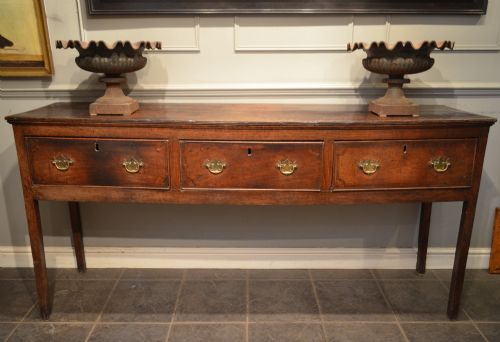


Country House Lowboy Table
A country house lowboy table is a low, single-table form prized for its utility and timeless proportion, offering practical surface space with deep drawers.
Country House Lowboy Table
A country house lowboy table combines the compact proportions of a side table with drawer storage, appearing across the eighteenth century and the Georgian period. These pieces function as small dressing tables or serving surfaces, rooted in domestic utility.
The versions met most frequently on this page include side tables, dresser bases, and lowboys originating from English workshops. They showcase forms classified under Georgian style, English country taste, and George II design.
Builders constructed these tables to serve everyday domestic needs in large residences, resulting in robust proportions. The range includes simple side tables alongside more defined lowboy forms with fitted drawers.
How they were made
Cabinetmakers utilised a variety of solid timbers including oak, fruitwood, elm, pine, cherrywood, mahogany, and yew wood. These woods were selected for local availability and structural strength in domestic furniture.
Construction techniques involved traditional joinery to frame the timber panels and support the drawer boxes. Selected pieces feature applied painted finishes over pine and other surfaces, showing historical layers of decoration.
Listings show items spanning the eighteenth century and the Georgian period, constructed from oak, fruitwood, elm, pine, cherrywood, mahogany, and yew wood.
What varies in quality
Quality separates through the selection of primary timbers, where dense fruitwoods and figured mahogany or oak display superior grain structure compared to utility pine. The choice of secondary woods inside drawer construction also marks the standard of the workshop.
The handling of surface treatment distinguishes standard examples from finer pieces, whether through the preservation of original paint layers or the depth of patina developed on exposed hardwood surfaces over centuries.
The Country House Lowboy Table Glossary
- Lowboy
- A small occasional table featuring one or more rows of drawers beneath the top surface. It typically stands on four legs and dates from the eighteenth century.
- Dresser base
- The lower section of a kitchen or dining room dresser, constructed with cupboards or drawers beneath a heavy top board. This form often matches the timber and period of regional lowboys.
- Fruitwood
- Timber harvested from fruit-bearing trees such as pear or apple, utilised by country cabinetmakers for its dense grain and warm tone. It yields a distinctive surface texture when polished.
- George II
- An architectural and furniture style spanning the reign of the second George, noted for sturdy proportions and classical restraint. It bridges heavy oak furniture and lighter mahogany designs.
Country House Lowboy Table: Frequently Asked Questions
What is a country house lowboy table used for?
These tables served various domestic functions throughout large residences, acting as writing surfaces, dressing tables, or serving boards in private rooms.
Today, their compact footprint makes them suitable as console tables in narrow hallways or as bedside storage units.
How do I identify a Georgian lowboy?
Georgian examples are identified through period timber selection, traditional joinery methods, and proportions typical of the eighteenth century. They display structural elements characteristic of English country workshops from that era.
Examining the drawer construction and timber ageing helps confirm the historical period of manufacture.
Are painted finishes on these tables original?
Some pieces retain original painted surfaces applied over pine or fruitwood timbers during the eighteenth century. These finishes show characteristic wear and craquelure developed over generations of domestic use.
Identifying historical paint layers requires looking at the wear patterns and the interaction between the pigment and the underlying wood.
What woods were used for these tables?
Cabinetmakers employed native hardwoods and softwoods depending on regional availability and the intended function of the piece. Oak, elm, fruitwood, cherrywood, and mahogany appear across the available inventory.
Selected items also incorporate yew wood and pine, often finished with paint or left to show the natural grain.