




Country House Cattle Painting
A country house cattle painting brings the weight of the pastoral estate straight onto the wall.
Country House Cattle Painting
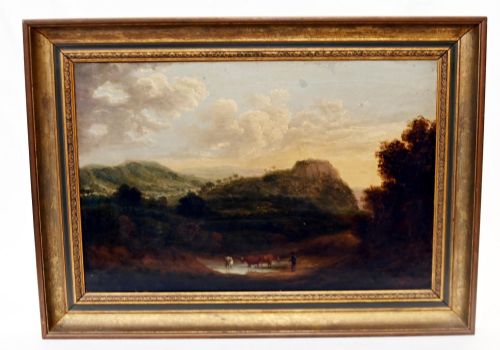
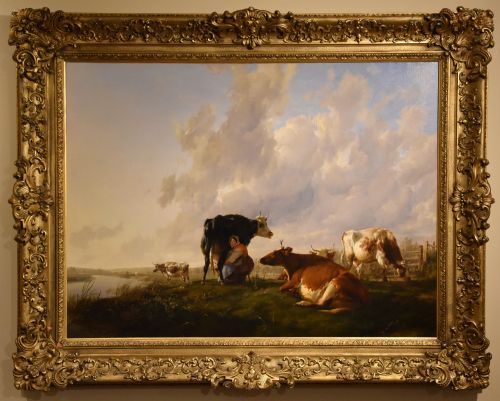
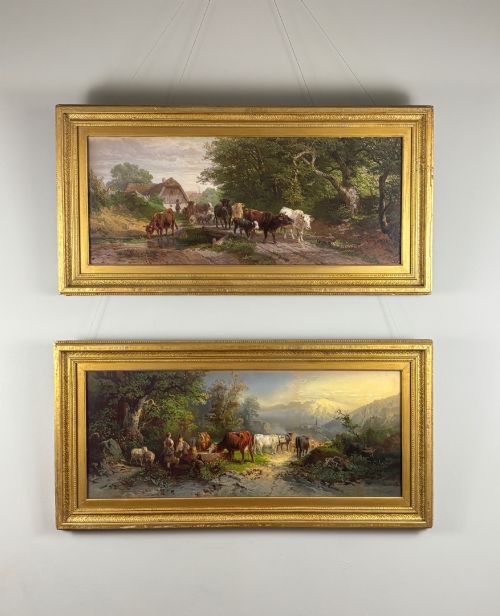
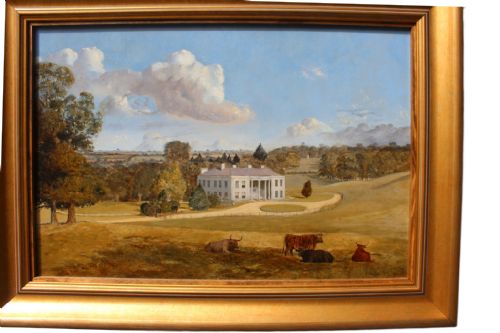
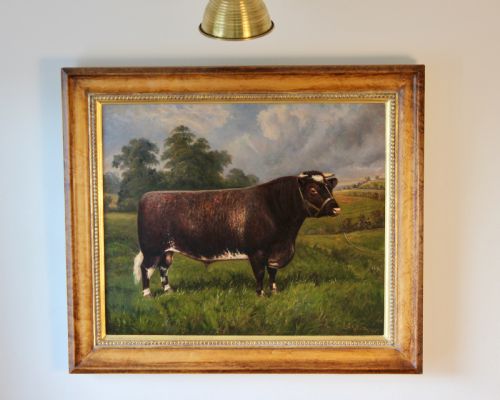
A country house cattle painting depicts livestock within pastoral landscapes, estate settings, or farmyards, capturing the agrarian focus of rural residences. When searching for a country house cattle painting, buyers encounter works spanning from the Georgian and Victorian periods through the Edwardian era. These pieces range in scale from large oils on canvas to intimate watercolours, often housed in heavy giltwood or burr frames.
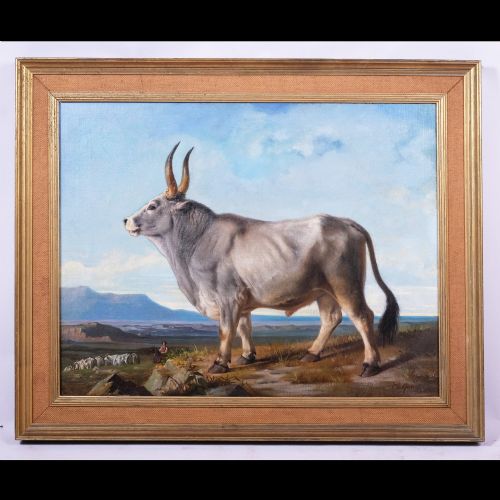
The subjects vary from individual prize bulls and dairy cows to herds gathered at watering places or enduring winter snow. Artists of the 19th Century British School and continental painters documented specific properties, prize livestock, and idealized rural scenes. Works associated with the circle of established animaliers sit alongside naive depictions from the same eras.
Distinctions in quality
Quality rests in the anatomical accuracy of the cattle, the handling of light within the landscape, and the cohesion of the composition. Master painters render bone structure, muscle, and texture with precision, whereas naive works prioritize charm and directness over proportion.
The framing contributes significantly to the character of the piece. Hand-carved giltwood frames with layered gesso display superior craftsmanship compared to plain or later replacement mouldings, completing the presentation of a substantial estate painting.
Listings feature works spanning from the late 18th century through the Edwardian period, utilising oil on canvas, watercolour, and giltwood frames.
Thomas Sidney Cooper·Johann Friedrich Voltz·A M Gauci·Charles Jones·Arthur Charles Dodd·W A Clark·Ernest Higgins Rigg·Samuel Lawson Booth
The Country House Cattle Painting Glossary
- Oil on Canvas
- A painting medium where pigments bound in oil are applied to a stretched woven fabric support. This combination allows for rich blending and textured application.
- Giltwood
- Wood carved and coated with a thin layer of gold leaf or metallic powder. It provides a reflective, ornate border suitable for formal paintings.
- Gesso
- A paint mixture consisting of a neutral binder mixed with chalk, gypsum, or pigment. It forms a smooth base on wooden frames before gilding.
- Naive
- Art created by an artist without formal academic training, characterised by direct perspective and unpretentious representation. These works often possess a distinct rustic appeal.
- Pastoral
- Relating to the countryside, country life, or the depiction of rural scenes involving livestock and shepherds. It evokes a peaceful, idealized view of agriculture.
Country House Cattle Painting: Frequently Asked Questions
How do I date a cattle painting?
Dating relies on stylistic markers, canvas preparation, and framing techniques. Victorian works often show dense realism, while Georgian pieces favour broader lighting and tonal balance.
Signatures, inscriptions on the reverse, and period stretcher frames provide further chronological clues. Examining the dress of figures or architectural elements in the background also helps narrow the decade.
Where were these paintings hung?
These works hung in the principal reception rooms, libraries, and dining spaces of large rural estates. They celebrated agricultural improvement, prize livestock, and the surrounding land.
Smaller watercolours and naive pieces often decorated more private family quarters or estate offices. Their placement reflected the status of the livestock and the importance of the landholding.
How do I care for an oil painting on canvas?
Keep canvases away from direct sunlight, high humidity, and rapid temperature fluctuations to prevent cracking of the paint and warping of the stretcher bars. Dust the surface gently with a soft, dry brush without applying pressure.
Avoid using water or chemical cleaners on the paint surface or the gilt frame. Professional conservation is recommended for cleaning or repairing old varnish layers.
What is the difference between academic and naive cattle paintings?
Academic paintings demonstrate formal training through accurate animal anatomy, perspective, and sophisticated tonal blending. Artists in this tradition aimed for naturalistic representation and anatomical correctness.
Naive works approach form and space more simply, offering a direct charm rather than anatomical precision. Both styles document the significance of livestock in the rural economy.