
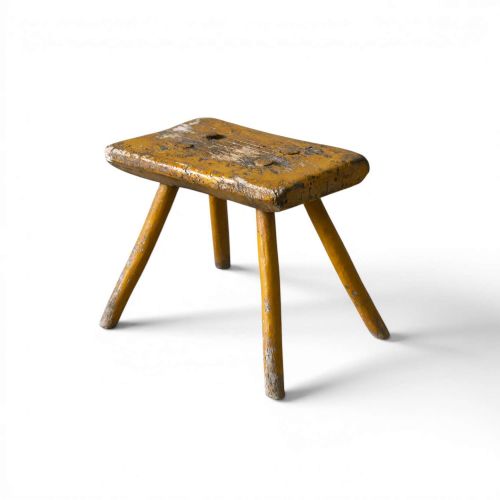
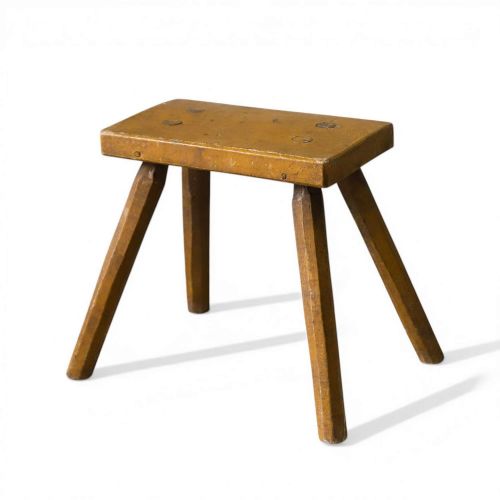
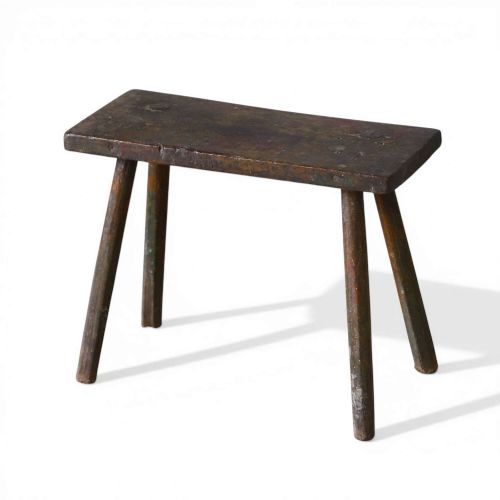
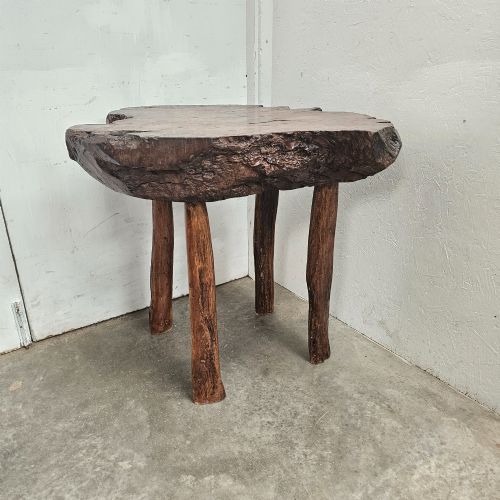


Country Folk Art Stool
These country folk art stool examples are honest working seats carrying natural timber forms and original paint.
Country Folk Art Stool
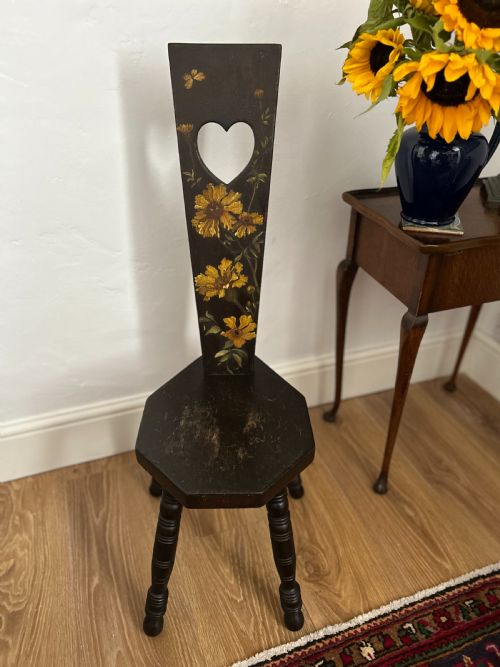
When you search for a country folk art stool, you encounter utilitarian seating shaped by rural makers for specific daily tasks. These forms range from Eastern European milking stools to Welsh spinning chairs and simple child seats.
The pieces on this page lean heavily into the nineteenth century, including examples from around eighteen hundred and the Edwardian era. You will frequently find milking stools, occasional tables, and primitive chopping blocks.
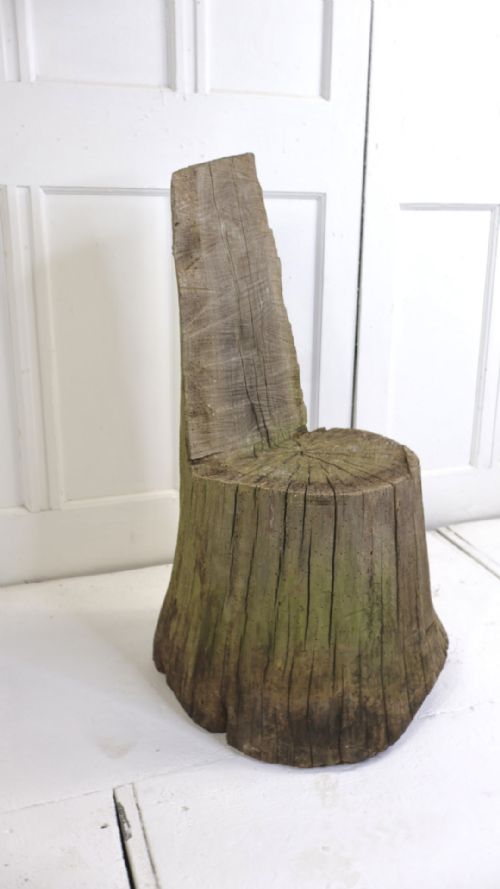
Makers utilised whatever timber came to hand, shaping natural tree trunks, oak, pine, and hardwood into functional items. Their charm lies in this unpretentious utility and direct response to domestic and agricultural needs.
How they were made
Construction relies on straightforward joinery and natural forms, utilising whole tree trunks, oak, pine, and diverse hardwoods. Makers shaped seats directly from solid timber blocks, sometimes incorporating iron components for stability.
Surface treatments define many items, featuring original ochre, yellow, and green paint applied to early surfaces. Other pieces showcase exposed burr thuya and natural grain without added colour.
What varies in quality
Quality rests in the integrity of the original surface and the honesty of the timber's form. An untouched coat of ochre or green paint elevates a piece far above later stripped surfaces.
Proportion and sculptural presence also separate the ordinary from the exceptional. A well-balanced tree trunk or a cleverly sculpted rounded seat displays a stronger visual harmony than standard utility work.
The Country Folk Art Stool Glossary
- Milking stool
- A low, typically three-legged seat designed for comfort while milking livestock by hand. These feature strongly in nineteenth-century European rural furniture.
- Primitive
- A descriptive term for items made outside urban workshops, lacking formal stylistic refinement. Such pieces rely on basic tools and immediate utility.
- Vernacular
- Architecture and objects created independently of academic architectural or design traditions, using local materials and traditional techniques. This describes much rural domestic equipment.
- Burr
- A growth on a tree where the grain has grown in a deformed manner, producing intricate patterns when sliced. It is prized for decorative tabletops and small furniture.
Country Folk Art Stool: Frequently Asked Questions
How were milking stools used?
Milking stools were designed to be lightweight and portable, frequently featuring a single leg or three legs to remain stable on uneven floors.
Farm workers strapped or carried them around the dairy or field for repetitive seated chores.
How do I date these pieces?
Dating relies on timber characteristics, tool marks, and the presence of early surface paint such as ochre, yellow, or green.
Nineteenth-century examples show hand-turned legs and adze-sculpted seats rather than modern mechanical fabrication.
How should I live with primitive furniture?
These pieces suit modern interiors by providing organic textures and contrasting clean architectural lines with rustic timber forms.
Place them as side tables, plant stands, or occasional seats where their sculptural qualities can be appreciated.