



Rustic Wood Chopping Block
These rustic wood chopping block examples bring heavy practical service and honest surface wear straight into the kitchen.
Rustic Wood Chopping Block
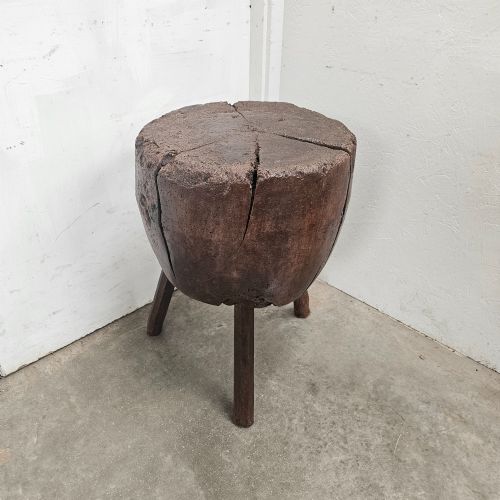
A rustic wood chopping block provides a heavy-duty preparation surface derived from nineteenth-century and mid-century utility pieces. Buyers searching for a rustic wood chopping block encounter solid timber surfaces originally designed for butcher shops or game preparation.
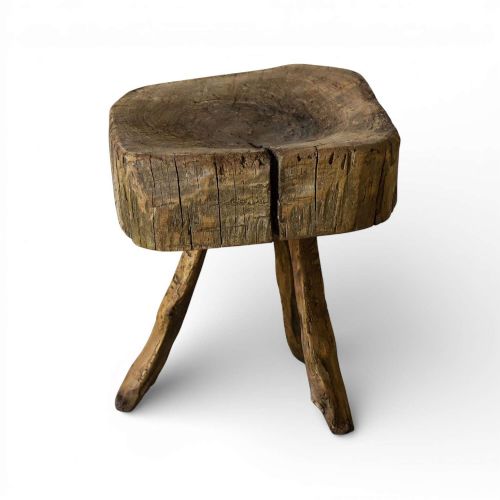
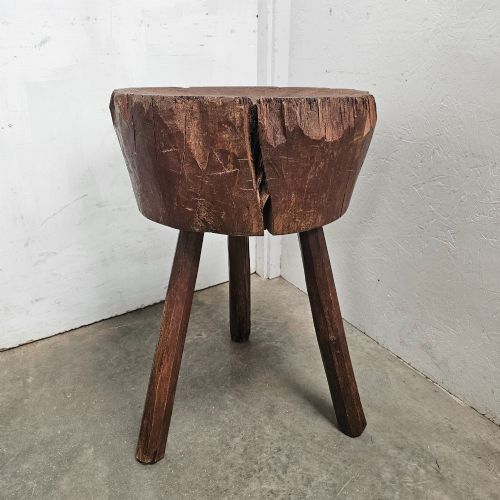
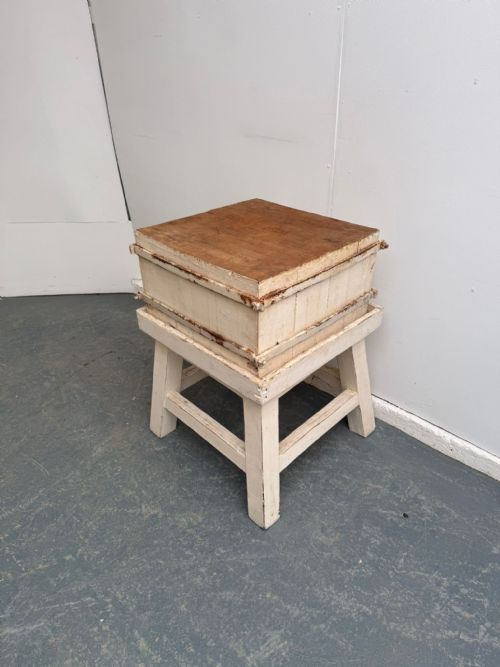
Most examples originate from French provincial contexts or Victorian utility spaces, often standing on dedicated stands or gnarled legs. Forms range from compact tree trunk sections to larger kitchen islands and side tables.
The aesthetic relies on vernacular rural styles and primitive country finishes, emphasising decades of genuine culinary use over decorative polish. Pieces span from the eighteen-nineties through to nineteen-fifty, maintaining a utilitarian character throughout.
How they were made
Construction relies on dense hardwoods such as oak, beech, elm, and general timber chosen to withstand heavy impacts and daily chopping. Blocks are built from thick end-grain or solid sections joined to resist splitting under constant pressure.
Supports incorporate iron brackets, wire elements, and occasionally painted finishes on the wooden stands. Legs are either simple structural frames or original gnarled timber trunks tailored to each block.
The listings span from the nineteenth century through to nineteen-fifty, utilising oak, beech, elm, and iron.
What varies in quality
Quality rests upon the integrity of the primary timber block and the originality of its supporting base. Heavy oak and beech sections that retain their deep, honest patina command greater attention than modified or overly restored surfaces.
The relationship between the block and its original stand defines the piece, particularly where gnarled legs or period ironwork remain intact. Depth of wood, natural wear patterns, and structural stability separate standard utilitarian items from exceptional vernacular examples.
The Rustic Wood Chopping Block Glossary
- End-grain
- Timber cut across the growth rings to provide a self-healing surface for heavy chopping. This construction absorbs knife edges without dulling blades.
- Vernacular
- Architecture and objects made by local craftspeople to solve specific practical problems rather than following high-style academic rules. These items use regional materials and traditional methods.
- Primitive
- Describes items of simple, unpretentious construction lacking decorative refinement. Such pieces prioritize pure utility over aesthetic ornamentation.
- Provincial
- Objects originating from regions outside the capital city, reflecting local tastes and available materials. French provincial furniture often combines rustic robustness with practical utility.
Rustic Wood Chopping Block: Frequently Asked Questions
Can I use these for actual food preparation?
These blocks were originally built for heavy butchery and food preparation in nineteenth and twentieth-century kitchens. Many buyers continue to use them for culinary tasks after proper cleaning and oiling.
Historic surfaces often bear the marks of decades of use, which contributes to their character. Modern users should assess the hygiene of deep knife scars depending on personal preference.
How do I clean and maintain a vintage block?
Maintenance involves scraping away surface debris and wiping the timber with mild soap and warm water. Avoid soaking the wood to prevent warping or splitting.
Regular application of food-safe mineral oil helps preserve the hardwood and prevents it from drying out. Keeping the block in a stable humidity environment protects the timber joints.
How do I date an antique chopping block?
Dating relies on the tooling marks, timber species, hardware such as iron and wire, and the overall vernacular style. Pieces span from nineteenth-century French game blocks to mid-century examples from nineteen-fifty.
Construction methods changed little over the decades, so wear patterns and structural details provide the clearest chronological clues. Comparing similar kitchen islands and side tables helps narrow the period.