


Country Farmhouse Stool
These country farmhouse stool pieces bring honest utility and rustic charm to a room, offering sturdy seating built for daily rural life.
Country Farmhouse Stool
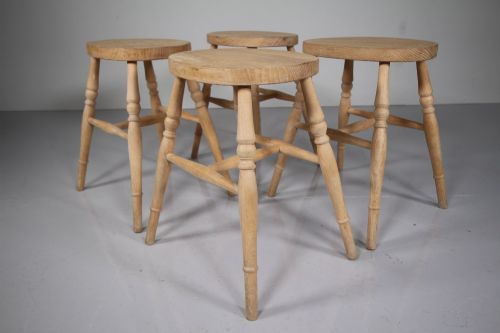
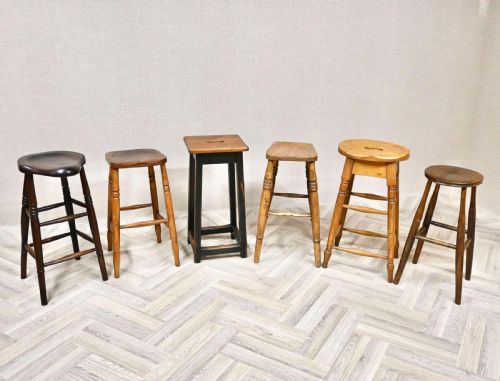
A country farmhouse stool is a functional seat shaped by rural traditions, frequently appearing as low three-legged milk stools, tall bar stools, or vernacular timber designs. Buyers searching this phrase look for straightforward wooden seating that displays the character of daily work.
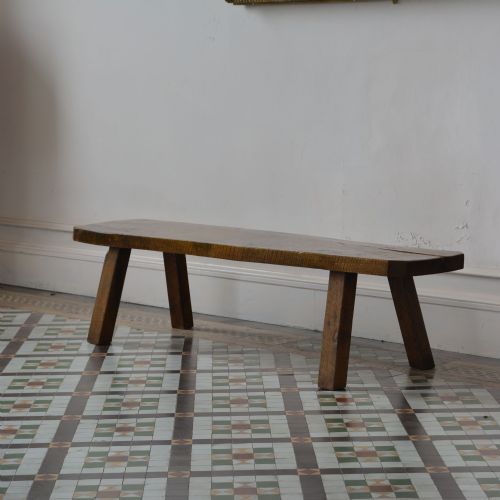
The selections available here span the eighteenth century, nineteenth century, and Edwardian periods, constructed in forms ranging from primitive milk stools to oak dining stools and pine benches. Elm and oak seats dominate, often showing the simple lines of English, French, and Eastern European vernacular traditions.
These pieces served practical roles around the hearth, dairy, or workshop before finding a place in modern domestic interiors. The most common varieties met on this page are nineteenth-century timber stools with elm or pine seats and sturdy wooden legs.
How they were made
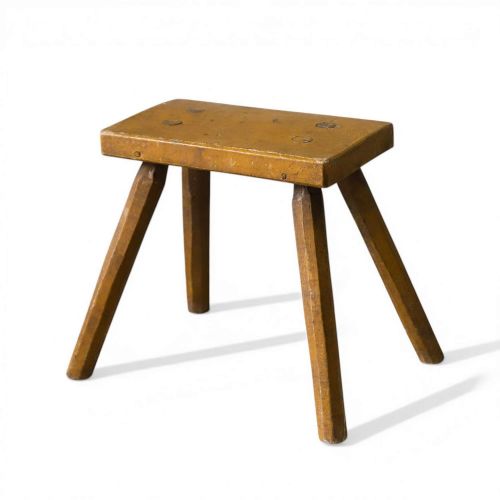
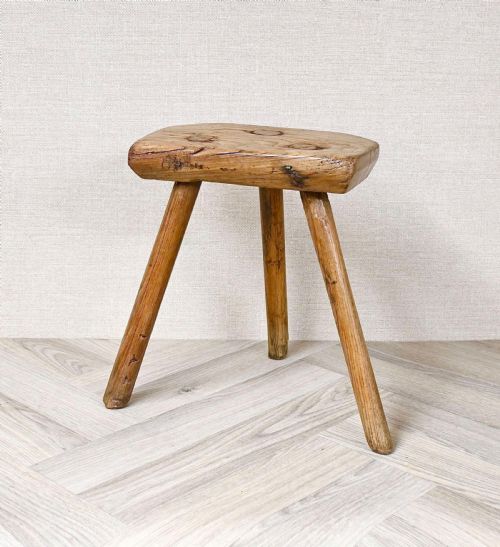
Construction relies on solid timbers such as oak, elm, pine, beech, and rush, shaped by local makers using basic hand tools. Seats are frequently carved from a single slab of elm or pine, while legs are turned or shaved and joined with simple peg or wedge methods.
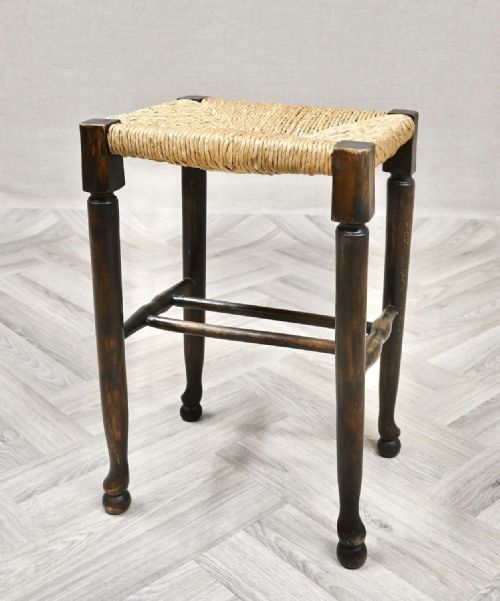
Surface treatments range from bare scrubbed wood to remnants of original yellow paint or scratch-built assemblies. Rush seating also appears on specific stool types, woven tightly across wooden frames to provide a resilient surface.
Traces of old yellow paint cling stubbornly to rural milking stools, outlasting the cows that watched them being made.
What varies in quality
Quality in a country farmhouse stool depends on the integrity of the timber and the balance of its proportions. Pieces carved from thick elm or oak slabs with tight joints demonstrate superior survival through decades of heavy use.
The presence of untouched original surfaces, such as early paint layers or time-worn patination, elevates a piece above standard utility items. Proportion and simplicity of line also distinguish better vernacular examples from simpler workshop outputs.
The Country Farmhouse Stool Glossary
- Vernacular
- Everyday objects built by local craftspeople using regional materials and traditional methods without formal architectural blueprints. These pieces reflect the specific domestic needs and timber supplies of their local area.
- Milk stool
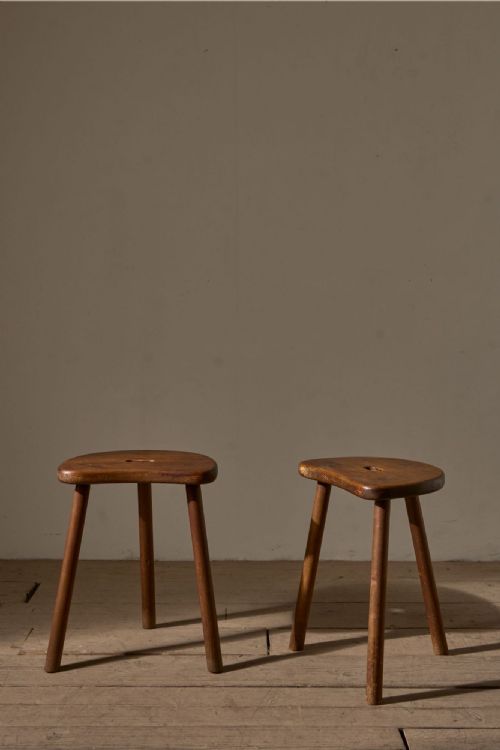
- A small, usually three-legged seat designed for comfort while milking livestock by hand. The tripod base provides stability on uneven barn floors.
- Plank top
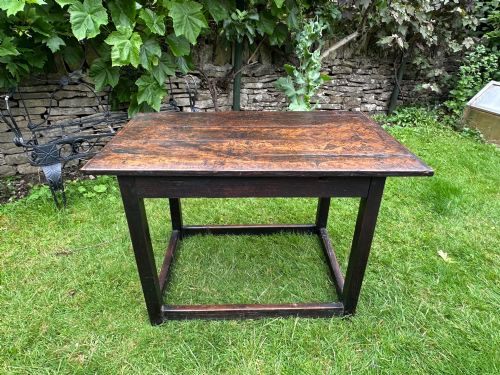
- A solid wooden surface constructed from one or more wide boards joined together. This technique forms the durable seats and tabletops seen in rustic furniture.
- Scratch built
- Furniture constructed from available timber using basic workshop skills rather than standardised factory processes. Each item displays unique measurements and jointing details.
- Rush seat
- A woven seating surface made from dried marsh grasses twisted into cords. This traditional method creates a flexible, supportive platform on wooden frames.
Country Farmhouse Stool: Frequently Asked Questions
What is a country farmhouse stool?
A country farmhouse stool is a traditional wooden seat created for rural utility, often featuring simple slab tops and sturdy legs. These pieces were used in dairies, kitchens, and workshops.
They bring tactile warmth and history to contemporary interiors, serving as extra seating or small side tables.
How do I date an antique stool?
Dating relies on examining the tool marks, timber types, and construction methods visible on the piece. Eighteenth and nineteenth-century examples often display hand-sawn boards and pegged joints.
Comparing the wear patterns and wood shrinkage helps establish the age of the timber and the approximate period of manufacture.
Are these stools comfortable to sit on?
Many country stools feature saddles or scooped seats carved to fit the body during long hours of work. While firmer than modern padded seating, their ergonomic wooden shapes offer surprising support.
They work well for brief seating at breakfast bars, dining tables, or as decorative perches in hallways.
How should I care for old timber?
Old timber benefits from minimal intervention, keeping the historic surface and patina intact. Dusting with a dry cloth and occasionally applying natural wax helps protect the wood without altering its finish.
Keep wooden stools away from direct heat sources and extreme humidity fluctuations to prevent the timber from splitting.