




Country Elm Windsor Chair
When you select a country elm windsor chair, you bring home a vernacular seating piece shaped by rural English cabinet-makers across the eighteenth and nineteenth centuries.
Country Elm Windsor Chair
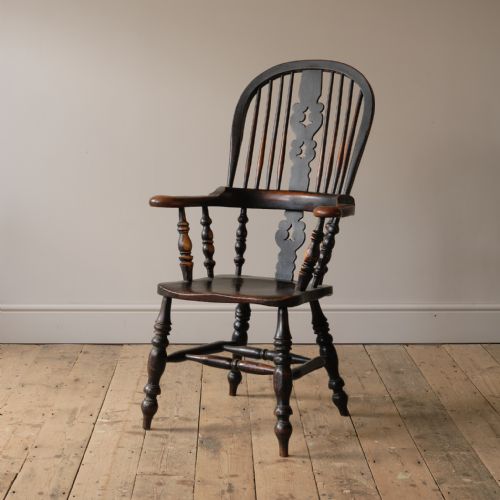
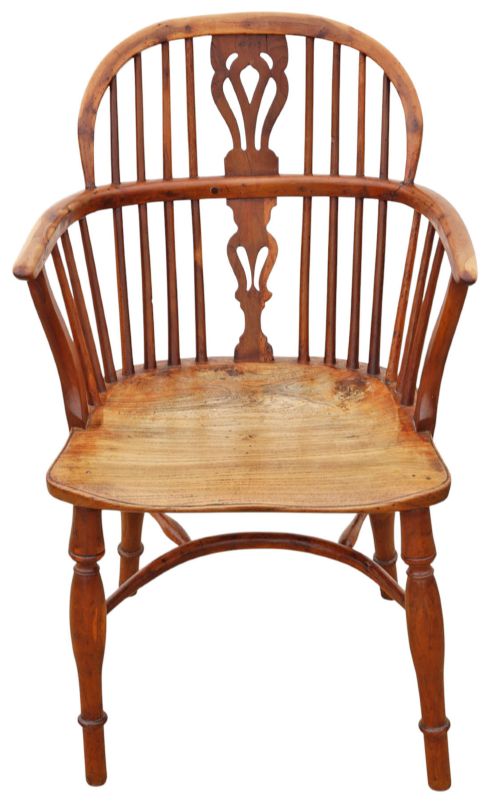
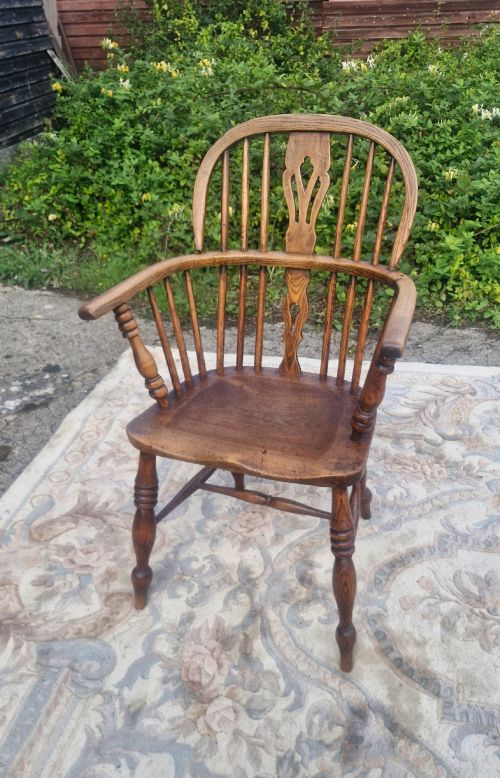
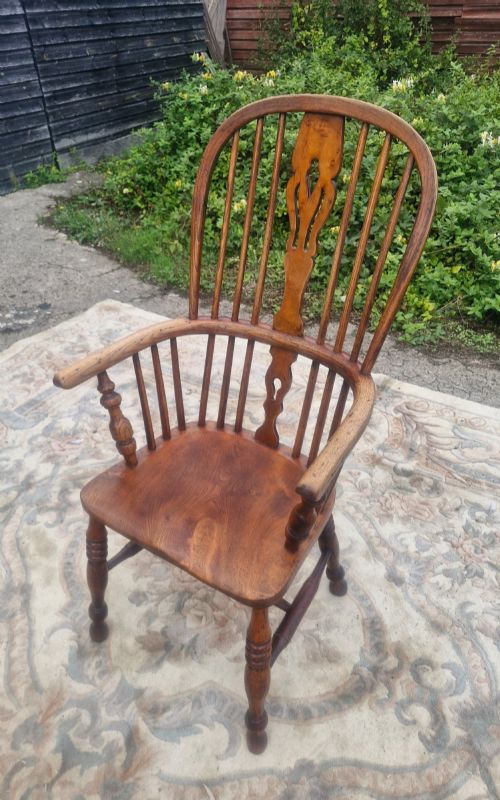
A country elm windsor chair is a traditional wooden seat defined by a solid plank saddle seat into which the legs and back spindles are wedged directly, rather than held within a framed chassis. These pieces span eighteenth-century Georgian origins through Victorian farmhouse production, emerging primarily from regional workshops in the West Country, Thames Valley, and northern shires.
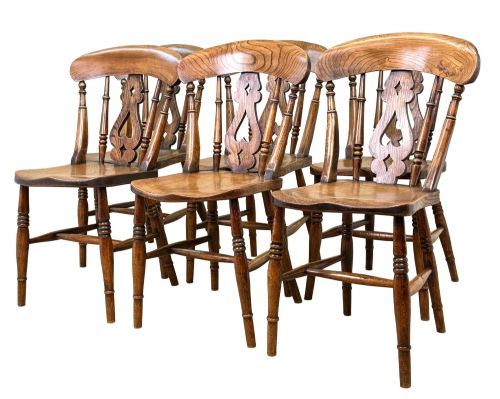
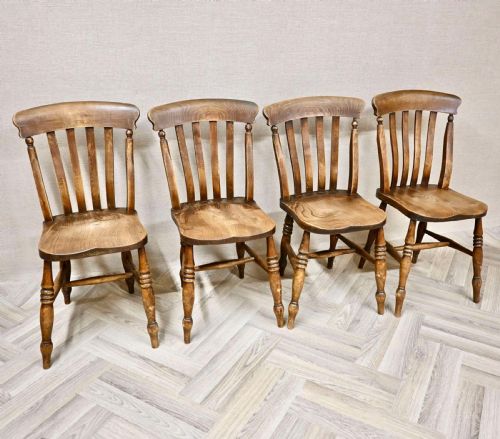
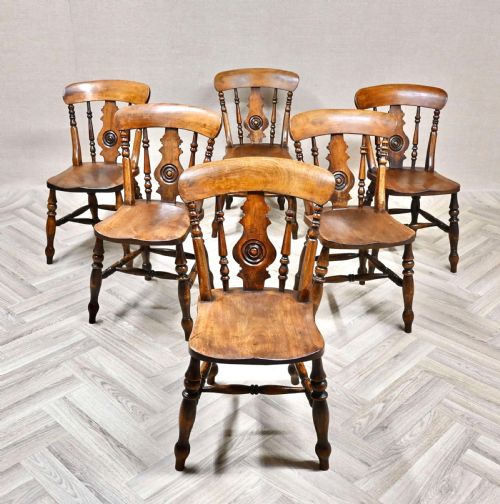
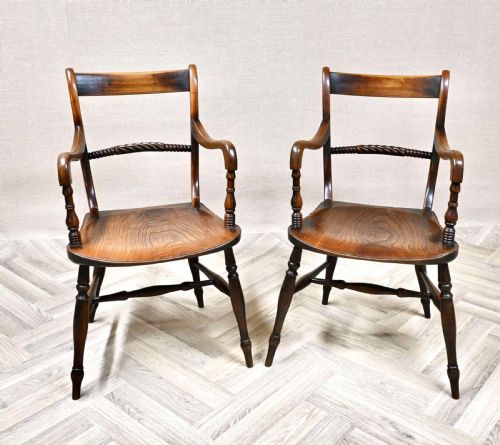
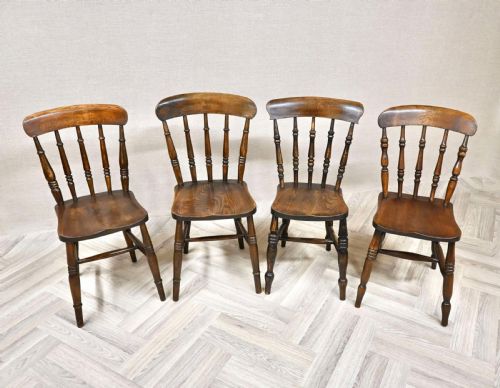
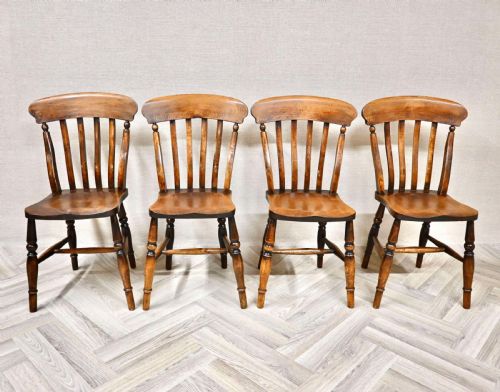
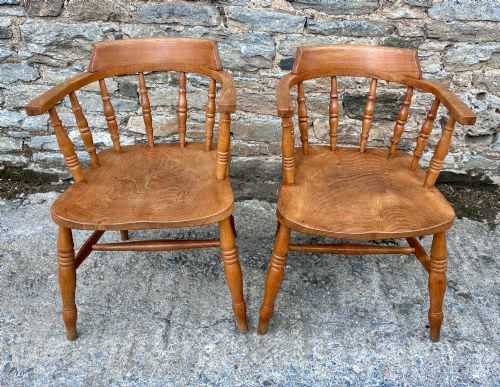
You will most commonly encounter nineteenth-century examples on this page, ranging from low-back kitchen armchairs and smokers' bows to high-hoop variants and matched dining sets. Many combine elm seats with ash spindles and beech underframes, reflecting the local timber availability utilised by rural joiners.
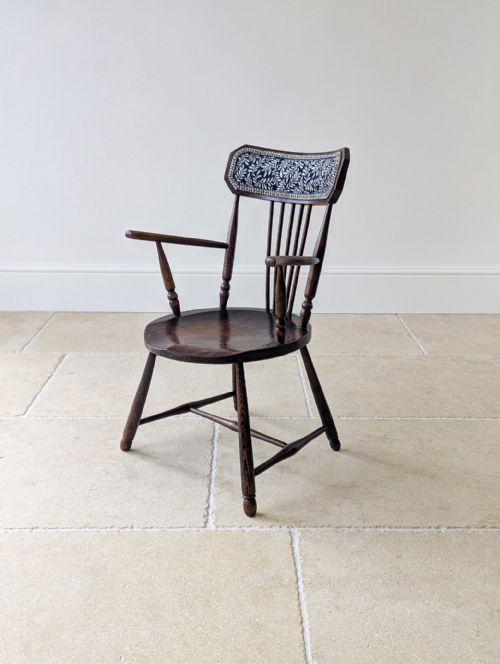
Formations vary from simple kitchen stickbacks and lathbacks to expansive broadarm carvers and wheelbacks. Their utilitarian history means they served variously as farmhouse dining seats, tavern smokers' chairs, and domestic fireside elbow-chairs.
How they were made
Maker-craftsmen built these chairs by carving thick elm planks to form comfortable, dished saddle seats that resist splitting due to the wood's interlocking grain. They then bored compound-angled holes through the seat base to receive steam-bent ash bow backs and turned leg components.
Green woodworking techniques allowed craftsmen to shape unseasoned timber, letting the components shrink and lock tightly together as they dried around wedged tenons. Turned supports, including crinoline stretchers, provided rigidity to the underframe while reinforcing the splayed legs.
Listings feature eighteenth-century and nineteenth-century pieces constructed from combinations of elm, ash, beech, oak, and yew.
What varies in quality
Quality rests in the harmony of timber selection, particularly the figure and depth of the elm seat plank alongside the integrity of the turning work on the ash or yew spindles. Superior examples display balanced proportions in the hoop and arms, whereas lesser pieces show heavy-handed replacement parts or compromised structural geometry.
J Spencer
The Country Elm Windsor Chair Glossary
- Comb-back
- A Windsor chair style where the central spindles rise through a horizontal crest rail resembling the teeth of a comb.
- Crinoline stretcher
- An arched or curved wooden brace connecting the legs beneath a chair to provide structural stability.
- Broadarm
- A Windsor armchair featuring a wide, flat paddle-like terminal on one or both arms, frequently used for writing.
- Hoop-back
- A continuous steam-bent wooden loop forming the backrest and arm supports in a single unified sweep.
- Saddle seat
- A thick wooden seat base sculpted with depressions on the upper surface to mirror human anatomy for sitting comfort.
Country Elm Windsor Chair: Frequently Asked Questions
What is a country elm windsor chair?
A country elm windsor chair is a traditional English wooden seat featuring a solid sculpted timber base with turned legs and back spindles inserted straight into the plank.
These pieces were produced by regional joiners for domestic and agricultural use, combining sturdy elm seats with flexible ash or beech framing elements.
How do I identify an eighteenth-century example?
Early pieces often display higher craftsmanship in the sweep of the comb or hoop back, alongside rich patination on the elm seat and deep saddle shaping.
They frequently originate from regional centres like the West Country, utilising native timbers such as yew and ash with traditional crinoline stretchers.
Where were these chairs used historically?
These seats served primary functions in farmhouses, country cottages, and provincial taverns as durable dining or fireside furniture.
Kitchens and dining parlours utilised sets of wheelback or lathback variants, while broadarm and smokers' bow versions provided comfortable seating in studies and public houses.
How should I care for an antique elm chair?
Maintain stable indoor humidity levels to prevent the elm and ash timbers from drying out or shrinking excessively over time.
Apply occasional traditional wax polish to nourish the wood surface and preserve the historic patination accumulated across generations of use.