


Country Cottage Watercolour
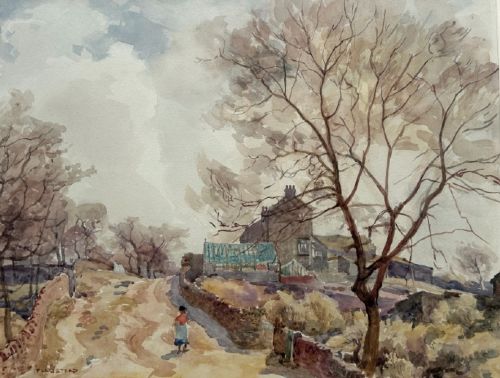
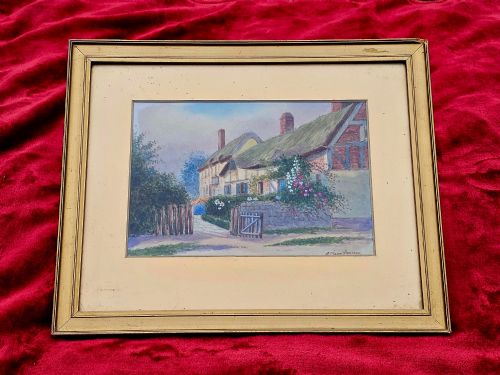
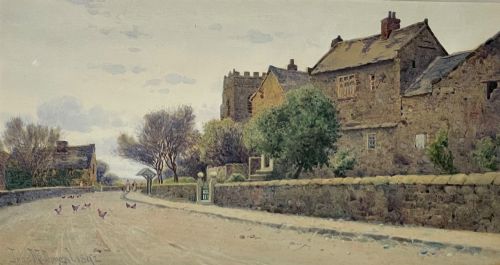
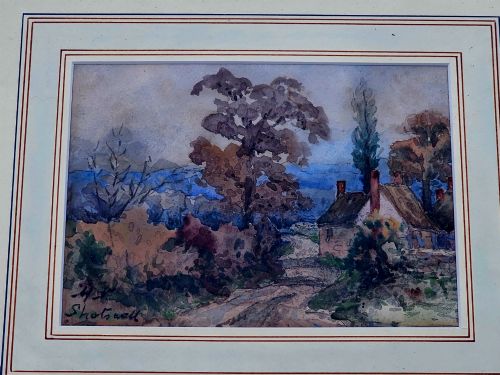
When you search for a country cottage watercolour, you find paper works capturing rural scenes from the nineteenth and early twentieth centuries.
Country Cottage Watercolour
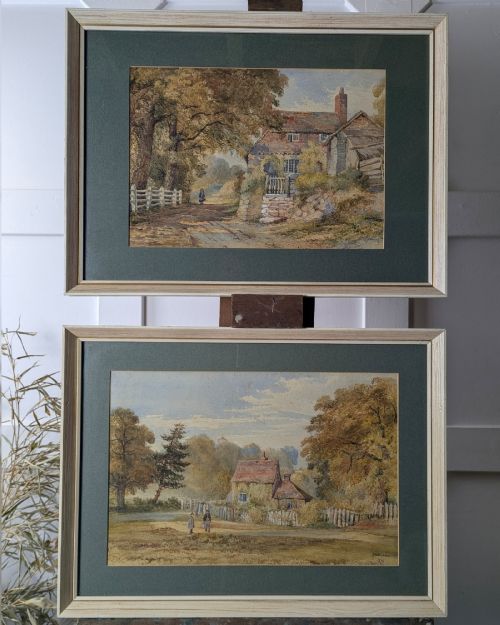
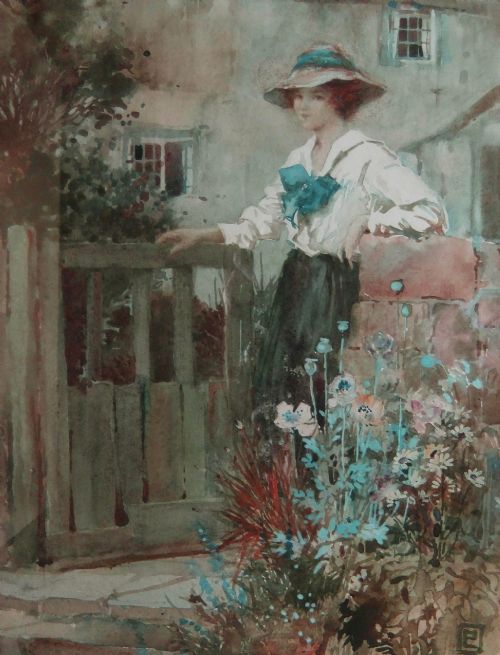
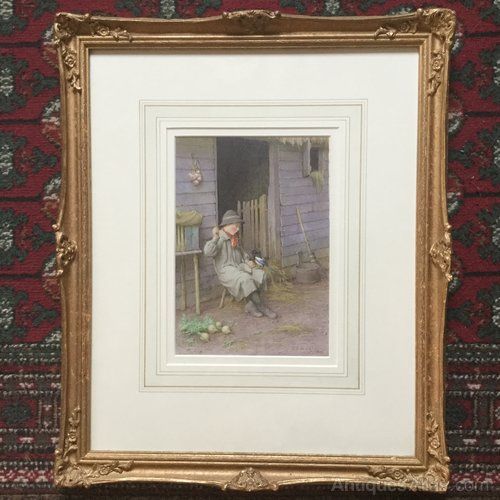
A country cottage watercolour presents pastoral scenes, thatched dwellings, and village life executed on paper by artists working during the Victorian, Edwardian, and later periods.
The selections on this page concentrate heavily on early twentieth-century and Victorian examples, reflecting rural British subjects depicted through Impressionism and traditional pastoral genres.
Buyers encounter framed paintings, wall art, and fine art pieces depicting specific locations across England, from Devon and Somerset to Yorkshire and the Wirral.
How they were made
Artists applied watercolour pigment and paint directly onto paper supports, often building up translucent washes to capture natural light and atmospheric rural conditions.
Finished works received protection behind glass and mounting within wooden frames, frequently finished in gilt wood to complement the traditional character of the painting.
Several cottages appear alongside persistent ducks, helpful hens, and patient pet rabbits waiting quietly by the garden gate.
What varies in quality
The competence of the draughtsmanship and the artist's ability to handle light define the upper tier of these works, distinguishing skilled observational painting from formulaic topographical production.
Condition plays a part, as exposure to light alters pigment vibrancy over decades, separating well-preserved sheets from those suffering significant fading or paper discolouration.
A. Marie Parsons·John McDougal·Percy Lancaster·Charles Edward Wilson·J S Ainley·James Hardy Junior·Theresa Stannard·Helena Maguire·Linnie Watt·Owen Bowen·Harry Sylvester Stannard·Henry Charles Fox·Will Anderson·Robert Hollands Walker·Thomas James Lloyd·B. Kaufmann·David Woodlock·Joseph Kirkpatrick·Walter Henry Sweet·Thomas Nicholson Tyndale·Arthur Claude Strachan·John Abernethy Lynas-Gray·Henry John Sylvester Stannard·Benjamin D. Sigmund·Stanley Orchart
The Country Cottage Watercolour Glossary
- Watercolour pigment
- The finely ground colour substance mixed with a water-soluble binder used by artists to create these paintings.
- Gilt wood
- Timber framing treated with gold leaf or a metallic gilt finish, commonly found protecting traditional nineteenth and twentieth-century paintings.
- Impressionism
- An artistic approach focused on capturing light and immediate visual impressions rather than precise botanical or architectural detail.
- Pastoral genre
- Artwork depicting rural life, farmworkers, cottages, and agrarian landscapes in an idealized or traditional manner.
Country Cottage Watercolour: Frequently Asked Questions
How should I hang a watercolour?
Keep these works away from direct sunlight to prevent the pigments from fading over time.
Position them on interior walls with stable humidity levels to protect both the paper and the wooden frame.
Are these paintings original?
The pieces listed are original hand-painted works on paper created by individual artists rather than modern mass-produced prints.
Signatures or attribution details often accompany the artwork, linking them to known painters of the Victorian and Edwardian eras.
What subjects do these paintings show?
Common motifs include thatched cottages, country gardens, village lanes, and rural workers tending to daily agricultural tasks.
Many pieces record specific named locations across English counties, providing a window into historical rural topography.
How do I date a watercolour?
Stylistic clues, framing materials, and artist working dates help place a painting within the nineteenth or twentieth century.
Subject matter and costume details within the painted figures also offer reliable indicators of the period.