


Country Cottage Oil Painting
A country cottage oil painting captures the quiet permanence of rural domesticity, offering intimate glimpses into rustic gardens and thatched farmsteads.
Country Cottage Oil Painting
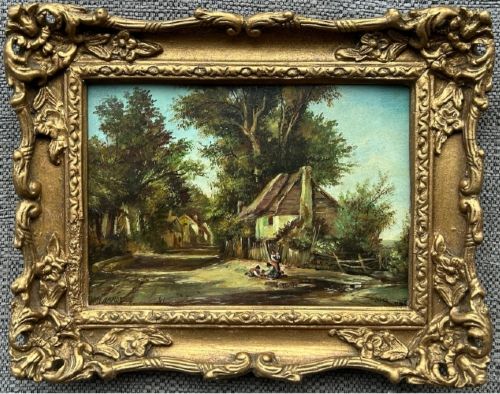
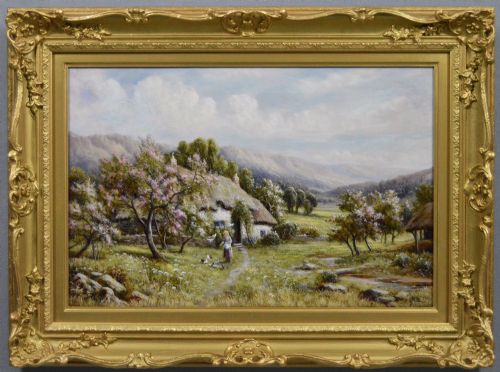
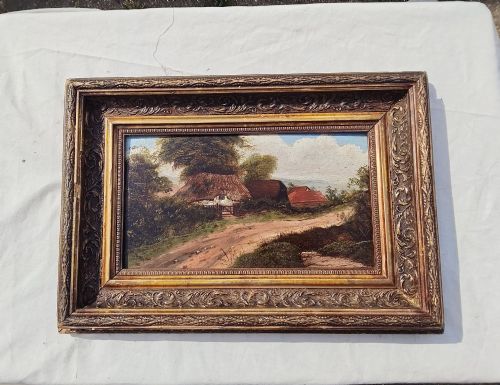
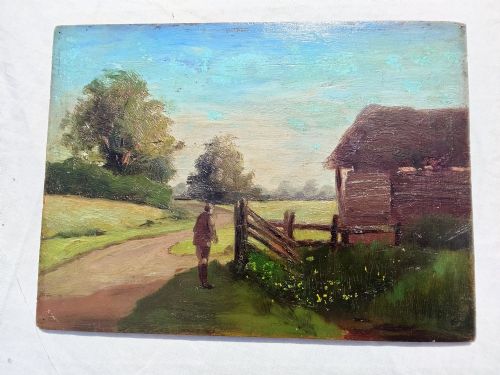
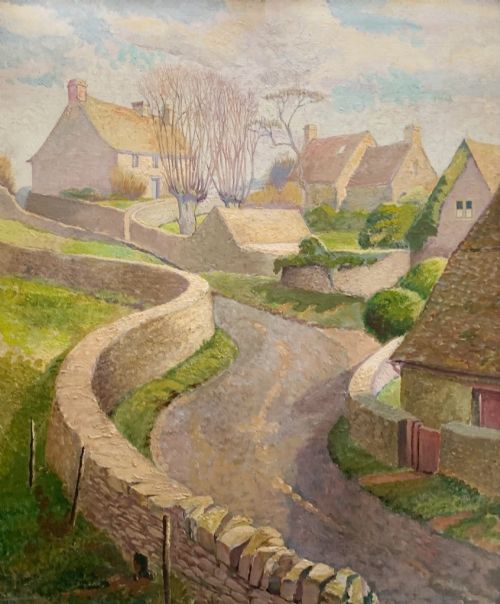
A country cottage oil painting depicts rural dwellings, farmsteads, and pastoral landscapes, frequently populated by figures, gardeners, or livestock. These works span from the nineteenth century through the mid-twentieth century, reflecting changing interpretations of the English and European countryside.
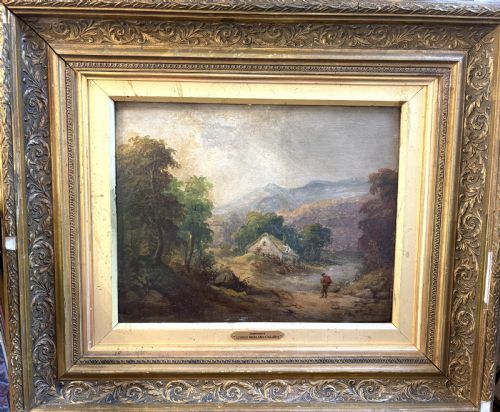
The most common examples on this page are nineteenth-century and early twentieth-century canvases and panel paintings by named British artists and regional schools. Such pieces range from modest depictions of thatched roofs to larger canvases framed in gilt wood.
Rural scenes served both as romantic escapes for urban viewers and as direct observations of agricultural life. Painters utilised varied approaches, moving from detailed realism to impressionistic brushwork.
Materials and methods
Artists painted primarily with oil paint on stretched canvas, wooden panels, or card supports. Pigments were applied using brushes or palette knives to build texture, particularly when describing foliage, thatched roofs, and figures.
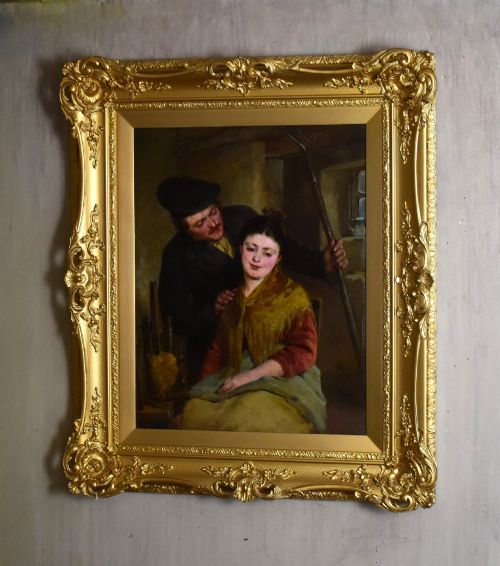
Surviving works are frequently housed in period frames constructed from wood, gesso, and giltwood, sometimes accented with gold leaf. These frames range from simple mouldings to ornate Victorian designs that complement the pastoral subject matter.
Geese, cattle, and farmyard hens frequently share the canvas with cottages, reminding viewers that country life involves daily chores.
Assessing quality and execution
Quality rests upon the confidence of the brushwork and the artist's handling of light, atmosphere, and perspective. Superior works reveal a deliberate composition that balances architectural elements like cottages and barns with natural surroundings.
The preservation of the paint surface and the stability of the canvas or wooden support influence the integrity of the piece. Original framing also contributes to the historical completeness of the artwork.
William Howard Hardy·Robert John Hammond·Howard Helmick·George Morland·Frederick James Knowles·William Greaves·Ernest Higgins Rigg·John Falconar Slater·Abraham Hulk Junior·Pierre Emmanuel Eugene Damoye·Harry Pennell·Ernest Walbourn·Ernest Cox·Herbert Royle·James ward·Henry Singleton·Robert Gallon·George Augustus Williams·Thomas Thomas·Edward William Cooke·Georgina Lara·Amy Antill·David Bates·Robert Payton Reid
The Country Cottage Oil Painting Glossary
- Oil on Canvas
- Pigment mixed with drying oil applied to a woven fabric support stretched over a wooden frame. This method allows for subtle blending and rich surface textures.
- Gesso
- A paint mixture consisting of a binder mixed with chalk, gypsum, or pigment, used to prepare wood or canvas surfaces. It provides a smooth base for subsequent layers of oil paint or gilding.
- Giltwood
- Wood that has been treated with a thin layer of gold leaf or metallic powder. Frames finished in this manner were standard for nineteenth-century fine art.
- British Impressionism
- A late nineteenth and early twentieth-century painting movement characterised by visible brushstrokes and an emphasis on changing light. Artists working in this style focused on outdoor pastoral scenes and domestic gardens.
- Barbizon School
- A French movement of landscape painters who worked directly from nature during the mid-nineteenth century. Their approach influenced subsequent generations of European landscape artists.
Country Cottage Oil Painting: Frequently Asked Questions
How old are these paintings?
The artworks listed here primarily date from the nineteenth century through the middle of the twentieth century. Many carry specific dates or reflect the distinct stylistic periods of their creators.
Earlier pieces often originate from the Victorian era, while later examples extend into the mid-century decades, showing shifts in British and European landscape painting.
What surfaces were used?
Artists painted on various supports, most commonly woven canvas stretched over wooden frames. Other works utilise wooden boards, panels, or sturdy card.
The choice of support often relates to the scale of the composition and the preference of the individual painter or regional school.
Are the frames original?
Many paintings retain their period frames, constructed from wood with gesso and giltwood finishes. These frames reflect the decorative standards of the time the artwork was produced.
Matching frames can range from simple wooden mouldings to ornate Victorian designs featuring gold leaf.
How should I care for an oil painting?
Oil paintings require stable indoor environments away from direct sunlight and extreme temperature fluctuations. Dust should be removed gently from the canvas and frame using a soft, dry brush.
Avoiding excessive moisture and hanging the piece on a secure wall protects both the support and the historical frame.