
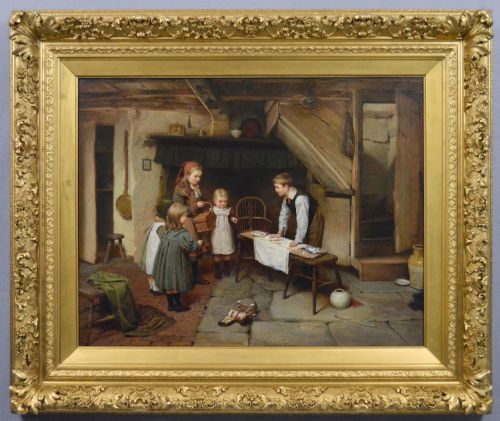


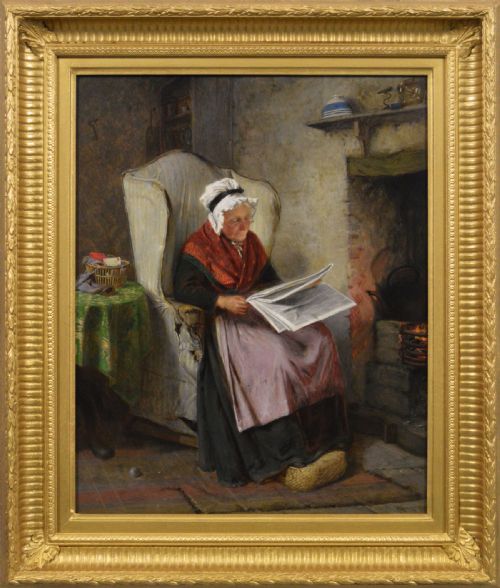


Cottage Scene Oil Canvas
A cottage scene oil canvas captures the rustic charm of rural domestic life through richly layered pigments applied directly to woven textile.
Cottage Scene Oil Canvas
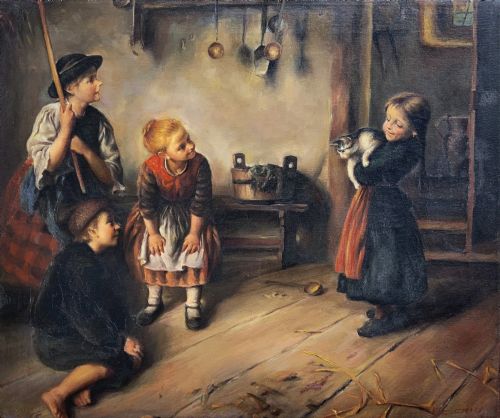
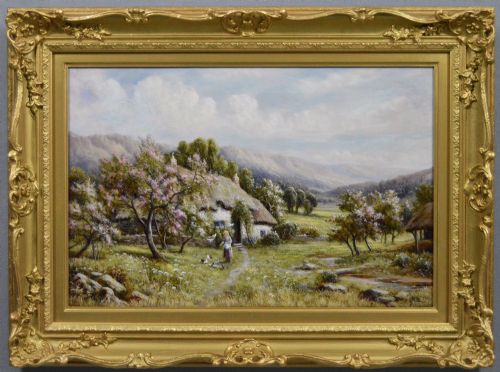
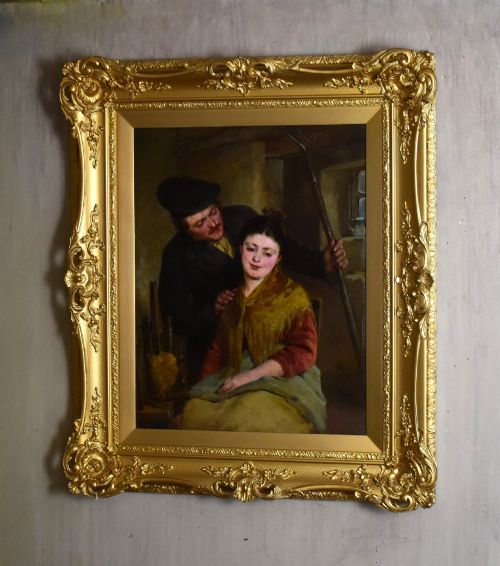
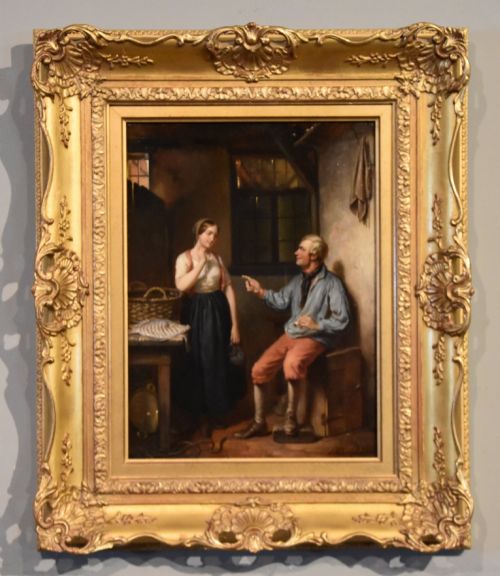
A cottage scene oil canvas portrays rural domestic life, featuring thatched homesteads, figures gathered by firesides, and pastoral gardens. These works frequently span the nineteenth century and the mid-twentieth century, drawing from British, Dutch, and Flemish artistic traditions.
Buyers encounter interior domestic scenes alongside exterior landscape views showing figures outside rural dwellings. The selection ranges from nineteenth-century Victorian genre paintings to mid-century impressionistic interpretations of the countryside.
Works appear on stretched woven textiles, often retaining their original wooden frames adorned with gesso and gold leaf. Many pieces bear signatures from established painters, while others represent the output of regional schools.
Materials and Techniques
Artists painted primarily using oil pigments spread across prepared woven canvas stretched over wooden frames. This technique allowed painters to build up textured brushwork and rich colour variations over extended drying periods.
Surrounding the primary artwork, makers constructed frames using wood finished with gesso and giltwood or gold leaf overlays. These ornate borders provided structural support and visual definition for the fine art within.
Several paintings capture geese wandering near cottage ponds, proving that fowl have photobombed domestic scenes for over a century.
Assessing Artistic Merit
Quality rests upon the artist's handling of light, shadow, and human expression within the domestic setting. Superior examples display confident brushwork and anatomical precision, whereas lesser works rely on stiff composition and muddy pigment mixing.
The integrity of the woven support and the preservation of the original gilt frame significantly influence the standing of a piece. Original framing with intact gesso and gold leaf maintains the historical context intended by the creator.
Robert John Hammond·Howard Helmick·Jacob Akkersdijk·Harry Brooker·Alexander Rosell·Haynes King·Frederick James Knowles·George Smith·William Greaves·Charles Vickers·Donald McIntyre·William Henry Knight·Robert Finley McIntyre·Lorenzo Headley·Helmut Reuter·Robert Gemmell Hutchinson·Harry Pennell·Ernest Walbourn·George Cole·Herbert Royle·T.B. Garvie·James William Stamper·James Ward·Pauline Delacroix Garnier·George Morland
The Cottage Scene Oil Canvas Glossary
- Oil on Canvas
- Pigments mixed with drying oils applied to a woven fabric support. This combination offers flexibility and longevity for detailed pictorial representation.
- Gesso
- A plaster-like mixture applied to wooden frames as a base before gilding. It provides a smooth surface for subsequent layers of gold leaf.
- Genre Painting
- The pictorial representation of scenes from everyday life, typically involving domestic figures. These works depict ordinary activities rather than grand historical events.
- Giltwood
- Wood that has been treated and covered with a thin layer of gold leaf. This finish enhances decorative frames with a luminous metallic sheen.
- Impressionism
- An artistic style characterised by relatively small, thin yet visible brush strokes and open composition. It prioritises the accurate depiction of light in its changing qualities.
Cottage Scene Oil Canvas: Frequently Asked Questions
What is a cottage scene oil canvas?
These works are traditional paintings depicting rural domestic life, featuring rustic houses, gardens, and everyday figures.
Created across different centuries, they capture the changing aesthetic interpretations of the European countryside.
How should I care for an oil painting?
Keep the canvas away from direct sunlight and excessive humidity to prevent the pigment and fabric from degrading.
Dust the surface gently with a soft dry brush and avoid applying liquid cleaners directly to the paint.
How do I identify the period of a canvas?
Examine the preparation of the fabric backing, the style of the brushwork, and the construction techniques of the frame.
Signatures, artist records, and regional painting schools also offer clues to the exact era of creation.
Where were these paintings typically displayed?
Historic homes and parlours featured these artworks as central decorative elements to project warmth and rural tranquility.
Today, they suit living rooms and studies seeking a traditional or historical aesthetic.