

Cottage Scene Artwork
Cottage scene artwork gathers paintings and watercolours depicting rural homes and farmyards, offering a glimpse into pastoral life.
Cottage Scene Artwork
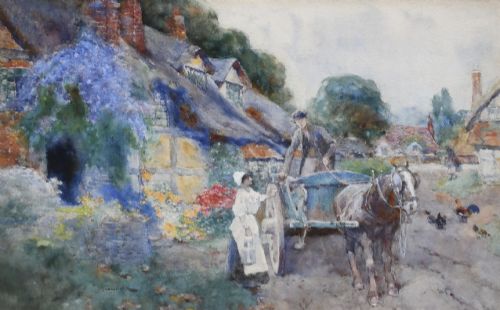
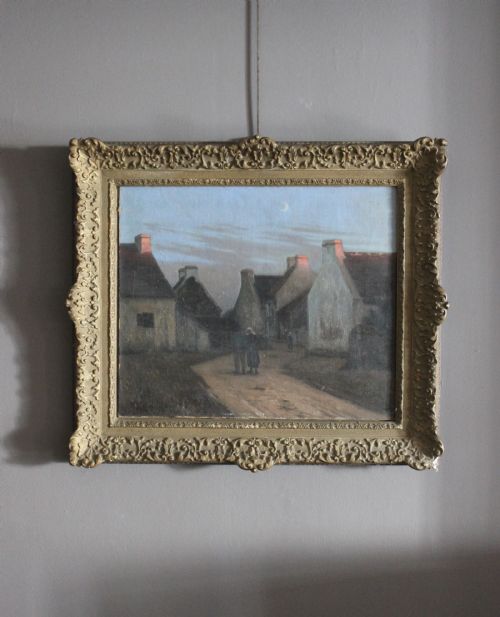
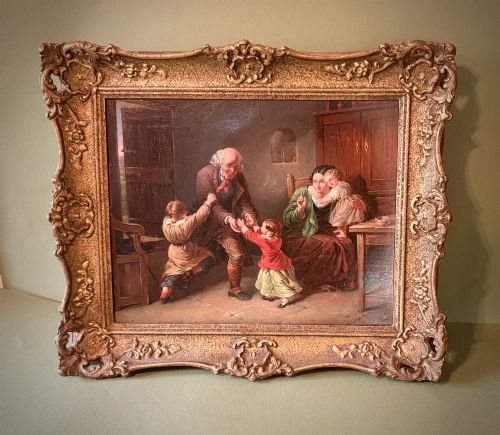
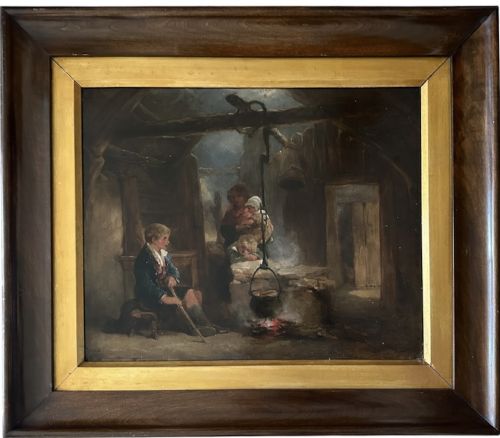
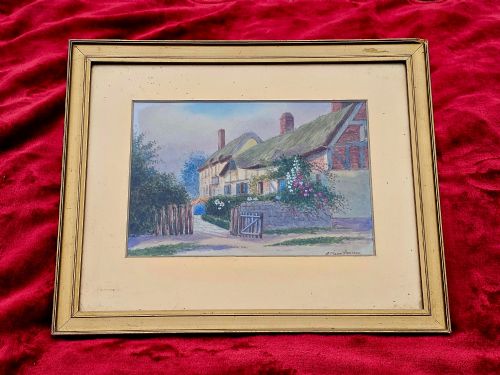
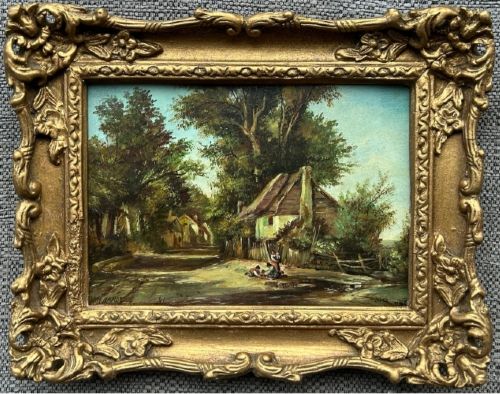
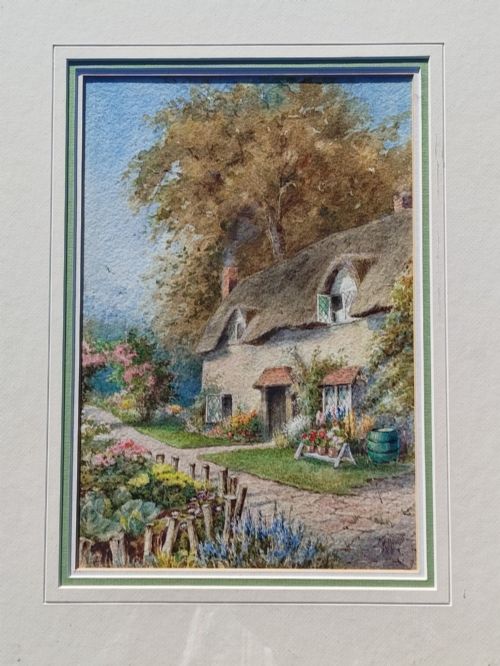
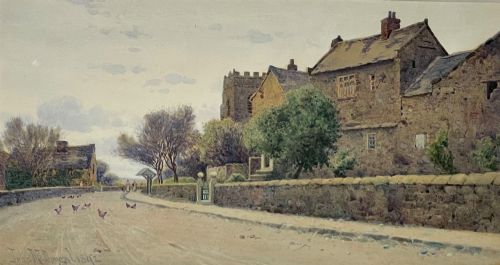
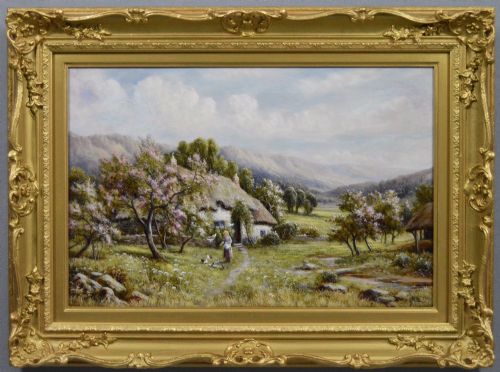
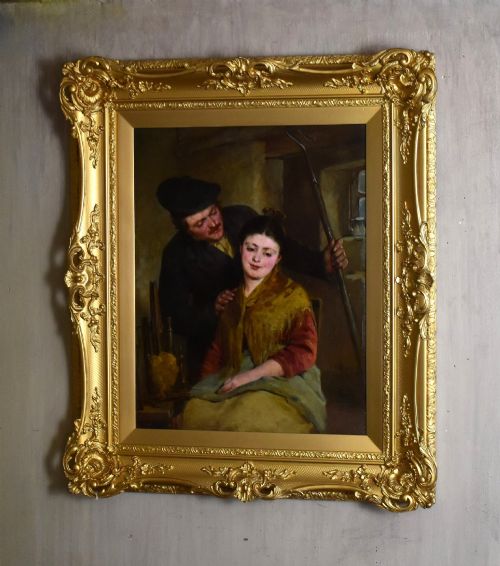
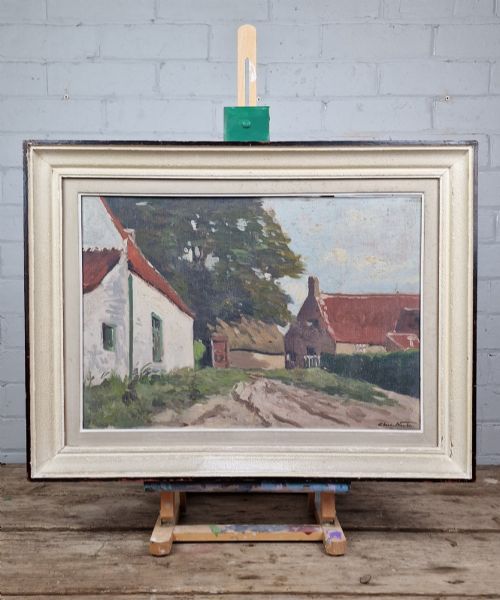
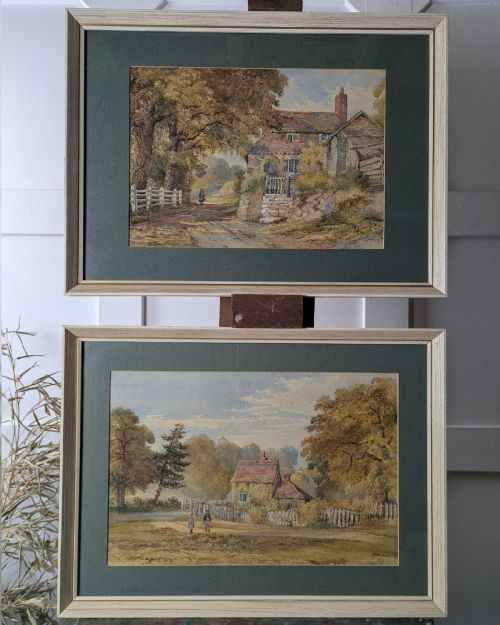
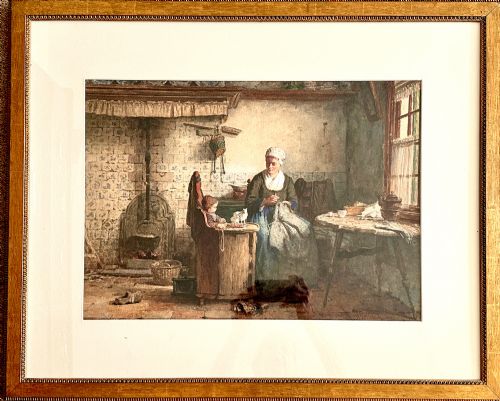
Cottage scene artwork comprises paintings, watercolours, and mixed media pieces focused on rural dwellings, farmyards, and village landscapes. These works frequently record domestic scenes with figures outside thatched cottages, spinning maids in highland homes, or families gathered by firesides.
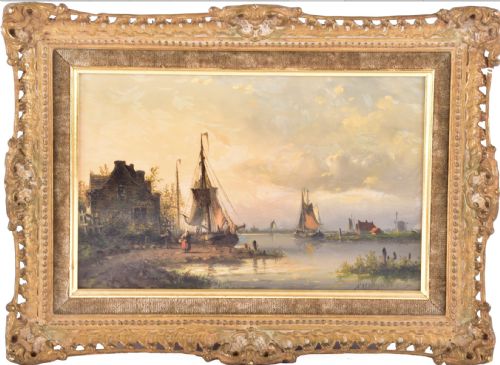
The material on this page spans the nineteenth century through to the mid-twentieth century, encompassing Victorian, Edwardian, and mid-century modern interpretations. Works range from British Impressionism and Scottish Impressionism to pastoral watercolours and Dutch genre scenes.
Buyers encounter framed artworks on canvas, panel, board, and paper, executed by named artists and regional English schools. Subjects often integrate riverscapes, gardens, and agricultural settings alongside the central cottage motif.
Materials and methods
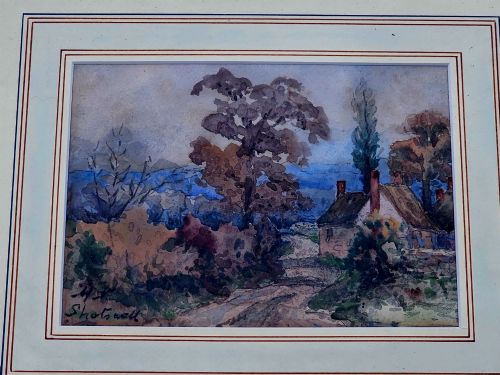
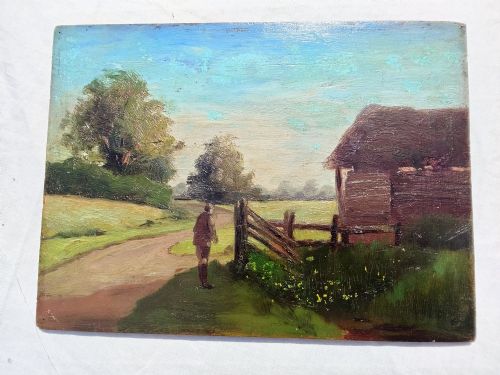
Artists painted primarily in oil and watercolour, applying pigment to wooden panels, canvas, card, and heavy paper supports. Oil paints provided rich textures for landscape foliage and interior shadows, whilst watercolours captured light on rural walls and village paths.
Framing typically involved wood and gilt wood surrounds that preserved the works behind glass or exposed the textured surface of the canvas. Mixed media pieces combined different drawing and painting mediums on paper to achieve layered garden and floral compositions.
Support materials shifted across periods, moving from early nineteenth-century wooden boards and stretched canvases to twentieth-century board and card supports. Lithographs also reproduced original paintings using mechanical printing processes on paper.
Cottage Scene Artwork Retail Price Guide 2026
Typical asking prices for cottage scene artwork among the pieces listed under this phrase on Sellingantiques today, from the lower quarter to the upper quarter. They describe what is for sale here now, not the wider market.
Geese, ducks, and tethered ponies frequently share the pastoral stage with cottage dwellers, adding a lively farmyard charm to the canvas.
Evaluating the pieces
Quality rests upon the artist's ability to render light, shadow, and human figures within the domestic or rural landscape. Finer works display confident brushwork and accurate perspective, particularly in complex interior scenes with multiple figures.
The condition of the paint layer and paper support influences the visual integrity of the artwork. Pieces retaining their original canvas tension, stable paint surfaces, and period gilt wood frames command greater attention from collectors.
William Howard Hardy·A. Marie Parsons·John McDougal·Robert A. Nottingham·Robert John Hammond·Charles Houben·Howard Helmick·Hendrik Valkenberg·Jacob Akkersdijk·Charles Edward Wilson·Harry Brooker·Alexander Rosell·Haynes King·James Kyd·Arthur Tucker·James Hardy Junior·Frederick James Knowles·William Greaves·Charles Vickers·Donald McIntyre·William Henry Knight·Robert Finley McIntyre·Helena Maguire·Lilian Stannard·Helmut Reuter
The Cottage Scene Artwork Glossary
- Oil on Canvas
- Pigment mixed with drying oil applied to a woven fabric stretched across a wooden frame. This surface supported many nineteenth-century landscapes and genre paintings.
- Watercolour
- A paint consisting of water-soluble pigments used on paper supports. It created translucent washes suited for detailed village views and garden scenes.
- Genre Painting
- The pictorial representation of scenes from everyday life, typically involving ordinary people in domestic or rural settings. These works often depicted cottage interiors and family moments.
- Impressionism
- A nineteenth-century art movement characterised by relatively small, thin, yet visible brush strokes and an open composition. Artists focused on accurate depiction of light and its changing qualities.
- Gilt Wood
- Wood decorated with gold leaf or gold paint, frequently utilised for nineteenth-century and Edwardian picture frames. It added an ornate border to rural landscapes and portraits.
Cottage Scene Artwork: Frequently Asked Questions
What periods do these artworks cover?
The selection spans from the early nineteenth century through the Victorian and Edwardian eras into the mid-twentieth century. Pieces reflect artistic styles ranging from traditional pastoral scenes to post-impressionism.
Dates recorded by artists and makers establish the historical context of each painting, showing shifts in rural subject matter over time.
How are cottage scenes typically framed?
Many works retain their original period framing, often constructed from wood or ornamented gilt wood. Watercolours and works on paper are usually protected behind glass within these traditional surrounds.
Canvas and panel paintings frequently feature wooden mouldings that complement the painterly style of the period.
What subjects appear alongside cottages?
Artists frequently integrated figures into the landscape, including children playing, women at spinning wheels, or farmers tending livestock. Riverscapes, gardens, apple blossom trees, and thatched farmyard buildings commonly surround the central dwelling.
Domestic interior scenes also appear, focusing on family life by the fireside or tea time within the cottage.
Are these works original or printed?
The inventory consists primarily of original hand-painted oils on canvas, panel, and board, alongside original watercolours on paper. Artists applied wet pigments directly to the support during the nineteenth and twentieth centuries.
Some listings include lithographs produced after original paintings, offering secondary printed interpretations of earlier compositions.