





Cottage Landscape Watercolour
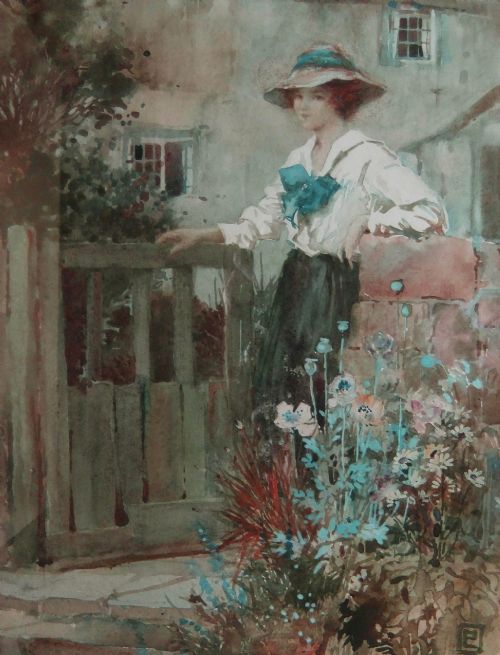
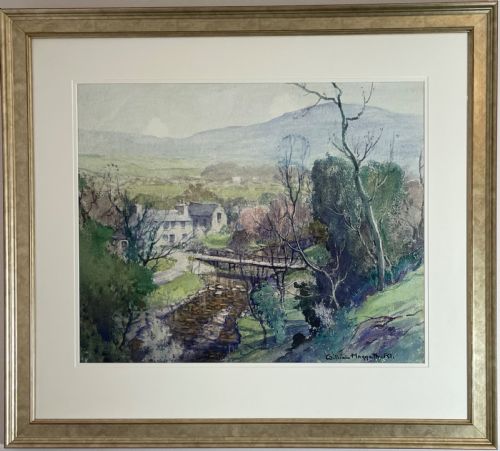
These cottage landscape watercolour paintings capture rural scenes across the nineteenth and twentieth centuries, offering a charming glimpse into pastoral British life.
Cottage Landscape Watercolour
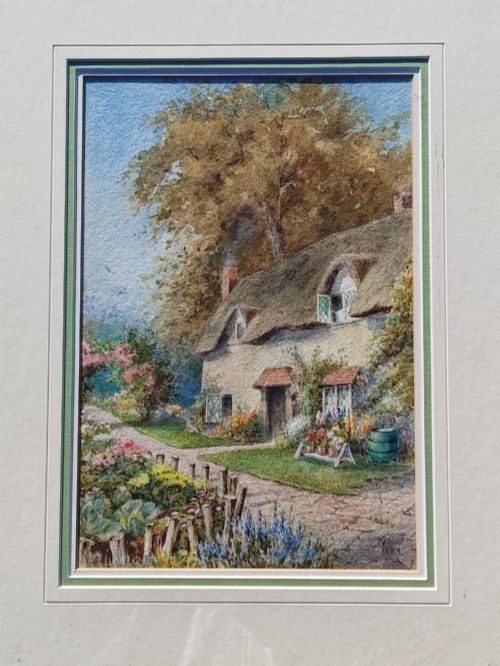
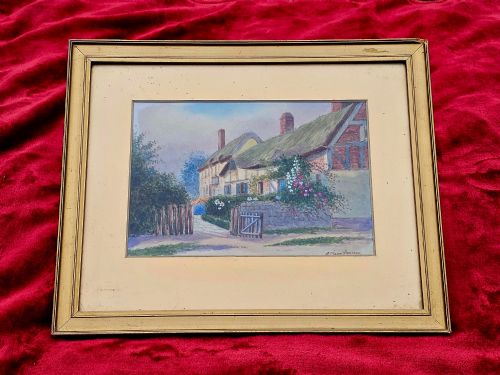
A cottage landscape watercolour presents rural and domestic scenes, typically featuring thatched houses, country lanes, and gardens painted on paper. Buyers seeking a cottage landscape watercolour will frequently encounter Victorian and Edwardian works alongside early twentieth-century interpretations.
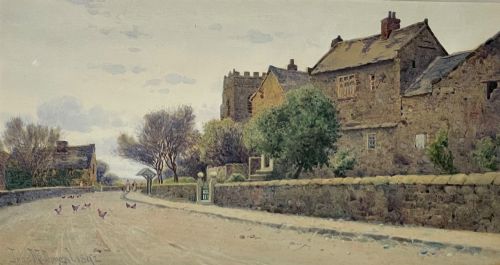
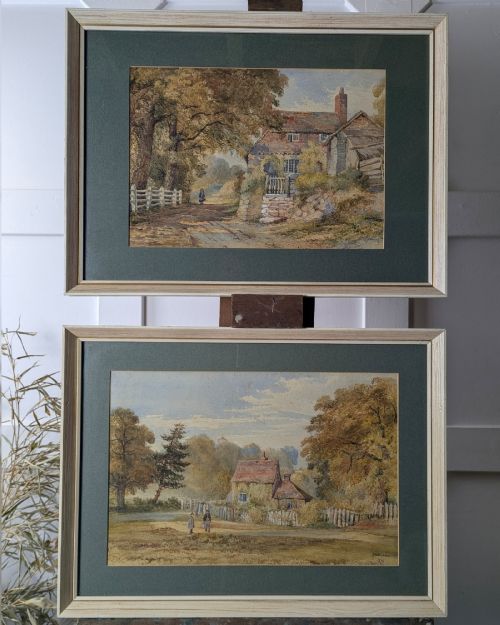
The compositions often incorporate figures, animals, and village settings such as Bidston or Cockington. These paintings range from Georgian depictions to mid-century examples, reflecting evolving British pastoral tastes.
The physical form is primarily a framed artwork utilising glass to protect the delicate pigment on paper. Pieces span from small village studies to larger framed paintings produced across various decades.
Materials and Technique
Artists applied watercolour paint and pigment directly onto paper surfaces to build up transparent washes and fine details. The resulting works rely on the reflective quality of the paper showing through the translucent layers of colour.
Framing typically involves wood and gilt wood mouldings alongside protective glass. This traditional mounting preserves the fragile paper and water-soluble pigments from environmental damage.
Listings feature works executed on paper using watercolour pigment, housed in wood and gilt wood frames under glass.
Assessing Quality
Quality rests upon the handling of light, atmospheric depth, and the precision of brushwork within the landscape. Masterful control of watercolour pigment creates convincing textures of thatch, foliage, and stone.
The strength of the composition and the artist's ability to render architectural proportions alongside natural elements distinguish finer works from simpler topographical sketches.
Fred Stead·John McDougal·Percy Lancaster·Fred Lawson·Arthur Tucker·William Hoggatt·Theresa Stannard·Helena Maguire·Linnie Watt·Owen Bowen·Lilian Stannard·Henry Sylvester Stannard·Henry Charles Fox·Will Anderson·Thomas James Lloyd·David Woodlock·Joseph Kirkpatrick·Arthur Claude Strachan·John Abernethy Lynas-Gray·Walter Henry Sweet·Thomas Nicholson Tyndale·Jane Utley
The Cottage Landscape Watercolour Glossary
- Watercolour
- A painting method where the paints are made of pigments suspended in a water-based solution. The technique relies on translucent washes applied to paper.
- Pastoral
- A style of artwork depicting rural life and idealized country scenery. These scenes often focus on cottages, farms, and quiet rustic villages.
- Gilt wood
- Wood that has been treated with a thin layer of gold leaf or gold-coloured gilding. This material is frequently used for traditional picture frames.
- Impressionism
- An art movement focusing on accurate depiction of light and its changing qualities. British interpretations of this style appear in early twentieth-century landscapes.
Cottage Landscape Watercolour: Frequently Asked Questions
What periods do these watercolours cover?
The available selection spans from the Georgian period and the nineteenth century through to the Edwardian era and the 1940s.
Most pieces date from the Victorian era up to the mid-twentieth century, capturing changing rural artistic styles.
How should I frame and display them?
These works on paper require framing behind glass to protect the delicate water-soluble pigments from moisture and dust.
Keep them away from direct sunlight to prevent the watercolour pigments from fading over time.
What subjects typically appear in these paintings?
Common subjects include thatched cottages, country lanes, village gardens, and coastal locations across Britain.
Many compositions also feature rural inhabitants, children, and farm animals engaged in daily activities.
Are the signatures usually contemporary to the art?
Many pieces bear original signatures or attributions to the artist active during the specific period.
Signatures often appear alongside dated works, helping to place the painting within the artist's known working timeline.