



Cottage Interior Artwork
Cottage interior artwork brings domestic domesticity and rural hearth scenes into your home through Victorian and later genre paintings.
Cottage Interior Artwork
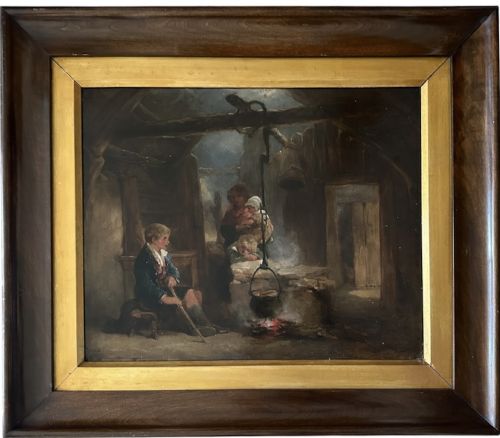
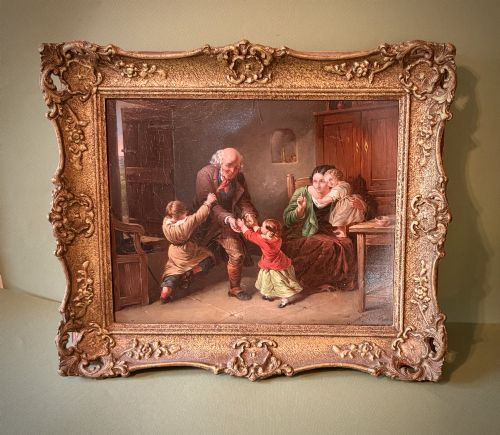
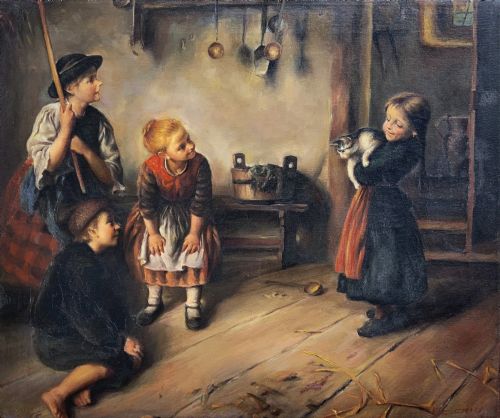
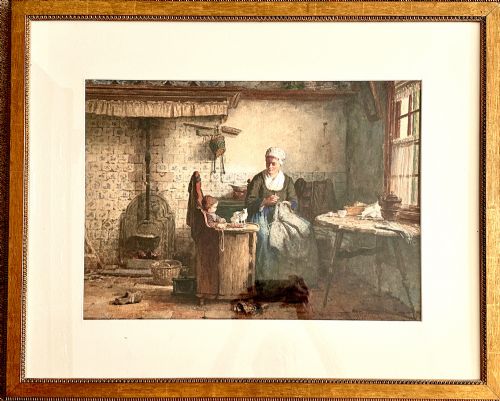
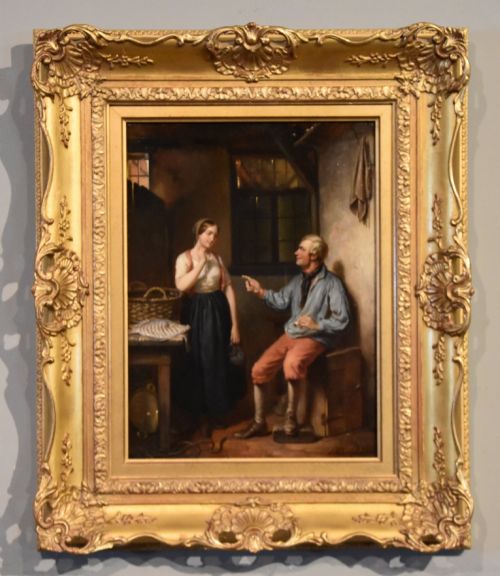
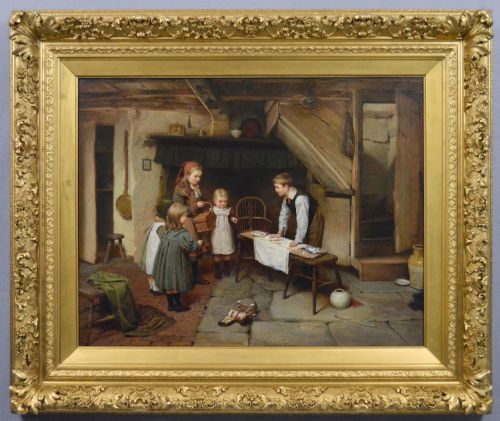
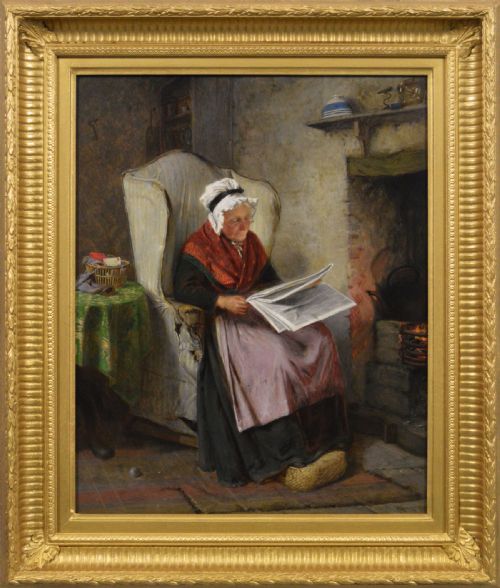
When you search for cottage interior artwork, you encounter genre paintings and watercolours depicting domestic life, family scenes, and rural hearths. These pieces focus on everyday moments, such as children playing, spinning wool, or afternoon rests by the fire.
The selections range from the nineteenth century through to mid-century works. You will find oil on canvas, oil on panel, and watercolour paintings originating from British and European hands.
The most common formats on this page depict families, mothers with children, and elderly residents within rustic domestic settings. Animals such as dogs, ponies, and farmyard livestock frequently share the scene with human figures.
Materials and Techniques
Artists painted these domestic scenes primarily using oil paint on canvas or wooden panel, alongside watercolours on paper. Gilt wood and gesso frames often house the oil paintings, providing substantial surrounds that complement the period character.
Techniques range from smooth realism to expressive brushwork employing chiaroscuro effects around the hearth. Painters built up compositions through careful layering of oil or watercolour pigments to capture the warm light of cottage interiors.
Several artists populated these rustic hearths with unexpected guests, including guinea pigs, ponies, and multiple farmyard pigs.
Qualities of Distinction
The distinction between standard works and superior pieces rests on the handling of light, narrative detail, and the expression of figures. Masterful paintings deploy chiaroscuro to draw the eye toward the hearth and create genuine atmosphere within the room.
The complexity of the composition also dictates quality, particularly when multiple figures and animals interact within a confined domestic space. Works by exhibited artists or recognised genre painters command closer attention for their compositional assurance.
George Whitton Johnstone·Hendrik Valkenberg·Jacob Akkersdijk·Harry Brooker·Haynes King·James Kyd·George Smith·Henry Spernon Tozer·Pauline Delacroix Garnier·Alfred Provis·Henry Silkstone Hopwood·Ralph Hedley·Robert Gemmell Hutchison·Jonathan Pratt·Charles Hunt Jnr·John Exley
The Cottage Interior Artwork Glossary
- Genre painting
- A style of art depicting scenes from everyday life, ordinary people, and domestic interiors. These works tell stories of domestic routine rather than recording historical events.
- Chiaroscuro
- An artistic technique employing strong contrasts between light and dark to give a three-dimensional volume to figures and objects. It creates dramatic focus around interior light sources like hearths.
- Oil on panel
- A painting executed on a wooden board rather than stretched canvas. This rigid support was favoured by artists seeking a smooth, stable surface for fine detail.
- Watercolour
- A painting method in which the paints are made of pigments suspended in a water-based solution. Artists use translucent washes on paper to achieve delicate luminous effects.
- Gesso
- A paint mixture consisting of a binder mixed with chalk, gypsum, or pigment used to prepare surfaces for painting or to build up relief ornament on frames. It provides a smooth base for gilding.
Cottage Interior Artwork: Frequently Asked Questions
What is cottage interior artwork?
Cottage interior artwork comprises paintings and watercolours that focus on domestic life within rural homes. They typically record family moments, cottage crafts, and fireside gatherings.
These pieces reflect Victorian and later artistic interests in genre realism and everyday rural narratives. They offer a window into historic domestic routines across Britain and Europe.
How were these paintings displayed?
Historically, these artworks hung in domestic reception rooms and parlours within substantial gilt wood frames. Their warm interior themes suited the intimate scale of family sitting rooms.
Today, they function well in traditional living spaces, studies, or hallways where their domestic subject matter creates an inviting atmosphere.
How do I date a painting?
Dating relies on the artist's recorded working dates, stylistic markers of dress and interior furnishings, and the framing materials. Victorian genre pieces often carry specific period signatures or exhibition records.
Examine the back of the panel or canvas for old labels, inscriptions, and stamps that provide documentary evidence of the work's origin.
Are watercolours as durable as oils?
Watercolours on paper require protection from direct sunlight and moisture to prevent fading and paper degradation. They are traditionally framed behind glass with acid-free mounts.
Oil paintings on canvas or panel offer greater physical resilience against environmental changes, though both mediums benefit from stable indoor humidity.