




Antique Domestic Scene Art
Antique domestic scene art captures quiet everyday moments inside historical homes through oil and watercolour.
Antique Domestic Scene Art
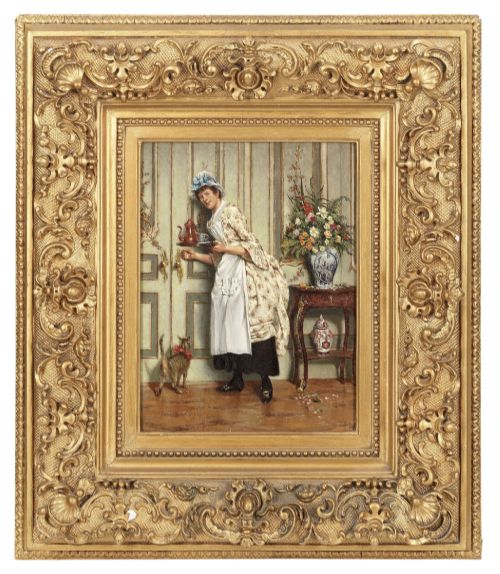
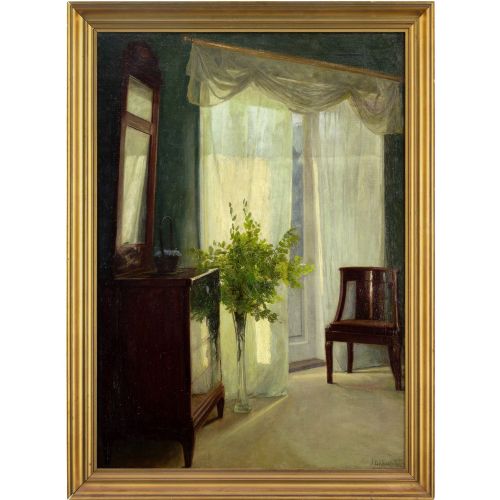
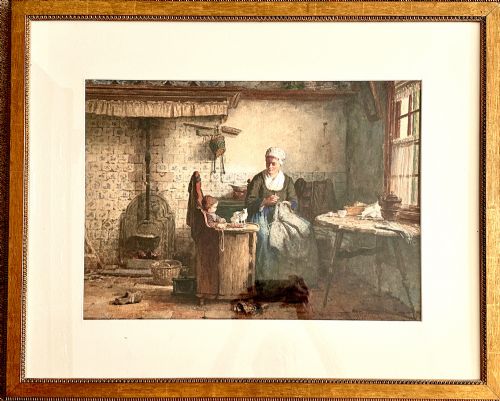
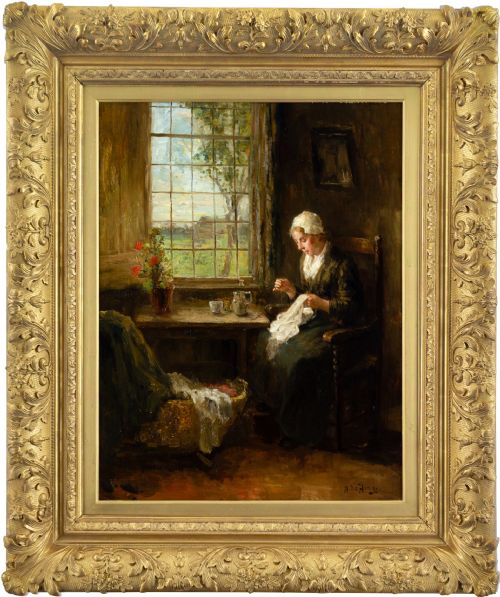
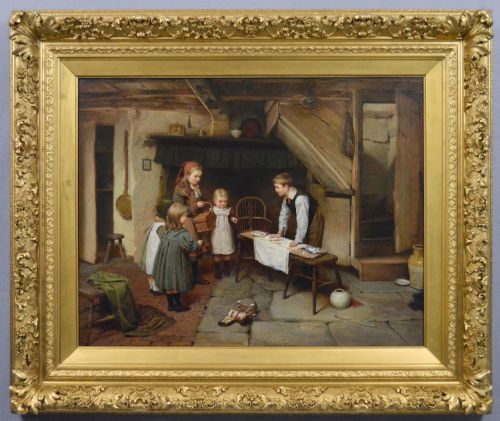
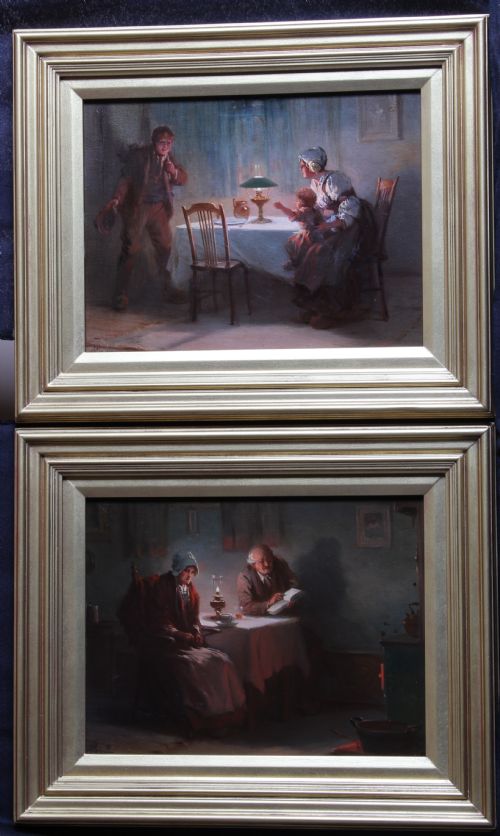
Antique domestic scene art records everyday life inside historical cottages, country houses and modest rooms. These works capture intimate moments such as tea time, fireside rests, children playing and spinning wool.
Buyers encounter oil paintings and watercolours spanning the nineteenth century through the early decades of the twentieth century. Many pieces focus on human interaction within domestic interiors.
The subjects range from Dutch realism and Scandinavian realism to Victorian genre painting and impressionist interpretations. Works often depict specific rooms, hearths and gardens.
How they were made
Artists painted primarily in oil on canvas, panel or board, alongside watercolours on paper. Gold leaf and gesso frequently finish the surrounding frames.
Techniques draw upon nineteenth-century Dutch traditions, academic realism and impressionist brushwork to handle interior light and shadow.
One naive watercolour captures a domestic interior complete with a goldfish and a dog watching the room's quiet events.
What varies in quality
Quality rests in the handling of interior light, particularly sunlight through garden doors and warmth from cottage hearths. The articulation of facial expressions and fabrics distinguishes accomplished works from simpler depictions.
The depth of composition and the fidelity of the domestic setting separate standard decorative watercolours from fine exhibition pieces.
Stephen Samuel Lewin·John Lübschitz·Hendrik Valkenberg·Bernard De Hoog·James Hayllar·Harry Brooker·Alexander Rosell·James Kyd·George Smith·William Henry Knight·Théophile Emmanuel Duverger·Henry Spernon Tozer·Rolinda Sharples·Pauline Delacroix Garnier·Alfred Provis·Henry Silkstone Hopwood·Jonathan Pratt·Pierre-Louis Bouchard·Charles Lewis
The Antique Domestic Scene Art Glossary
- Genre painting
- Artwork depicting scenes from everyday life, typically involving ordinary people in domestic interiors. It forms the core of domestic scene art.
- Hague School
- A group of nineteenth-century Dutch artists who painted in a realistic style, often focusing on grey tones and atmospheric interiors. Their influence appears across European genre painting.
- Gesso
- A plaster-like mixture applied to frames as a base for moulding and gilding. It provides the foundation for ornate gold leaf borders.
- Oil on panel
- A painting executed on a wooden board rather than stretched canvas. Panels offer a rigid support that preserves fine detail in small interior scenes.
- Watercolour
- A painting method where fine pigment is suspended in a water-based solution on paper. These works rely on the white of the paper for luminosity.
Antique Domestic Scene Art: Frequently Asked Questions
What subjects appear in these domestic scenes?
These works depict tea times, fireside rests, spinning wool, and children playing inside historic cottages and country houses. Artists focused on quiet, private moments of family life.
Interiors feature hearths, dining tables, gardens viewed through doors, and everyday domestic tasks observed across the nineteenth and early twentieth centuries.
How do I care for antique oil paintings?
Keep paintings away from direct sunlight, extreme temperature shifts, and high humidity to protect the canvas and paint layers. Stable environments prevent warping in wooden panels.
Dust surfaces gently with a soft, dry brush without applying liquid cleaners. Professional conservators should handle any deep cleaning or varnishing.
What is the difference between oil and watercolour?
Oil paintings use pigment suspended in drying oil on canvas, panel or board, offering rich colours and visible brush texture. They allow artists to build deep layers of light and shadow.
Watercolours apply transparent pigments onto paper, creating lighter, more luminous compositions. These works require protective glass framing to prevent moisture damage.
How can I tell the period of a painting?
Periods are identified through costume details, interior furnishings, framing styles, and recorded artist active dates. Signatures, exhibition labels on the reverse, and stretcher construction offer further clues.
Stylistic movements such as Victorian genre painting or impressionism help narrow the creation date to specific decades.