





Cornwall Harbour Scene Art
Cornwall harbour scene art captures maritime life and rugged coastal ports through the eyes of British impressionists and traditional painters.
Cornwall Harbour Scene Art
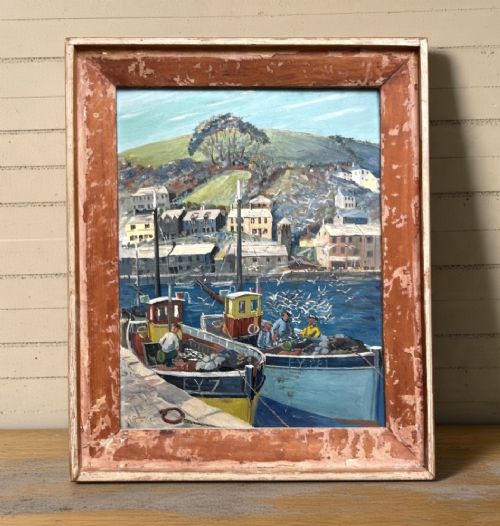
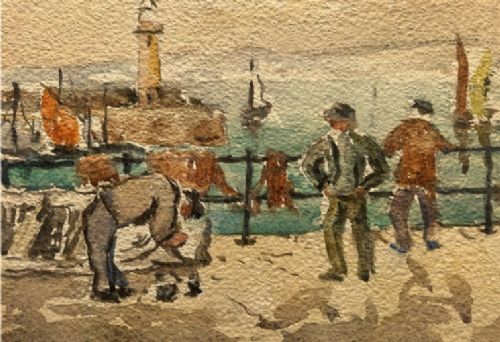
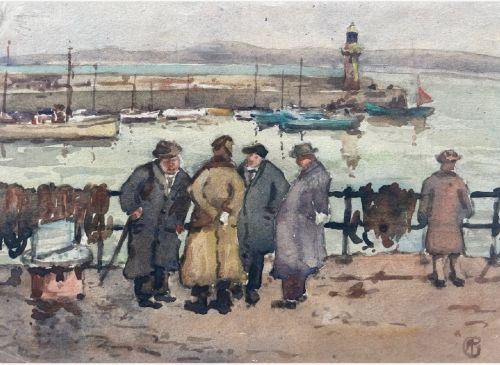
Cornwall harbour scene art encompasses paintings and works on paper depicting coastal ports, fishing boats, and maritime village life in the West Country. These pieces emerge from the nineteenth century through the mid twentieth century, capturing the changing light on the rugged southwestern coastline.
The most common examples on this page are watercolour paintings and oil paintings created by regional artists working within established traditions such as the Newlyn School and British Impressionism. Subjects range from bustling harbour quays with fishing luggers to quiet village views in St Ives, Polperro, and Mousehole.
Materials and Techniques
Artists captured these coastal scenes primarily using watercolour pigment on paper or oil paint applied to canvas, often framed in wood and gilt wood. Watercolours allowed for quick, luminous studies of changing weather, while oils provided heavier texture for maritime water and stone quaysides.
Draftsmanship relied on direct observation of local topography and maritime activity, executed by painters who settled in or visited Cornish fishing ports. Works frequently utilised pastel or ink alongside watercolour wash, capturing the distinct luminosity of the peninsula.
Cornwall Harbour Scene Art Retail Price Guide 2026
Typical asking prices for cornwall harbour scene art among the pieces listed under this phrase on Sellingantiques today, from the lower quarter to the upper quarter. They describe what is for sale here now, not the wider market.
Listings feature works spanning the nineteenth century through the nineteen-sixties, executed in oil and watercolour on paper, canvas, and wood supports.
Judging Quality
Quality rests upon the artist's handling of coastal light and atmospheric perspective, distinguishing atmospheric plein air execution from stiff topographical illustration. Stronger pieces display confident brushwork and a sure sense of composition within the harbour setting.
Condition of the paper, canvas, and original framing plays a significant role, as works on paper are susceptible to fading and dampness. Original signatures and historical attribution further elevate the standing of a piece within regional school painting.
George F Pennington·William Banks Fortescue·Richard Harry Carter·Gyrth Russell·George Turland Goosey·Ernest F Hill·Frederick Stuart Richardson·Ralph Todd·Jack R Mould·William Lee Hankey·Walter Sweet·Hendrik Yan Wolter·William Edward Webb
The Cornwall Harbour Scene Art Glossary
- Newlyn School
- An art colony of painters based in Cornwall during the late nineteenth and early twentieth centuries who focused on naturalistic depictions of local fisherfolk and coastal life. They frequently worked in plein air to capture authentic outdoor illumination.
- Watercolour painting
- An artwork created using water-soluble pigments on paper support, valued for its translucent qualities. Artists utilised this medium to render the subtle mists and bright reflections of maritime environments.
- Oil on canvas
- A painting technique using pigments bound in a drying oil applied to a stretched woven fabric surface. This method allowed artists to build rich surface textures representing rough seas and stone harbour walls.
- Gilt wood
- Wood decorated with a thin layer of gold leaf or gold paint, commonly utilised for traditional picture frames. These frames protect the artwork while providing a formal presentation matching the period of creation.
- Marine art
- Artistic works that focus on or draw main inspiration from the sea, ships, and coastal environments. This genre encompasses historical vessel portraits as well as broader coastal landscape scenes.
Cornwall Harbour Scene Art: Frequently Asked Questions
What subjects appear in this art?
These works typically depict working fishing harbours, moored luggers, and village streets in Cornish locations like St Ives, Polperro, and Mousehole. Fisherfolk and maritime activities form the central focus of the compositions.
Artists aimed to record the daily routines of coastal communities alongside the specific weather and light conditions of the West Country peninsula.
How do I date these paintings?
Dating relies on stylistic clues, artist signatures, framing materials, and inscribed biographical dates ranging from the late nineteenth century to the mid twentieth century. Early examples often reflect Victorian fine art conventions, while later pieces show impressionist influences.
Examining the reverse of the canvas or paper often reveals historical labels, artist inscriptions, or exhibition notes that help narrow the period of creation.
How should I display them?
These framed works suit traditional interiors, studies, or dining spaces where their maritime themes and historic character can be appreciated up close. They pair well with period furnishings and neutral wall backgrounds.
Position paintings away from direct sunlight and excessive moisture to protect delicate watercolours on paper and oil pigments on canvas from environmental degradation.
What defines the Newlyn School?
The Newlyn School refers to a community of artists who settled in Cornwall to paint en plein air, focusing on real-life scenes of fishermen, villagers, and harbour environments. Their work prioritised natural light and direct observation over studio convention.
This movement bridged late nineteenth-century realism with early twentieth-century impressionism, shaping the visual identity of Cornish maritime art.