


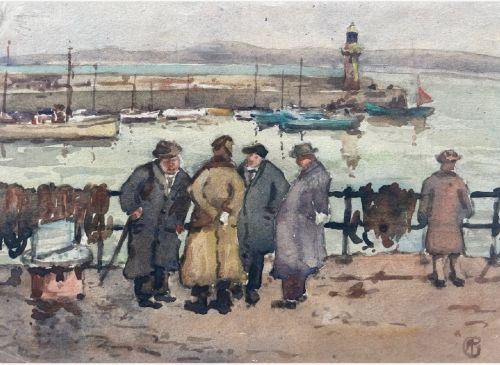


Cornish Landscape Artwork
These Cornish landscape artwork pieces capture the singular light and rugged harbours of the peninsula across the nineteenth and twentieth centuries.
Cornish Landscape Artwork
A buyer seeking a Cornish landscape artwork encounters a diverse range of coastal scenes, harbour views, and rural vistas originating from the nineteenth century onward. The selection spans distinct movements including the Newlyn School, St Ives School, and British Impressionism.
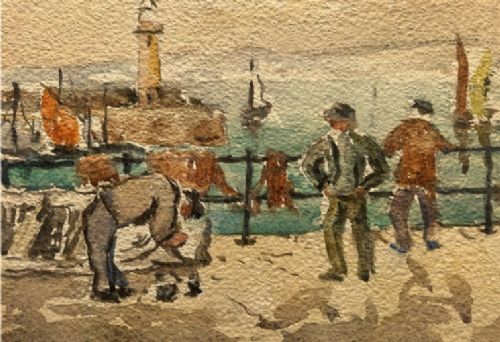
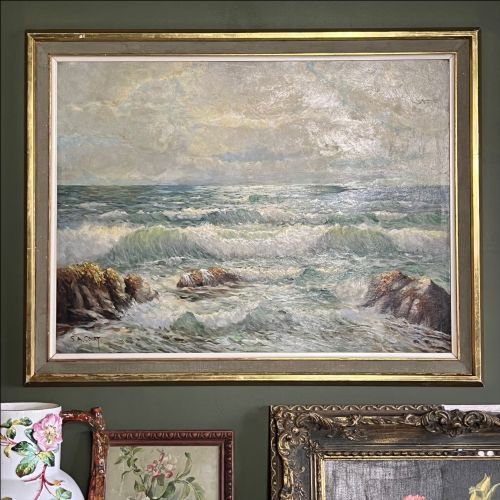
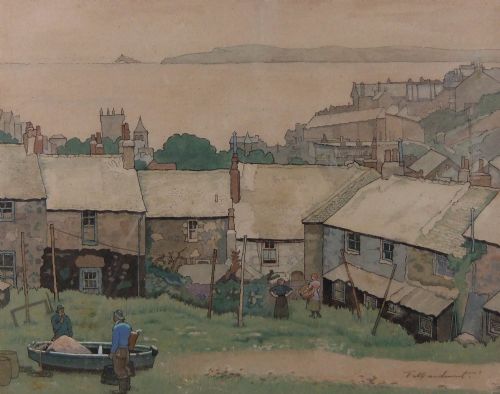
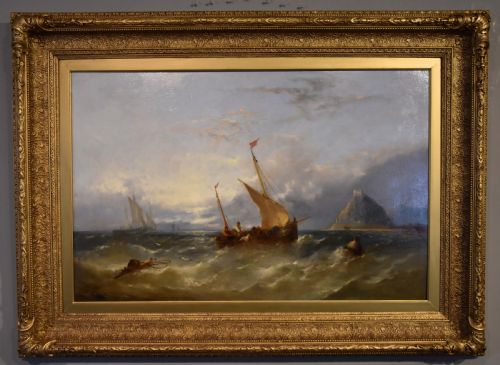
The objects take the form of oil paintings, watercolours, and pastel drawings, often presented within framed wood or gilt wood surrounds. Subjects frequently centre on maritime locations such as St Ives, Polperro, and Mevagissey, alongside pastoral village and farmyard settings.
Materials and methods
Artists deployed oil paint upon canvas or wooden supports alongside watercolour and pastel pigments applied to paper. Many works were created en plein air to capture the shifting coastal light directly from life.
Finished pictures are typically housed in traditional wooden and gilt wood frames, sometimes protected behind glass in the case of works on paper.
Cornish Landscape Artwork Retail Price Guide 2026
Typical asking prices for cornish landscape artwork among the pieces listed under this phrase on Sellingantiques today, from the lower quarter to the upper quarter. They describe what is for sale here now, not the wider market.
Several artists braved the unpredictable Cornish sea breezes simply to capture a single morning's harbour tide.
Distinguishing quality
Quality rests upon the artist's handling of pigment and ability to render the specific atmospheric conditions unique to the western peninsula. Stronger examples demonstrate confident brushwork and a sure sense of composition, whether executed in oil or watercolour.
The depth of provenance and the historical significance of the painter within regional movements such as the Newlyn or St Ives schools further elevate individual pieces.
Sidney A Court·William Banks Fortescue·Robert Morson Hughes·Thomas Maidment·William Henry Williamson·Frank Kelsey·George F Pennington·Joan Gillchrest·Edward Matthew Elliott·Gyrth Russell·George Turland Goosey·William Pitt·Joseph Farquharson·Ernest F Hill·Frederick Stuart Richardson·William Lambert Bell·Jack R Mould·Walter Sweet·Hendrik Yan Wolter·S J Lamorna Birch·Cuthbert Crossley·William Edward Webb·John Baragwanath King
The Cornish Landscape Artwork Glossary
- En plein air
- The practice of painting outdoors directly from the subject. This method allowed artists to capture transient effects of natural light.
- Newlyn School
- An artist colony based in a Cornish fishing village during the late nineteenth and early twentieth centuries. Painters focused on naturalistic depictions of rural and maritime life.
- St Ives School
- A group of artists associated with the Cornish port town. The designation encompasses both traditional maritime painters and later modernist figures.
- Watercolour
- A paint consisting of water-soluble pigments suspended in a water-based solution. It is traditionally applied to paper supports.
Cornish Landscape Artwork: Frequently Asked Questions
What subjects appear in these works?
The pieces primarily depict coastal harbours, fishing boats, and rural inland scenes located across the Cornish peninsula. Popular settings include St Ives, Polperro, and Mevagissey.
Artists also recorded local architecture, village street scenes, and specific landmarks such as St Michael's Mount.
How do I care for these works?
Paintings and works on paper require stable environmental conditions away from direct sunlight and excessive humidity. Glazed watercolours and pastels benefit from protection against ultraviolet light to prevent fading.
Dust should be removed gently from frames and unglazed canvases using a soft, dry brush without applying pressure to the paint surface.
How are different periods distinguished?
Nineteenth-century works tend toward traditional academic realism or Victorian fine art conventions. Twentieth-century pieces frequently display the looser brushwork associated with Impressionism and the Newlyn and St Ives schools.
Framing styles and the physical substrate, such as primed canvas boards versus older hand-stretched linens, also offer clues to the era of creation.
Were these painted on site?
Many examples were painted en plein air directly along the cliffs, harbours, and fields of the West Country. This direct engagement with the landscape allowed artists to record changing weather and light conditions immediately.
Other larger canvases were likely developed in studio spaces from preliminary watercolour sketches and studies made outdoors.